



You are about to explore the rich heritage of Surat Zari Craft. This traditional textile art has seen a surge in interest lately.
This GI-tagged craft is famous for its detailed zari weaving. It’s considered a precious metalwork of art. As you dive into Surat Zari, you’ll learn about its importance and the chances it offers.
The art of Surat Zari Craft has been passed down through generations. Its revival shows the hard work of artisans and craftspeople. They’ve worked hard to keep this traditional craft alive.
Key Takeaways
- Surat Zari Craft is a GI-tagged textile art known for its intricate zari weaving.
- The craft is made using precious metals like gold and silver.
- The revival of Surat Zari Craft presents opportunities for artisans and craftspeople.
- The craft has been passed down through generations and is a significant part of India’s cultural heritage.
- The use of precious metals makes Surat Zari Craft a valuable and luxurious textile art.
The Rich Heritage of Surat’s Zari Craftsmanship
Exploring Surat’s Zari Craftsmanship reveals a deep history. This ancient art form has been a part of Surat, Gujarat, India, for centuries. The traditional zari weaving techniques have been passed down through generations, making it a valuable part of Indian culture.
Origins of Zari Weaving in Gujarat
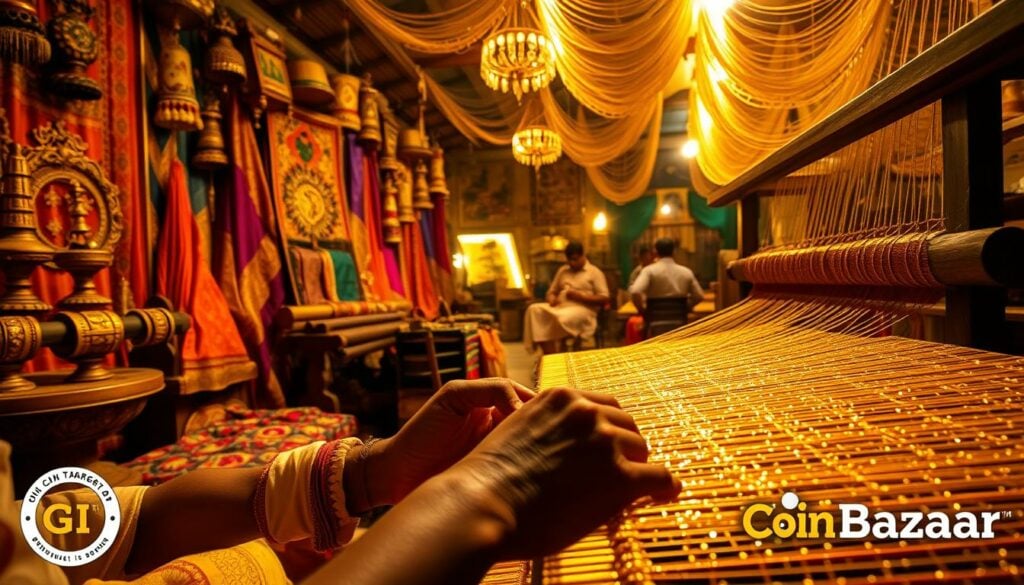
Zari weaving in Gujarat has ancient roots, dating back to the Silk Road era. Gold and silver threads were used to weave fabrics for royalty. These fabrics were symbols of wealth and spiritual importance, used in religious ceremonies.
The art of Zari weaving is a key part of Gujarat’s culture. It started when the region was a major textile producer. Surat’s artisans combined gold, silver, silk, and cotton to create beautiful designs for traditional Indian clothes.
Evolution Through Centuries
Over time, Surat’s Zari Craftsmanship has grown, influenced by different dynasties and cultural exchanges. The Mughal era was a significant time for the craft, with emperors supporting the artisans. This led to the creation of complex patterns and motifs that are now a hallmark of Surat Zari.
Despite modern challenges, Surat’s Zari Craftsmanship remains strong. Skilled artisans and preservation efforts keep this ancient art alive. Today, Surat Zari combines traditional techniques with modern designs, making it relevant in today’s fashion.
Understanding Gold & Silver Zari: The Precious Threads
The heart of Surat Zari Craft is its gold and silver threads. These threads are woven into detailed patterns. What makes them special is their composition and properties.
Composition and Properties of Zari Threads
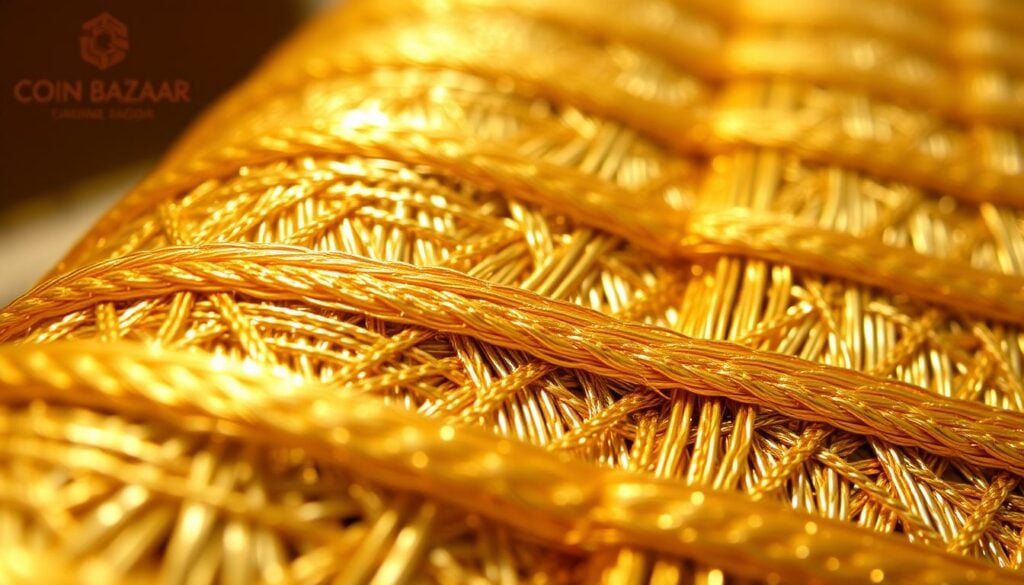
Zari threads are made by wrapping thin metal strips around a core yarn. This core is usually silk or cotton. This method makes the threads shine and last long.
Gold Content and Purity Standards
The gold content in zari threads is key to their quality. Surat Zari uses high-purity gold, often 22-karat or higher. This ensures the gold zari keeps its value and beauty over time.
Silver Components and Quality Markers
Silver zari is used with gold to make detailed designs. The quality of silver zari depends on its purity and the silver’s fineness. High-quality silver zari is known for its bright, shiny finish.
Distinguishing Real from Imitation Zari
It’s important to tell real zari from fake ones. Real zari is heavy, has a soft shine, and makes a soft clink. Fake zari is light, has a harsh sound, and lacks the real zari’s beauty.
| Characteristics | Real Zari | Imitation Zari |
|---|---|---|
| Weight | Heavier due to precious metals | Lighter, often synthetic materials |
| Luster | Soft, luxurious shine | Bright, but often harsh |
| Sound | Gentle clink | Harsh, metallic sound |
Understanding gold and silver zari threads shows the skill in Surat Zari textiles. Whether you’re a fan or new to this craft, knowing what to look for deepens your appreciation of its beauty and worth.
The Traditional Techniques of Surat Zari Weaving
Surat Zari weaving is an ancient craft that combines art and precision. It’s a labor-intensive process that needs great skill. This skill has been passed down through generations of artisans.
Tools and Equipment Used in Zari Crafting
The traditional techniques of Surat Zari weaving depend on special tools and equipment. Artisans use looms, spindles, and needles for different parts of the weaving process. The main loom used is the traditional pit loom or the frame loom, which helps weave the zari threads.
Step-by-Step Weaving Process
The weaving process in Surat Zari is detailed and involves several stages. First, the warp and weft threads are prepared and mounted on the loom. Then, the zari threads, made from gold or silver, are woven into the fabric using traditional patterns and techniques.
Thread Preparation Methods
Preparing the threads is a key step in Surat Zari weaving. The zari threads are made by wrapping thin strips of gold or silver around a core thread, usually silk or cotton. This process needs great precision to get the right thickness and texture.
Intricate Weaving Patterns
The intricate patterns in Surat Zari are a key feature of this craft. Artisans use techniques like brocade and embroidery to create complex designs. These designs often include floral motifs, geometric shapes, and other traditional Indian designs.
Learning about Surat Zari weaving helps you appreciate the craftsmanship and artistry behind these textiles. The mix of traditional methods and artistic expression makes these fabrics beautiful and rich in cultural heritage.
Cultural Significance of Zari in Indian Textiles
Zari is more than a decoration in Indian textiles. It shows the country’s rich culture and spiritual depth. It’s a key part of India’s cultural identity, thanks to its deep-rooted traditions.
Ceremonial and Religious Importance
Zari is used in ceremonies and religious events. It adorns fabrics in temples, during festivals, and in wedding attire. It’s believed to bring good luck and holiness.
For example, zari-embroidered sarees are lucky for brides. They symbolize wealth and joy in marriage.
Royal Patronage Through History
Zari has always been favored by royalty. Kings and nobles used it to decorate their clothes and palaces. This support made zari craftsmen famous and helped improve zari designs.
This royal support still shapes today’s zari designs. It mixes old motifs with new styles.
Zari’s cultural value is huge. It’s important for both religious and royal reasons. It keeps inspiring artists and designers, keeping Indian heritage alive.
Geographical Indication (GI) Tag: Significance for Surat Zari
The GI tag for Surat Zari is very important. It shows the product’s unique qualities and where it comes from. This tag proves Surat Zari’s rich history and skill in making traditional crafts.
The Journey to GI Recognition
Getting the GI tag for Surat Zari was a big effort. It involved documenting its history, techniques, and where it comes from. Artisans, local officials, and experts worked together to gather all the needed information.
This teamwork made sure the application was strong. It showed off what makes Surat Zari special.
Benefits of GI Status for Artisans and Industry
The GI tag has helped Surat Zari artisans and the industry a lot. It protects the traditional craft and opens up new markets. Now, Surat Zari products are more popular and valuable, both at home and abroad.
The GI tag also promotes Surat Zari’s cultural heritage. It encourages young people to learn this traditional craft. This has helped keep Surat Zari alive and relevant today.
The Decline Era: Challenges Faced by Zari Craftsmen
The decline of zari craftsmanship was due to economic and market pressures. Exploring its history shows the many challenges zari craftsmen faced.
Economic Pressures and Market Changes
Economic issues were a big part of zari craftsmanship’s decline. The cost of gold and silver went up, making it hard for artisans to stay profitable. “The increasing cost of precious metals has been a major challenge for zari craftsmen,” says a veteran artisan. “It’s hard to keep up with the rising costs and still produce high-quality zari products.”
Changes in the market also hurt zari product demand. As fashion trends changed, people wanted simpler designs. This made it tough for zari craftsmen to keep up.
Competition from Machine-Made Alternatives
Machines made zari embroidery faster and cheaper, threatening traditional craftsmanship. However, handmade zari work lost its quality and uniqueness.
Many people chose cheaper, machine-made zari over the real thing. This reduced demand for authentic zari products. Zari craftsmen had to find new ways to stay in the game.
Yet, there’s hope for a comeback. By understanding these challenges, we see the strength of zari craftsmen. Their efforts to keep this traditional craft alive are inspiring.
Revival Initiatives: Breathing New Life into Surat Zari
Revival efforts are key in saving Surat Zari, a traditional Indian craft. It was on the decline due to many challenges. But, thanks to government, NGOs, and private groups, Surat Zari is coming back strong.
Government Support Programs
The government has started many programs to help Surat Zari. They offer money, training, and marketing help. For example, they’ve created craft clusters for artisans to work together and share knowledge.
This has made products better and increased how much they can make.
Key government initiatives include:
- Financial aid to artisans to upgrade their tools and equipment
- Training programs to introduce new designs and techniques
- Marketing support through trade fairs and exhibitions
NGO and Private Sector Contributions
NGOs and private groups are also helping Surat Zari. They work with artisans to improve skills and quality. Some NGOs give design advice to make products more modern.
Private companies use online stores to sell Surat Zari, making it easy to buy online.
“The collaboration between NGOs, private organizations, and government bodies is crucial for the revival of traditional crafts like Surat Zari.” – Expert in Textile Industry
Thanks to these efforts, Surat Zari is changing for the better. Artisans are making more money, and the craft is being kept alive for the future. You can now find and buy real Surat Zari online, helping the artisans and the industry.
Modern Applications of Surat Zari in Fashion
Modern designers are mixing the old Surat Zari technique with new styles. This ancient craft is now seen in many modern fashion items. From fancy clothes to accessories, Surat Zari adds luxury and detail.
Contemporary Designer Collections
Today’s designers love Surat Zari for its unique patterns and luxury. Famous designers like Sabyasachi Mukherjee and Manish Malhotra use it in their work. They mix old techniques with new looks, making Surat Zari popular again.
“The resurgence of traditional crafts like Surat Zari in modern fashion is a testament to the timeless appeal of Indian textiles. It’s not just about preserving heritage; it’s about innovating and pushing boundaries.” –
Fusion Styles Incorporating Traditional Zari
Now, designers are combining Surat Zari with modern styles. They use it in new shapes, accessories, and even gold jewelry. This mix of old and new is refreshing the craft and appealing to today’s fashion lovers.
| Designer | Collection Highlights | Incorporation of Surat Zari |
|---|---|---|
| Sabyasachi Mukherjee | Haute couture gowns, bridal wear | Intricate Zari work on fabrics |
| Manish Malhotra | Celebrity wear, festive collections | Zari embroidery on modern silhouettes |
| Anju Modi | Ethnic wear, accessories | Surat Zari in jewelry and embellishments |
By using Surat Zari, designers keep the tradition alive and share it worldwide. The new uses of Surat Zari in fashion show its lasting beauty and flexibility.
Gold & Silver Zari: Investment Perspective
Gold and silver zari textiles can be a smart investment. They mix art and financial security. When you look at gold and silver zari as an investment, you’ll see their value grow. They compare well to traditional bullion investments.
Value Appreciation of Authentic Zari Textiles
Authentic zari textiles can increase in value over time. This makes them a good investment. Several things affect their value, like the craftsmanship, the materials used, and their history.
- Rarity and Historical Significance: Older or historically significant pieces tend to be more valuable.
- Craftsmanship Quality: The skill of the artisans greatly impacts the value of zari textiles.
- Market Demand: Growing interest in traditional crafts and sustainable investments boosts demand for authentic zari textiles.
Price Fluctuations and Market Trends
The value of gold and silver zari can change with market trends. These trends include gold and silver prices, demand for luxury textiles, and cultural or fashion trends. Knowing these trends helps you make better investment choices.
Comparison with Traditional Bullion Investment
Investing in gold and silver zari is different from investing in bullion. Bullion is valued for its metal content. Zari textiles, however, are valued for their craftsmanship, history, and beauty. This makes zari a more complex investment that offers both financial gains and cultural enrichment.
Collecting Zari Artifacts as Alternative Investments
Collecting zari artifacts can be a fulfilling alternative investment. By focusing on rare and historically significant pieces, collectors can create a valuable collection. This collection also connects them to cultural heritage.
When considering zari as an investment, it’s crucial to work with trusted dealers. Make sure the pieces are authentic. Also, stay updated on market trends.
The Artisan Community: Keepers of the Tradition
Exploring Surat Zari reveals the master craftsmen who keep this craft alive. The artisan community is key in saving Surat Zari’s heritage. They pass down techniques from one generation to the next.
Profiles of Master Craftsmen
Master craftsmen are the heart of Surat Zari. They’ve honed their skills over years, often starting young. Some are known for weaving complex patterns with silver coins and other valuable materials.
| Craftsman | Years of Experience | Notable Work |
|---|---|---|
| Ramesh Kumar | 20 | Intricate Zari Weaving |
| Suresh Patel | 15 | Designs using Silver Coins |
| Laxmi Devi | 25 | Traditional Zari Patterns |
Training the Next Generation
Teaching the next generation is vital for Surat Zari’s future. Master craftsmen are now teaching young apprentices. They do this through formal programs or family traditions.
This effort not only keeps the craft alive but also gives artisans a steady income. You can help by spreading the word about the need to save traditional crafts like Surat Zari.
Economic Impact of Zari Revival on Surat’s Economy
The zari weaving industry in Surat has seen a big boost. This traditional craft has always been important for the local economy. Now, it’s even more so with its revival.
This revival has brought employment generation to many areas. From artisans to traders, people are finding jobs. Many skilled workers have started their own businesses, helping the economy grow.
Employment Generation in the Sector
The zari industry has created many jobs for local artisans. Before, some were jobless or had low-paying jobs. Now, they have steady work and better pay.
- Artisans are now able to earn a steady income, improving their living standards.
- New businesses are being established, contributing to the local economy.
- The industry is also providing training and skill development opportunities.
Export Potential and Market Expansion
The zari revival has also opened up new opportunities for export and market expansion. With more demand for zari products, the industry is growing fast.
Government support for exports has helped Surat’s zari products reach global markets. This has boosted the local economy even more.
Buying Authentic Surat Zari Products: A Guide
To buy authentic Surat Zari, know what high-quality zari looks like. Surat Zari is famous for its detailed designs and gold and silver threads. It shows India’s rich textile history. The GI tag ensures Surat Zari meets traditional standards.
Identifying Quality Craftsmanship
The skill in making Surat Zari is key to its value. High-quality zari weaving has detailed patterns and a luxurious feel. Look for:
- Intricate designs that show the artisan’s skill
- Tight and even weaving
- Genuine gold and silver threads
Gold Zari Authentication Methods
To check if gold zari is real, look at the gold’s purity and how it’s applied. Real gold zari wraps gold around a thread, usually silk or cotton. Check the weight and color for authenticity.
Silver Zari Quality Assessment
Silver zari quality is checked by its silver purity and craftsmanship. It should look bright and shiny. The weaving quality and even silver thread application also show its authenticity.
| Characteristics | Authentic Zari | Imitation Zari |
|---|---|---|
| Material | Real gold/silver threads | Synthetic or coated threads |
| Craftsmanship | Intricate, precise weaving | Machine-made, less precise |
| Appearance | Lustrous, rich | Dull, uniform |
Trusted Marketplaces and Online Platforms
Buying authentic Surat Zari means choosing trusted sources. Look for online platforms and local markets that focus on Indian textiles. Sellers should describe the craftsmanship and materials used.
“The best way to ensure authenticity is to buy directly from artisans or from well-known, reputable dealers who specialize in traditional Indian crafts.”
Preservation Efforts: Museums and Cultural Institutions
Many museums and cultural institutions showcase Surat Zari’s rich legacy. They play a key role in protecting its history and cultural importance. This helps keep the traditional craft alive for future generations.
Notable Collections of Historical Zari Work
In India, several museums have large collections of historical Zari work. For example, the National Museum in New Delhi displays a stunning array of textiles, including Surat Zari pieces. The Museum of Indian Textiles in Surat also has a vast collection of Zari fabrics. These show off their detailed designs and skillful craftsmanship.
| Museum | Location | Notable Collection |
|---|---|---|
| National Museum | New Delhi | Historical Zari textiles |
| Museum of Indian Textiles | Surat | Surat Zari fabrics and designs |
Educational Programs and Exhibitions
Museums and cultural institutions also offer educational programs and exhibitions. These events aim to increase understanding and appreciation of Surat Zari. They include demonstrations by skilled craftsmen, workshops for visitors, and interactive displays.
By participating in these efforts, you can develop a deeper respect for Surat Zari’s artistry and cultural value. This ensures its legacy will endure for many years to come.
Digital Transformation: Online Platforms Boosting Zari Sales
The rise of digital platforms is boosting Surat Zari sales. Now, you can explore and buy exquisite Zari products from home. This change is more than just online sales. It’s about supporting artisans, preserving cultural heritage, and giving shoppers a unique experience.
E-commerce Opportunities for Artisans
E-commerce has opened doors for artisans to show their work to the world. You can find a wide range of Zari products online, from traditional sarees to modern accessories. This has not only grown their customer base but also provided a steady income.
Social Media Influence on Craft Awareness
Social media is key in raising craft awareness and teaching consumers about Surat Zari’s value. Follow artisans, designers, and cultural groups on social media to see the latest trends and get a peek into Zari craftsmanship. This increased visibility keeps the tradition alive and growing.
Conclusion: The Enduring Legacy of Surat’s Golden Threads
You’ve learned about Surat Zari Craft, a key part of Indian culture for centuries. It’s known for its golden threads, made from precious metals. These threads symbolize luxury and opulence.
The skill of Surat Zari artisans has kept this craft alive. Thanks to revival efforts and government support, it’s thriving again. This shows the art’s importance in today’s world.
Looking ahead, Surat Zari’s beauty and cultural value will keep it cherished. Its golden threads will always represent India’s rich heritage. They will inspire many for years to come.