



You’re about to explore the world of Indian jewelry. Each piece has a story and celebrates heritage. Indian jewelry has a long history, with roots in ancient texts and digs.
In India, jewelry making started with the Indus Valley Civilization. They made gold and silver ornaments with great skill. The makeup of indian materials in jewellery features diamonds, pearls, and gemstones for detailed designs.
Key Takeaways
- Indian jewelry is a treasure trove of rich heritage and cultural significance.
- The history of Indian jewelry dates back to the Indus Valley Civilization.
- Precious materials like gold, silver, diamonds, pearls, and gemstones are used in Indian jewelry.
- Indian jewelry is known for its intricate designs and craftsmanship.
- The components of Indian jewelry vary, reflecting the country’s diverse cultural heritage.
The Rich Heritage of Indian Jewellery Materials
Indian jewelry has a long history, dating back thousands of years. It is deeply rooted in the country’s culture. Traditional Indian elements in jewelry showcase the country’s skill, using various materials to create stunning pieces.
Ancient Origins of Indian Jewellery Craftsmanship
The Indus Valley Civilization, from around 3300 BCE, highlights India’s jewelry-making history. Archaeologists have found gold and silver ornaments with detailed designs and precision.
Archaeological Evidence of Early Materials
The earliest South Indian jewelry evidence comes from the Indus Valley Civilization. Precious stones and intricate designs were common. Indian gemstones in jewelry were key, with many stones used to decorate ornaments.
Influence of Trade Routes on Material Acquisition
Trade routes greatly influenced Indian jewelry. They brought new materials and techniques, enhancing jewelry-making traditions. 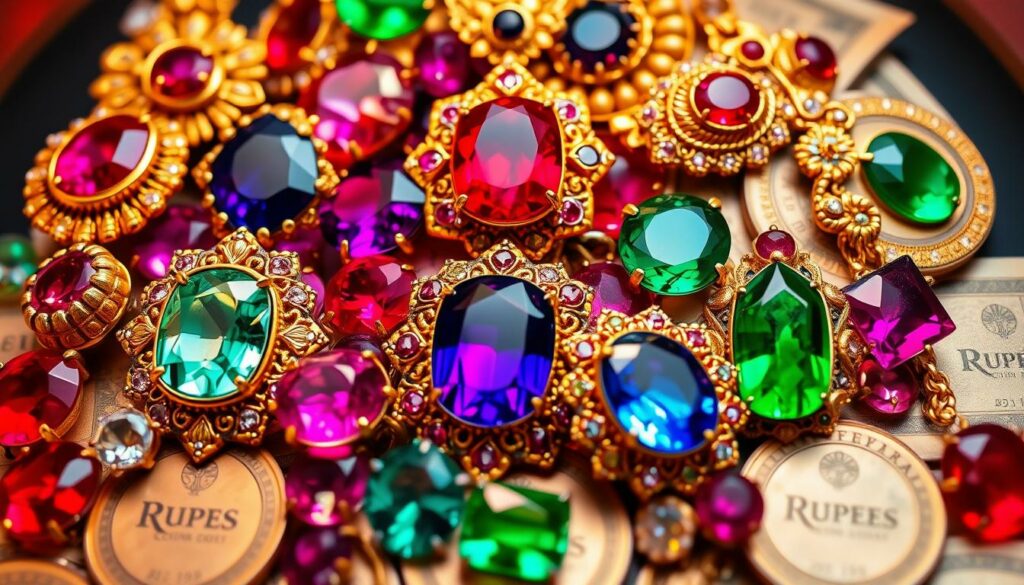
With trade growing, Indian jewelry started using a wide range of materials. This mix of materials and techniques made Indian jewelry famous worldwide.
Gold: The Heart of Indian Jewellery
Gold is essential in Indian jewellery, symbolizing wealth and good fortune. It’s not just about its value but also its emotional and spiritual meaning. Gold is deeply rooted in Indian culture.
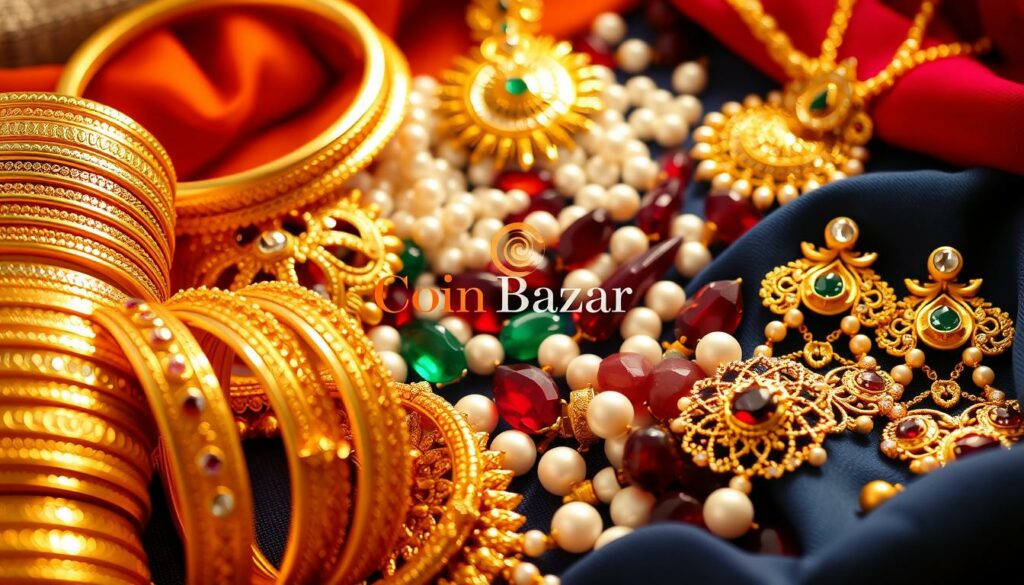
In India, gold is seen as a purifier, used in many rituals. Its use in jewellery shows the country’s rich heritage and craftsmanship. The intricate designs showcase Indian craftsmen’s skill and artistry.
Types of Gold Used in Traditional Indian Jewellery
Indian jewellery uses different gold types, each with its own characteristics. Here are some common ones:
Yellow Gold Traditions
Yellow gold is a favorite in Indian jewellery, known for its bright color. It’s often used in traditional designs like temple jewellery and Kundan work.
Rose Gold and White Gold Applications
Rose gold and white gold are becoming popular in modern designs. Rose gold adds elegance, while white gold offers a contemporary look.
Gold Alloys in Different Regions
Gold alloys vary by region, creating unique jewellery pieces. For example, 22k gold is prized for its purity and used in traditional jewellery.
| Type of Gold | Characteristics | Common Uses |
|---|---|---|
| Yellow Gold | Bright, vibrant color | Traditional designs, temple jewellery, Kundan work |
| Rose Gold | Elegant, sophisticated | Modern designs, contemporary jewellery |
| White Gold | Contemporary look | Modern jewellery, diamond settings |
| 22k Gold | High purity | Traditional Indian jewellery, ornaments |
The variety of gold types and alloys in Indian jewellery highlights the country’s craftsmanship. Gold remains central to both traditional and modern designs in Indian jewellery.
Silver: The Everyday Elegance
Exploring Indian jewelry, you find silver is more than a metal. It’s a symbol of elegance and tradition. Silver is key in Indian jewelry making, especially in rural areas. It’s prized for its beauty and lasting quality.
Cultural Significance of Silver in Indian Jewellery
Silver is deeply rooted in Indian culture, especially in religious and spiritual practices. It’s used to make ornaments and decorative items for worship and ceremonies.
Silver in Religious and Spiritual Practices
In many Indian homes, silver is used for idols, utensils, and items in daily worship. It’s believed to bring spiritual purity and is seen as lucky.
Silver as Status Symbol in Rural Communities
In rural India, silver jewelry shows a person’s status. The more and better silver someone has, the higher their economic and social standing.
Indian jewelry making techniques have grown over centuries, with silver being a main material. The skill in making intricate silver jewelry is highly respected. These pieces are often kept as family treasures.
Silver’s flexibility and affordability make it popular among many. It’s a key part of Indian jewelry, used in ceremonies and as a fashion statement. Silver remains vital in Indian jewelry culture.
Diamonds: India’s Sparkling Legacy
For centuries, India has been known for its diamonds. This legacy is both rich and captivating. The history of diamonds in India shows the country’s deep love for this gemstone.
Historical Significance of Indian Diamonds
Indian diamonds have a long history, starting in the 4th century BCE. They mean more than just money in Indian culture. They symbolize love, power, and spirituality.
Golconda Diamonds and Their Unique Properties
Golconda diamonds are famous for their quality and unique traits. Mined in the Golconda region, they were loved for their sparkle. Here are some special features of Golconda diamonds:
- Exceptional clarity and brilliance
- Rare and unique inclusions
- Highly valued for their historical significance
India’s Role as the Original Diamond Source
India was once the main source of diamonds worldwide. The Golconda region was a key diamond mining area. Its rich diamond deposits were key to the global diamond trade.
The legacy of Indian diamonds still shapes today’s indian jewelry styles. Many designers find inspiration in India’s rich cultural heritage.
Pearls: Treasures from the Waters
In Indian jewelry, pearls are seen as treasures from the sea. They are loved for their shine and beauty. You might find it interesting to learn about the different types of pearls used in traditional Indian designs.
Types of Pearls in Indian Jewellery
Indian jewelry showcases a wide range of pearls. Each type has its own special qualities. Natural pearls are rare and highly valued, while cultured pearls are more common and used in modern designs.
Natural vs. Cultured Pearls in Traditional Designs
Natural pearls form without human help, making them rare and precious. Cultured pearls, on the other hand, are grown with human assistance. They are more affordable but still beautiful. Traditional Indian jewelry often mixes both types to create stunning designs.
Basra Pearls and Their Significance
Basra pearls are highly valued in Indian jewelry for their bright shine and round shape. They come from the Persian Gulf and symbolize wealth and status. Basra pearls are often used in luxury jewelry to add elegance.
| Characteristics | Natural Pearls | Cultured Pearls |
|---|---|---|
| Formation | Occur naturally without human intervention | Cultivated with human assistance |
| Rarity | Extremely rare | More available |
| Value | Highly valuable | Generally less expensive |
The Makeup of Indian Materials in Jewellery: A Comprehensive Overview
Indian jewelry making is an art that combines different materials to create stunning pieces. Traditional Indian jewelry is not just about the materials used. It’s about how these materials come together to make something unique.
Material Combinations in Traditional Designs
Indian jewelry is famous for its detailed designs and motifs with deep meanings. The mix of materials is key to these designs. Indian jewelry makers blend elements to make pieces that are both beautiful and culturally rich.
Polki and Kundan: Diamond and Gold Fusion
Polki and Kundan are traditional Indian jewelry styles that show the beauty of diamonds and gold together. Polki sets uncut diamonds in gold, creating a striking contrast. Kundan uses gold to frame precious stones, often diamonds. Both styles highlight the beauty of diamonds and gold combined.
Navratna: The Nine-Gem Combination
Navratna means “nine gems” and is a big deal in Indian jewelry. It’s a mix of nine precious gemstones. This mix is thought to bring balance and harmony, as each gemstone is linked to a celestial body. Navratna jewelry is not just beautiful but also carries deep astrological meaning.
Understanding the material combinations in traditional Indian jewelry helps us see the craftsmanship and cultural heritage. Whether it’s the diamond and gold mix in Polki and Kundan or the astrological significance of Navratna, Indian jewelry is truly captivating.
Precious Gemstones in Indian Jewellery
Precious gemstones are the heart of Indian jewellery. They are cherished for their beauty and cultural significance. These stones have a long history in Indian jewellery, adding beauty and spiritual values.
Ruby, Emerald, and Sapphire Traditions
Rubies, emeralds, and sapphires are special in Indian jewellery. They are valued for their beauty, rarity, and historical significance.
Burmese Rubies in Mughal Jewellery
Burmese rubies are known for their deep red color. They were prized in Mughal jewellery, symbolizing power and wealth. Today, you can still see their influence in traditional Indian jewellery.
Colombian Emeralds in Indian Settings
Colombian emeralds are vibrant green. They are set in intricate gold settings, creating stunning pieces. These emeralds are both elegant and culturally significant.
Kashmir and Ceylon Sapphires
Kashmir and Ceylon sapphires are highly valued. Sapphires are durable and have a beautiful blue color. They are a popular choice for jewellery, showing India’s rich gemstone heritage.
The mix of precious gemstones and traditional Indian craftsmanship creates beautiful jewellery. These pieces are not just beautiful but also rich in cultural heritage. They show the uniqueness and meaning of ethnic Indian jewellery materials.
Semi-Precious Stones and Their Importance
Exploring Indian jewelry reveals the key role of semi-precious stones. These stones, less valuable than precious gems, add charm and character to traditional pieces.
Popular Semi-Precious Stones in Indian Jewellery
Indian jewelry makers love semi-precious stones for their beauty and meanings. These stones add details and color to jewelry.
Turquoise, Coral, and Lapis Lazuli
Turquoise is calming and brings good fortune. Coral, in red or pink, keeps evil spirits away. Lapis lazuli is prized for its beauty and spiritual value.
Carnelian adds a natural touch with its warm tones. Agate, with its patterns, is valued for its unique look and is used in detailed designs.
Jade and Quartz Varieties
Jade, green in color, symbolizes luck and prosperity. Quartz, in various colors, is used for elegant pieces. From amethyst to citrine, quartz is popular for its beauty and strength.
Semi-precious stones in Indian jewelry show the skill of Indian makers. They also highlight the cultural importance of these stones. By using these stones, Indian jewelry makers create pieces that are both stunning and meaningful.
Traditional Craftsmanship Techniques
Meenakari, an ancient art, brings Indian jewelry to life with its vibrant colors. This traditional technique applies colors to metal surfaces. It creates intricate designs that are both beautiful and culturally significant.
The Art of Enameling
Meenakari is a highly respected technique in Indian jewelry-making. It adds color and elegance to various pieces. The process fuses powdered glass to metal, resulting in a durable and glossy finish.
Regional Enamel Color Palettes
Different regions in India have their own enamel color palettes. These reflect local tastes and traditions. For example, Rajasthan is known for its bold and vibrant colors. Other regions may prefer more subtle tones.
| Region | Characteristic Colors |
|---|---|
| Rajasthan | Red, turquoise, green |
| South India | Gold, emerald green, ruby red |
| North India | Turquoise, coral, lapis lazuli |
Techniques and Applications
The application of Meenakari involves designing the pattern, applying the enamel, and firing it at high temperatures. This technique is used in various types of jewelry, from earrings to necklaces.
By combining traditional techniques with modern designs, Indian jewelry continues to evolve. It appeals to both local and international markets. Meenakari remains a cherished part of this heritage, symbolizing the rich cultural legacy of Indian craftsmanship.
Modern Innovations in Indian Jewellery Materials
The world of Indian jewellery is changing fast. Old and new materials are coming together. This shows how traditional skills are being updated with new methods.
Fusion of Traditional and Contemporary Materials
Indian jewellery designers are mixing old favorites like gold and silver with new stuff. They’re using metals and materials that weren’t around before. This mix is making traditional jewellery more exciting for young people.
Integration of Alternative Metals
Using metals like palladium and titanium is a big change in Indian jewellery. These metals are used with gold and silver to make pieces that last longer. “The use of alternative metals is opening new avenues for creativity in jewellery design,” says a famous Indian jewellery designer.
Experimental Material Combinations
Designers are trying out new mixes, like gold with carbon fiber or wood. This makes jewellery stand out and is better for the planet.
Some designers are even using 3D printing for designs that were hard to make by hand. This mix of old skills and new tech is changing Indian jewellery.
The future of Indian jewellery looks bright. It will keep its cultural roots but also explore new ideas. This way, Indian jewellery will win hearts worldwide while staying true to its heritage.
Regional Masterpieces and Their Material Composition
Indian jewelry is famous for its many regional styles. Each style shows off unique materials and skill. Exploring these styles lets you see India’s rich cultural heritage.
North Indian Jewellery Materials and Styles
North Indian jewelry is known for its detailed designs and big motifs. It often uses gold, silver, and precious stones. This makes it stand out.
Kundan-Meena of Rajasthan
The Kundan-Meena style from Rajasthan is a big deal in North India. It’s all about gold and precious stones. This style is loved for its detailed designs and bright colors. Each piece shows the artisan’s amazing skill.
Delhi and Punjab Traditions
Delhi and Punjab have their own special jewelry styles. They mix old and new materials. Silver and semi-precious stones are often used, adding elegance. These styles show the variety in Indian jewelry.
Looking at these regional masterpieces helps us understand Indian jewelry better. Each piece is a unique treasure, showing India’s rich culture.
Identifying Authentic Indian Jewellery Materials
Authenticity is key in Indian jewellery. Knowing how to spot genuine pieces is important. As you explore Indian jewellery, learning about materials and their authenticity is crucial.
Hallmarks and Certification Systems
Hallmarks and certification systems are vital for verifying precious metals and gemstones in Indian jewellery. They give buyers peace of mind about the quality and genuineness of their jewellery.
BIS Hallmarking for Precious Metals
The Bureau of Indian Standards (BIS) hallmarking is a key certification for precious metals like gold and silver. It ensures these metals meet purity standards. BIS hallmarking is mandatory for gold and silver jewellery. It involves testing and marking to show the metal’s purity.
Gemstone Certification Standards
Gemstones, including diamonds and other precious stones, have their own certification standards. Reputable labs issue certificates that confirm the gemstone’s authenticity and quality. Look for certifications from recognized gemological laboratories when buying gemstone jewellery.
| Certification Type | Description | Relevance |
|---|---|---|
| BIS Hallmarking | Certification for precious metals | Ensures purity of gold and silver |
| Gemological Laboratory Certificates | Certification for gemstones | Verifies authenticity and quality of gemstones |
By understanding and looking for these hallmarks and certifications, you can ensure your Indian jewellery is authentic and of high quality. Whether it’s gold, silver, or gemstone jewellery, these systems offer valuable assurance.
Caring for Your Indian Jewellery Materials
It’s important to take care of your Indian jewellery. This keeps its cultural value and beauty alive. Indian jewellery is famous for its detailed designs and precious materials like gold, silver, and gemstones. To keep these pieces looking great, follow specific care tips for each material.
Material-Specific Maintenance Tips
Each material needs its own care method. Knowing what your Indian jewellery needs is crucial for its upkeep.
Gold and Silver Care
Gold and silver jewellery needs regular cleaning with a soft cloth. This removes dirt and oils. For deeper cleaning, a mild soap solution works well. But, stay away from harsh chemicals and rough materials that can harm the metal.
Diamond and Gemstone Maintenance
Clean diamonds and gemstones with a soft-bristled brush and mild soap. This gets rid of dirt in small spaces. Some pieces can be cleaned with an ultrasonic cleaner, but always check with the jeweller first.
Pearl and Organic Material Preservation
Pearls and organic materials need gentle care. Use a soft, dry cloth to clean them. Avoid chemicals and extreme temperatures to keep them safe.
| Material | Cleaning Method | Special Care |
|---|---|---|
| Gold and Silver | Mild soap solution | Avoid harsh chemicals |
| Diamonds and Gemstones | Soft-bristled brush and mild soap | Check before using ultrasonic cleaners |
| Pearls and Organic Materials | Soft, dry cloth | Avoid chemicals and extreme temperatures |
By following these care tips, your Indian jewellery will stay beautiful for a long time. Regular maintenance not only keeps the jewellery looking good but also its cultural and monetary value.
Conclusion
Exploring Indian jewellery reveals a rich heritage and cultural significance. Materials like gold, silver, gemstones, and pearls each have their own story. This shows the country’s glorious past and the skill of its artisans.
Indian jewellery combines traditional and modern designs beautifully. Different materials are used to create stunning pieces that showcase the country’s cultural diversity. Whether you love diamonds or pearls, there’s something for everyone.
Appreciating Indian jewellery is more than admiring art; it’s experiencing history. The craftsmanship, materials, and designs offer a unique experience. The beauty of Indian materials in jewellery continues to inspire and captivate people worldwide.