




Get ready to dive into the world of Koftgiri, a detailed art form from India’s rich culture. This traditional Rajasthani craft decorates arms and weapons with precious metals. It turns them into beautiful pieces with deep cultural meaning.
Koftgiri metal inlay is a skillful art of placing gold or silver into steel. You’ll see how this ancient craft makes stunning jewelry and decorative items. It shows the deep cultural heritage of Rajasthan.
Key Takeaways
- Koftgiri is a traditional Rajasthani art form involving metal inlay.
- It includes inlaying gold or silver into steel.
- This art form is used to create decorative and culturally significant items.
- Koftgiri reflects the rich cultural heritage of Rajasthan.
- The craft involves intricate and skilled workmanship.
The Ancient Art of Koftgiri: A Rajasthani Treasure
Koftgiri has a history of over 500 years, showing the rich culture of Rajasthan. It’s a key part of Rajasthani heritage, especially during the Mughal era. Back then, it thrived thanks to royal support.
Origins and Cultural Significance
Koftgiri started in the Mughal era, influenced by ornate weaponry traditions. The mix of Mughal methods and local skills created Koftgiri. Today, it’s a big part of Rajasthani culture, showing the area’s history and skill in making things.
Buying Koftgiri is more than getting beautiful art. It’s also about knowing the value of gold and silver. These metals make Koftgiri even more special and valuable.
Regional Variations Across India
Koftgiri is mainly from Rajasthan, but it’s found in other parts of India too. Each place has made Koftgiri their own, with different patterns and designs. This shows how the art has changed in different areas.
| Region | Characteristics | Influences |
|---|---|---|
| Rajasthan | Intricate gold and silver inlay work | Mughal and local craftsmanship |
| Bihar | Simplified designs, use of local motifs | Local tribal influences |
| Tamil Nadu | Blend of Koftgiri with traditional Tamil designs | Tamil artisanal techniques |
Historical Evolution of Koftgiri in Rajasthan
Koftgiri has a long history in Rajasthan, starting when royal support helped it grow. It was mainly found in the Mewar area, now part of Rajasthan.
Royal Patronage and Development
Royal support made Koftgiri artisans better at their craft. They made detailed designs for weapons and later, for jewelry. The royal families of Jaipur and Udaipur helped Koftgiri thrive.
The use of gold and silver in Koftgiri shows the differences between gold and silver. Gold is more flexible, making designs more detailed. Silver, on the other hand, has a bright look.
From Weapons to Ornaments
At first, Koftgiri decorated weapons, showing the artisans’ talent. Later, it turned to making jewelry. Here, the advantages of gold over silver, like not tarnishing, were key.
| Metal | Characteristics | Use in Koftgiri |
|---|---|---|
| Gold | High ductility, resistant to tarnish | Intricate designs, ornaments |
| Silver | Brighter hue, less expensive than gold | Contrasting designs, decorative items |
Understanding the Koftgiri Technique
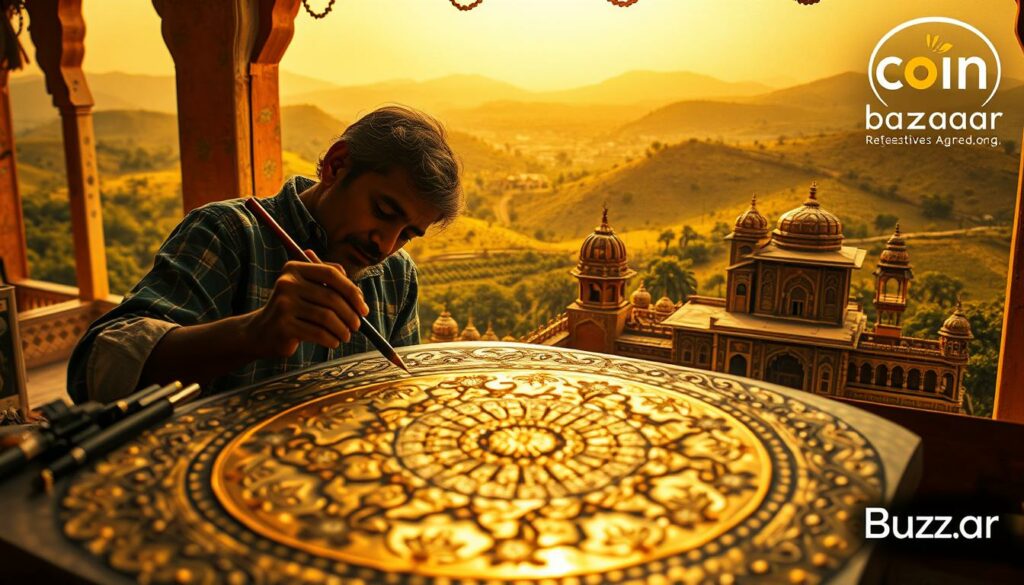
Making Koftgiri art is a detailed process. It goes from designing to polishing. This traditional Rajasthani art needs skill and focus.
Traditional Tools and Materials
Artisans use old tools like chisels, hammers, and files. They also use materials like steel, gold, and silver. The choice between gold and silver depends on the look and market analysis of precious metals.
Preparing the Base Metal
The first step is preparing the base metal, usually steel. It’s shaped and smoothed for the designs. Artisans plan carefully, thinking about the investment potential of the piece.
Inlaying Precious Metals
After preparing the base, artisans add gold or silver wires. They create detailed patterns and designs. The choice between gold and silver depends on durability and market demand.
Finishing Touches
The last step is polishing the piece to a shine. This shows off the art’s details. The finished piece is a sign of the artisan’s skill and can grow in value, like investments in gold and silver.
| Material | Characteristics | Usage in Koftgiri |
|---|---|---|
| Steel | Strong, durable | Base metal |
| Gold | Valuable, ductile | Inlay for intricate designs |
| Silver | Less expensive than gold, still valuable | Alternative to gold for inlay |
Learning about the Koftgiri technique helps us value the art. It also tells buyers about the investment in such pieces.
Gold vs Silver: Choosing Metals for Koftgiri Work
Choosing between gold and silver for Koftgiri work depends on several factors. These include the physical properties of the metals and market demand. Artisans must think about the metal’s characteristics when creating detailed designs.
Physical Properties and Workability
The physical traits of gold and silver affect their use in Koftgiri art. Malleability and ductility are key. They decide how well these metals can be shaped into detailed designs.
Malleability and Ductility Comparison
Gold is very malleable, making it easy to shape into thin sheets. Silver is also malleable but less so than gold. Yet, silver’s high ductility is great for detailed patterns. Think about your Koftgiri piece’s needs when picking a metal.
Tarnishing and Oxidation Factors
It’s also important to consider how these metals react to tarnish or oxidation. Silver tarnishes more than gold, which can change your art’s look over time. You might need to think about how to keep your chosen metal looking good.
Price Considerations for Artisans and Buyers
The cost of gold and silver is a big factor in your choice. Gold is pricier than silver, affecting both the artisan’s cost and the buyer’s price. Balance the look you want with your budget.
When picking gold or silver for Koftgiri work, weigh the physical traits, workability, and cost. Knowing these factors helps you make a choice that fits your needs, whether you’re creating or buying.
Distinctive Patterns and Motifs in Koftgiri Art
Rajasthani artisans show their skill in Koftgiri art’s intricate patterns and motifs. These designs are not just beautiful but also hold deep cultural meaning.
Traditional Rajasthani Designs
Traditional Rajasthani designs in Koftgiri art include floral motifs, geometric patterns, and mythological scenes. These are meticulously crafted with gold and silver inlays.
Symbolic Meanings Behind Patterns
The patterns and motifs in Koftgiri art carry symbolic meanings. For example, floral patterns symbolize prosperity and good fortune. When choosing between gold vs silver, artisans consider both beauty and meaning. Gold represents grandeur and wealth, while silver is known for its elegance and subtlety.
| Characteristics | Gold | Silver |
|---|---|---|
| Symbolic Meaning | Wealth, Grandeur | Elegance, Subtlety |
| Aesthetic Appeal | Vibrant, Luxurious | Simple, Sophisticated |
| Durability | High | Moderate |
Knowing the differences between gold and silver helps us appreciate Koftgiri art’s craftsmanship. Whether gold or silver is used, it showcases the skill and creativity of Rajasthani artisans.
Modern Applications: Koftgiri in Contemporary Jewelry
Koftgiri, an ancient Rajasthani art, is now in modern jewelry. It mixes gold or silver inlays in steel. This creates unique, eye-catching pieces for collectors and connoisseurs.
Fusion of Traditional and Modern Designs
Traditional Koftgiri meets modern designs in new jewelry. This mix brings elegance and sophistication. You’ll find many pieces that blend old and new.
Necklaces and Pendants
Necklaces and pendants with Koftgiri art are sought after. They have intricate designs and are crafted with care. These pieces, made of gold and silver, are valuable due to gold and silver prices.
Earrings and Rings
Earrings and rings with Koftgiri patterns are loved for their traditional touch and modern look. The gold and silver in them make them a good investment for investing in gold and silver.
Home Decor and Gift Items
Koftgiri art is also in home decor and gifts. These items, with gold and silver inlays, are unique. They make great presents and can increase in value over time.
Exploring Koftgiri in jewelry shows the detail and skill in blending old and new. Whether you want to invest in gold and silver or just enjoy handmade jewelry, Koftgiri pieces will impress you.
The Investment Value of Gold and Silver in Koftgiri Pieces
Koftgiri pieces are loved for their beauty and skill. They also offer a special investment chance because of their gold and silver. Buying a Koftgiri piece means getting a stunning art piece and a valuable investment.
Precious Metal Content Assessment
Knowing the gold and silver in Koftgiri pieces is key to their value. The worth of these metals can change with market prices. To figure out the value, look at the metal’s weight and purity.
For example, a piece with lots of gold is more valuable when gold prices are high. Here’s a quick guide:
| Metal | Purity | Weight (grams) | Market Value |
|---|---|---|---|
| Gold | 22K | 10 | $500 |
| Silver | 925 | 20 | $100 |
Knowing how gold and silver markets work helps you invest wisely. Gold is often seen as a safe choice, but silver can offer bigger gains but is riskier.
Appreciation Potential of Handcrafted Art
The skill in making Koftgiri pieces adds to their value. Handmade art, especially from famous artists, can grow in value over time. It’s important to think about the craftsmanship and history when choosing between gold and silver.
Thinking about investing in Koftgiri art? Remember, the value is in the metals, artistry, and cultural heritage. This makes Koftgiri pieces a unique and potentially valuable investment.
The Master Artisans: Keepers of the Koftgiri Legacy
The tradition of Koftgiri is kept alive by skilled artisans. They have mastered the art of inlaying gold and silver into steel. For generations, they have passed on their knowledge, keeping this ancient Rajasthani art form alive.
Prominent Koftgiri Families in Rajasthan
Rajasthan is home to several families who keep the Koftgiri legacy alive. These families have mastered the craft and innovated within it. They create pieces that are both modern and rooted in heritage.
The use of gold and silver in Koftgiri is key. Gold is durable and doesn’t tarnish, while silver is malleable and affordable.
Training and Apprenticeship Systems
Koftgiri is often passed down from father to son. Young apprentices learn the craft from a young age. They go through a long apprenticeship to learn the technical skills and cultural context of Koftgiri.
This training ensures artisans know the differences between gold and silver. They can choose the right metal for their work based on the client’s preferences.
Exploring Koftgiri, you’ll see artisans’ dedication in every piece. Their skill shows the lasting legacy of this ancient art form.
Caring for Your Koftgiri Jewelry and Artifacts
Keeping Koftgiri jewelry and artifacts beautiful for years is easy with the right care. To keep the detailed designs and precious metals in top shape, follow some important cleaning, storage, and display tips.
Cleaning and Maintenance Techniques
Cleaning your Koftgiri jewelry needs to be gentle. Use a soft, dry cloth to remove dirt and oils. For deeper cleaning, mix mild soap with warm water and use a soft-bristled brush on detailed designs.
Avoid harsh chemicals or rough materials that can harm the metal or inlay. Silver pieces might tarnish, so they need occasional polishing to stay shiny.
Regular maintenance is crucial to keep your Koftgiri jewelry in great condition. Check your pieces often for wear, like loose threads or damaged settings. Fix these problems quickly.
Storage and Display Recommendations
Storing your Koftgiri jewelry right is key to keeping it safe. Store each piece in a soft-lined box or pouch to prevent scratches and tangles. When showing off your Koftgiri, stay away from direct sunlight and moisture to avoid tarnish or damage.
By following these care tips, you can enjoy your Koftgiri jewelry and artifacts for many years. This way, you’ll keep their beauty and the skill that went into making them.
Distinguishing Authentic Koftgiri from Imitations
Koftgiri art is getting more popular, making it key to tell real craftsmanship from fake ones. Knowing how to spot a genuine piece is essential for any collector.
Quality Markers and Craftsmanship Signs
Real Koftgiri art shows off detailed designs and careful work. Look for minute details in the inlay work, like the evenness of the gold or silver wire. The quality of the metal is also a clue; real Koftgiri uses top-notch gold or silver that shines brightly.
Check for signs of being made by hand, like small pattern variations or tiny flaws. These show it was made by a person, not a machine. Also, real Koftgiri feels heavy because it’s made of solid metals.
Common Shortcuts in Mass-Produced Pieces
Imitations of Koftgiri often skip details to save money. Watch out for pieces missing fine details or with uneven inlay work. These might use lower-grade metals or fake materials that look like gold or silver but aren’t as valuable or lasting.
Another warning sign is uniform patterns or designs that seem too perfect. When buying Koftgiri, whether for looks or as an investing in gold and silver option, choose authenticity. Comparing gold vs silver Koftgiri can also help you see their value and skill.
Preservation Efforts and Government Initiatives
Efforts to protect Koftgiri art have grown with government help. The Indian government has started many projects to keep traditional crafts like Koftgiri alive.
GI Tag and Legal Protections
The Geographical Indication (GI) tag is a big step for Koftgiri craft protection. It makes sure only certain artisans can make Koftgiri items. This keeps the craft’s quality and authenticity high.
The GI tag also stops fake or wrong use of Koftgiri. It helps keep Koftgiri’s special identity safe.
With the GI tag, Koftgiri artisans get more market recognition. They also get better prices for their work. This helps keep the craft alive and supports artisans’ lives.
Skill Development Programs
The government has started skill development programs for Koftgiri artisans. These programs teach traditional techniques and modern designs. This helps artisans stay current in the market.
These programs also teach about gold and silver prices and gold and silver market analysis. This helps artisans make smart choices about their craft.
Where to Experience and Purchase Authentic Koftgiri in India
You can explore the rich heritage of Koftgiri art by visiting renowned workshops and galleries across India. These centers offer a unique opportunity to witness skilled artisans at work and acquire authentic pieces.
Renowned Workshops and Galleries
Koftgiri art is predominantly found in regions like Jaipur and Jodhpur, known for their rich cultural heritage. Visiting these places can provide a firsthand experience of the craftsmanship involved.
Jaipur and Jodhpur Centers
Jaipur, often referred to as the craft capital, houses numerous workshops where Koftgiri artisans showcase their skills. Jodhpur, with its majestic forts and palaces, is another hub where you can find exquisite Koftgiri pieces.
| City | Notable Workshops | Specialties |
|---|---|---|
| Jaipur | Rajasthan Crafts Council | Traditional Koftgiri designs |
| Jodhpur | Jodhpur Handicrafts | Intricate gold and silver inlay work |
Online Marketplaces for Authentic Pieces
In addition to physical locations, online marketplaces have made it easier to purchase authentic Koftgiri art. Websites like Etsy and specialized Indian craft portals offer a wide range of Koftgiri pieces.
Major Exhibitions and Craft Fairs
India hosts various exhibitions and craft fairs where Koftgiri artisans showcase their work. These events are excellent opportunities to see the art up close and purchase authentic pieces.
Some notable events include the Rajasthan International Folk Festival and the India Craft Week. These events attract artisans from across the country, offering a diverse range of Koftgiri art.
Conclusion: The Enduring Legacy of Koftgiri Art
The Koftgiri craft shows the deep cultural roots of Rajasthan. It’s known for its fine art of mixing gold and silver into steel. This craft’s lasting impact comes from the hard work of artisans and those who help keep it alive.
Choosing between gold and silver for Koftgiri work is important. Knowing the differences in these metals helps you appreciate the craft more. It also helps you decide what to buy.
When you buy Koftgiri pieces, you’re supporting a tradition and a culture. You help keep this ancient art alive. Your support means a lot to the artisans and preservation efforts.