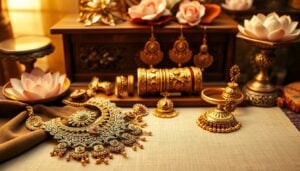





Have you ever worn or seen Indian jewelry styles on someone special? For ages, these pieces have been key in Indian culture. They carry deep meanings and are used in big celebrations and rituals.
The maang tikka and beautiful anklets are just a few examples. Traditional Indian jewelry trends have changed but still keep their cultural value. This guide will show you the beauty and importance of these timeless pieces.
Key Takeaways
- Understanding the cultural significance of Indian traditional jewelry
- Exploring various types of traditional Indian jewelry
- Discovering the evolution of Indian jewelry styles
- Learning about the symbolism behind different pieces
- Appreciating the beauty of traditional Indian jewelry trends
The Rich Heritage of Indian Jewelry
Indian jewelry has a long history, starting with the Indus Valley Civilization. It has become a mix of tradition and art. The country’s diverse cultures and skilled craftsmanship are seen in its jewelry.
Cultural Significance in Indian Society
Indian jewelry is very important in the country’s culture. It’s used in many rituals, ceremonies, and celebrations. It stands for prosperity, good luck, and marital status.
The design and making of jewelry show the culture of each region. Different jewelry is worn for different events, like weddings and festivals. This shows how vital it is in Indian society.
Evolution Through Centuries
The history of Indian jewelry is rich and varied. It has been shaped by different dynasties and cultural exchanges. Each region has its own special jewelry-making ways.
| Period | Influence on Jewelry | Notable Features |
|---|---|---|
| Indus Valley Civilization | Early beginnings of Indian jewelry | Use of metals and stones |
| Mughal Era | Intricate designs and use of precious stones | Symmetrical designs, use of enameling |
| South Indian Tradition | Temple jewelry, intricate motifs | Use of gold, motifs of deities |
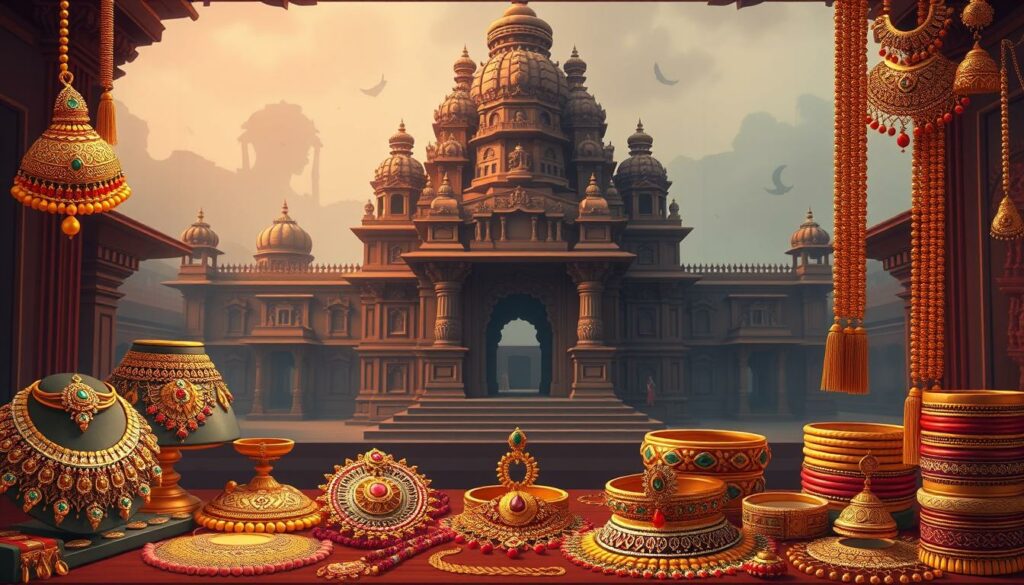
Understanding the Indian Traditional Jewellery Guide
Exploring Indian traditional jewelry opens a world of styles and meanings. It’s more than just decoration; it shows the country’s rich culture and history.
Regional Diversity in Jewelry Styles
Indian jewelry changes a lot from one region to another. It shows local traditions, materials, and how things are made. For example, North India is famous for Kundan and Polki work. Meanwhile, South India is known for its temple jewelry.
| Region | Jewelry Style | Characteristics |
|---|---|---|
| North India | Kundan and Polki | Intricate designs, use of uncut gemstones |
| South India | Temple Jewelry | Inspired by temple carvings, often features deities |
Symbolism and Meaning Behind Ornaments
Every piece of Indian jewelry has its own meaning. It can show if someone is married, their religious beliefs, or their social status. For example, the mangalsutra is a special necklace for married women. It shows they are married.
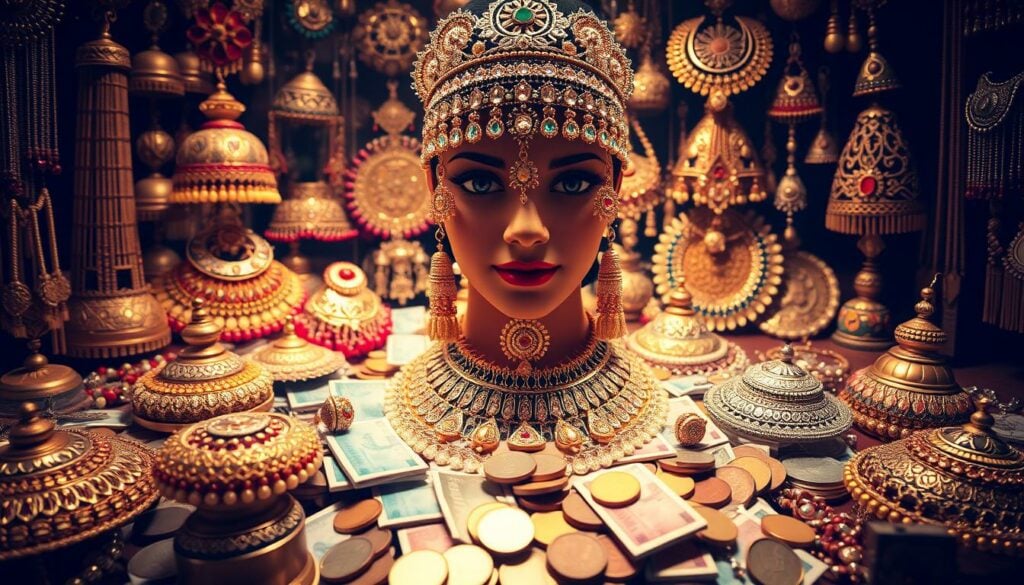
Learning about these symbols can make you appreciate Indian jewelry more. Whether you love the designs or the cultural background, this guide will help you understand Indian ornaments better.
Head Ornaments: Crown Jewels of Indian Tradition
Indian head ornaments, from the maang tikka to hair pins, showcase the country’s rich jewelry-making history. They highlight the various types that make these ornaments so important in Indian culture.
Maang Tikka and Matha Patti
The maang tikka is a key piece of Indian bridal jewelry, symbolizing marital happiness and beauty. It’s often paired with a matha patti, a forehead ornament that boosts the bride’s grandeur. These pieces are adorned with detailed designs and precious stones.
Jhoomar and Passa
A jhoomar is a decorative piece that hangs from the head or hair, adding elegance to the bride’s look. The passa is another vital ornament worn on the side of the head, featuring intricate designs and embellishments. These ornaments are key to the traditional Indian bridal look.
Hair Accessories and Pins
Hair accessories and pins are essential for keeping head ornaments in place. They are often made with intricate patterns and gemstones, adding elegance to the bride’s hairstyle. You can find many designs that match your traditional outfit.
Indian head ornaments are more than just decorations; they hold deep cultural and symbolic meanings. Exploring these ornaments can help you understand their importance in Indian tradition.
Ear Ornaments: From Simple to Spectacular
In India, ear ornaments like jhumkas and chandbalis show the country’s skill in jewelry-making. Earrings are everywhere in Indian jewelry, from simple studs to big designs. Each one has its own cultural meaning.
Jhumkas and Chandbalis
Jhumkas have a bell shape, and chandbalis look like a crescent moon. Jhumkas are for special times, while chandbalis show marital status and cultural roots.
Karnphool and Tops
Karnphool, or “flower for the ear,” are fancy earrings that make any outfit better. Tops are simpler and for daily wear. Both are loved in many parts of India.
Regional Variations in Earrings
India’s different areas have their own earring styles, showing local culture and traditions. For example, South India’s temple jewelry is famous for its detailed designs and precious stones.
| Region | Popular Earring Style | Cultural Significance |
|---|---|---|
| North India | Jhumkas, Chandbalis | Often worn during festivals and weddings |
| South India | Temple Jewelry Earrings | Reflects the rich cultural heritage of the region |
Neck Jewelry: Statements of Elegance
The art of neck jewelry in India is rich in culture, elegance, and tradition. For centuries, neck adornments have been key in Indian jewelry. They symbolize life, spirituality, and status.
Chokers and Collars
Chokers and collars, known as Hasli or Polki in different regions, are timeless. They have adorned Indian necks for generations. These pieces are often made with precious stones and metals.
They show marital status, wealth, or spiritual affiliation. You can find many materials and designs. From delicate gold chokers to elaborate diamond collars, there’s something for everyone.
Long Necklaces
Long necklaces, or Haar and Mala, are big in Indian jewelry. They’re worn during special occasions and ceremonies. These necklaces can be made from pearls, beads, and precious gems.
They’re designed to make a statement. The Mangalsutra, a sacred necklace, shows marital commitment. It’s worn by married women as a sign of their bond with their spouse.
Pendant Styles
Pendant styles, like the Mangalsutra and Tanmaniya, are beautiful and carry deep meanings. The Mangalsutra is tied around the bride’s neck during the wedding. It shows her marital status.
Other pendants show off intricate craftsmanship. They often feature nature or mythology motifs.
Whether you want a statement piece or something subtle, Indian neck jewelry has something for everyone. It suits all tastes and occasions.
Arm and Wrist Adornments
In Indian culture, arm and wrist jewelry is more than just pretty. It holds deep meaning. You wear ornaments on your arms and wrists that show your life and heritage.
Bangles and Kada
Bangles and kada are key in Indian jewelry. They’re often worn together to make a bold statement. Bangles come in many designs and colors, made from glass, metal, or lacquer. “Bangles are a girl’s best friend,” people say, and they’re given as gifts on special days.
Armlets (Bajuband, Vanki)
Armlets, called bajuband or vanki, sit on the upper arm. They add elegance to your outfit. These armlets are detailed with precious stones and metals, making them beautiful pieces for your collection.
Haath Phool and Palm Jewelry
Haath phool, or hand flowers, decorate your hands, connecting to fingers or wrists. Palm jewelry is less common but adds a special touch. These pieces are for special events, showing off Indian jewelry’s beauty and skill.
Finger Ornaments: Beyond Wedding Rings
Indian traditional jewelry goes beyond wedding rings. You can wear many Indian jewelry designs on your fingers. These designs carry deep tradition and cultural meaning.
Traditional Ring Designs
Indian ring designs are very diverse, showing the country’s rich culture. You’ll find everything from simple bands to detailed designs with precious stones. These rings are worn on special days and ceremonies.
Connected Rings and Finger Chains
Connected rings and finger chains are interesting in Indian jewelry. They have interlocking rings or chains that look great on multiple fingers. These rings and finger chains are not just pretty. They also mean unity and connection.
You can pick from many designs to match your style. From delicate chains to bold pieces, there’s something for everyone.
Waist Jewelry: The Forgotten Elegance
Waist jewelry is a key part of Indian traditional attire, adding elegance and sophistication. You might not always notice it, but a well-crafted kamarbandh can elevate your entire look. It symbolizes femininity and beauty.
Kamarband and Oddiyanam
The kamarbandh and oddiyanam are traditional waist jewelry pieces. They have been part of Indian ethnic jewelry trends for centuries. The kamarbandh is a decorative belt that cinches at the waist, often adorned with intricate designs and precious stones. The oddiyanam is a waist ornament that adds a touch of grace to the overall attire.
- Kamarbandh is often worn during special occasions and is a staple in bridal jewelry.
- Oddiyanam, with its delicate craftsmanship, is a testament to the rich cultural heritage of Indian jewelry making.
Symbolic Significance of Waist Ornaments
Waist ornaments like kamarbandh and oddiyanam hold significant symbolic meaning in Indian culture. They are not just decorative pieces but are also believed to bring good fortune and prosperity. In many Indian communities, these waist ornaments are considered an essential part of a woman’s jewelry collection. They signify her marital status and cultural identity.
- Waist jewelry is often given as a gift during weddings and other significant life events.
- These ornaments are believed to enhance the beauty and femininity of the wearer.
You can incorporate these traditional waist jewelry pieces into your modern wardrobe. They add a touch of ethnic elegance. Whether you’re attending a special occasion or simply want to elevate your everyday look, kamarbandh and oddiyanam are excellent choices.
Leg and Foot Jewelry
In Indian culture, leg and foot jewelry mean more than just fashion. They carry deep cultural and marital meanings. Each piece, passed down through generations, tells a story of tradition and heritage.
Anklets (Payal, Pajeb)
Anklets, known as payal or pajeb in different places, are key in Indian jewelry. They’re made with detailed designs and worn around the ankle. The sound they make is seen as musical, showing a woman’s grace.
Payal is usually heavier, making a clear sound. This symbolizes the wearer’s presence.
The making of these anklets is truly amazing. They use silver and gold, sometimes with gemstones or detailed filigree work.
Toe Rings (Bichiya) and Their Significance
Toe rings, or bichiya, are very important in Indian tradition, especially for married women. They’re worn on the second toe, showing marital status. They’re often made of silver or gold.
This tradition is rooted in ancient customs. It’s believed to have health benefits and to show the marital bond.
You can find many designs, from simple to fancy, with gemstones or other decorations. Toe rings are more than pretty; they’re a cultural tradition kept alive for centuries.
Precious Materials in Indian Jewelry
Indian jewelry is known for its detailed designs and valuable materials. It’s made from a variety of items, each picked for its cultural importance and beauty.
Gold and Silver Traditions
Gold and silver have been key in Indian jewelry for ages. Gold, especially 22-karat gold, is highly valued for its deep color. It’s often used in traditional and special pieces. Silver, meanwhile, is loved for its flexibility and is used in detailed designs and temple jewelry.
Gemstones and Their Significance
Gemstones are very important in Indian jewelry, with each stone thought to have spiritual and astrological powers. Rubies, emeralds, and diamonds are highly sought after. They’re used in elaborate designs for bridal and ceremonial jewelry.
Alternative Materials
Indian jewelry also uses materials like glass, beads, and threads. These are used in modern and fashion-forward designs. They add a new look to traditional jewelry making.
Learning about the materials in Indian jewelry helps us see the skill and cultural background in each piece.
Traditional Jewelry Craftsmanship Techniques
Indian artisans show their mastery in traditional jewelry making. Each piece has a story to tell. This art form has been perfected over centuries, with different regions having their own styles.
Kundan and Polki Work
Kundan and Polki are ancient Indian jewelry making methods. They set precious stones in metal frameworks. Kundan uses glass or ceramic pieces with gold foil for bright designs. Polki, meanwhile, uses uncut diamonds and other stones with metalwork.
Meenakari and Enamel Work
Meenakari is an old Indian art that decorates metal with colorful enamel. It adds bright colors to jewelry. Enamel work, similar but different, fuses powdered glass to metal for colorful designs. Both add beauty to Indian jewelry.
Filigree and Other Metalwork Techniques
Filigree is a metalwork technique that twists metal threads into designs. It creates lacy patterns in jewelry. Techniques like chasing and repoussé also add texture and depth. These show the skill of Indian jewelry makers.
| Craftsmanship Technique | Description | Characteristics |
|---|---|---|
| Kundan | Setting stones into metal frameworks | Vibrant, intricate, traditional |
| Polki | Using uncut diamonds and precious stones | Elegant, luxurious, detailed |
| Meenakari | Decorating metal with colorful enamel | Colorful, vibrant, artistic |
| Filigree | Twisting metal threads into intricate designs | Delicate, lacy, detailed |
These traditional techniques are still celebrated for their beauty and skill. Indian jewelry shows the country’s rich culture and artisanal talent.
Bridal Jewelry Across Indian Cultures
Indian bridal jewelry is a treasure trove of cultural richness. It spans from North India’s intricate designs to South India’s temple jewelry. Each type showcases a blend of tradition, culture, and beauty.
North Indian Bridal Sets
North Indian bridal jewelry is known for its opulence. It includes a maang tikka, jhumkas, and intricate neckpieces. These pieces are made with Kundan or Polki work and carry deep cultural and symbolic meanings.
- Maang Tikka: A headpiece that symbolizes marital status
- Jhumkas: Traditional earrings that are a staple in North Indian bridal jewelry
- Neckpieces: Often layered, these add to the overall grandeur of the bridal look
South Indian Temple Jewelry
South Indian bridal jewelry is famous for its intricate craftsmanship. It is deeply rooted in tradition and used in wedding ceremonies. The jewelry features detailed designs, often showing deities and mythological figures.
- Temple jewelry is made using traditional techniques passed down through generations.
- It often features motifs of gods and goddesses, adding a spiritual element to the bridal attire.
- The craftsmanship involves intricate detailing, making each piece unique.
Eastern and Western Regional Variations
Eastern and Western India have their own unique bridal jewelry styles. In Eastern India, bridal jewelry includes shakha (conch shell bangles) and pola (a gold ornament worn on the neck). In Western India, especially in Rajasthan and Gujarat, bridal jewelry is known for its vibrant colors and intricate designs, often incorporating meenakari work.
- Eastern Indian bridal jewelry is characterized by simplicity and elegance.
- Western Indian bridal jewelry is known for its bold and colorful designs.
Modern Adaptations of Traditional Designs
Modern Indian jewelry mixes old and new, creating stunning pieces for today’s fashion lovers. This blend of traditional and modern styles is changing Indian jewelry. It makes it more versatile and appealing to many.
Fusion Jewelry Trends
Fusion jewelry trends lead the way in modern Indian jewelry. Designers mix traditional motifs with modern designs, creating unique pieces. For example, Kundan and Polki work is now in modern shapes, making jewelry both elegant and modern.
You can find fusion jewelry that combines Indian craftsmanship with modern design. These pieces are great for both traditional and modern outfits.
Contemporary Interpretations of Classic Pieces
Contemporary takes on classic Indian jewelry are also popular. Designers use new materials and techniques to give old pieces a new look. For instance, Chandbali earrings are now made with modern twists, like oxidized silver or pearls.
This makes traditional jewelry appealing to the young and gives old pieces a new life. You can wear your cultural heritage with pride.
Caring for Your Traditional Indian Jewelry
Keeping your traditional Indian jewelry looking great is important. It’s not just a pretty accessory, but a family treasure. To keep it shining, follow some easy care tips.
Storage and Maintenance Tips
Storing your jewelry right is key. Put each piece in a soft pouch or lined box to avoid scratches. Don’t let it get too close to harsh chemicals or extreme heat. Also, check for loose stones or broken clasps and fix them quickly.
Cleaning Different Types of Jewelry
Each jewelry type needs its own cleaning method. For gold and silver, use a mild soap and a soft cloth. For gemstones, use a gentle cleaner suggested by the jeweler. For detailed designs, a soft-bristled brush can help clean hard spots.
Buying Guide: Authentic Indian Traditional Jewelry
Authentic Indian traditional jewelry is more than just beauty. It’s about the skill and story behind each piece. Knowing what makes it real and valuable is key when you’re shopping.
Identifying Quality Craftsmanship
Quality craftsmanship is what makes Indian jewelry stand out. Look for detailed designs and a finish that shows the artisan’s talent. Techniques like Kundan, Polki, and Meenakari are signs of top-notch work.
Understanding Pricing and Value
The price of Indian traditional jewelry varies. It depends on the material (gold, silver, gemstones), design complexity, and craftsmanship. Knowing these factors helps you see the jewelry’s true value.
Trusted Sources and Artisans
It’s important to buy from trusted sources and artisans. They offer genuine pieces and share the story and meaning of each item. Check for certifications or look for their reputation when you shop.
| Aspect | Description | Importance |
|---|---|---|
| Craftsmanship | Intricate designs and traditional techniques | High |
| Material | Gold, silver, gemstones | High |
| Source | Trusted artisans and sellers | High |
Conclusion: Celebrating India’s Jewelry Legacy
Indian jewelry shows the country’s rich culture and skill. This guide has shown the wide variety of ornaments, like maang tikka and anklets. They highlight India’s long history of jewelry.
Indian jewelry has changed over the years, shaped by different cultures and traditions. The detailed designs and deep meanings in these ornaments are amazing. Celebrating Indian jewelry means more than just admiring its beauty. It’s about seeing the importance of these pieces in Indian culture today.
When you wear traditional Indian jewelry, you’re linking to a long history. It’s not just about the ornaments; it’s about the stories they tell. Whether you’re buying authentic pieces or just enjoying the craftsmanship, Indian jewelry is a timeless treasure that still fascinates and inspires us.