






Exclusive Deals & Trending Items




Indians have always been drawn to gold. They see it as a sign of wealth and status. For thousands of years, gold has been a key part of Indian culture. It’s not just for decoration but also as a way to invest.
When you’re into investing, knowing how the stock market and gold relate is key. The stock market trends, especially those tied to the Nifty index, can help you pick the best times to buy gold.
Learning how Nifty and gold work together can help you make smarter investment choices. This connection can guide you, helping you use market trends to your advantage. It might even help you earn more from your investments.
Key Takeaways
- Understanding the correlation between Nifty and gold can help you time your gold purchases more effectively.
- The stock market trends can provide valuable insights into the gold market.
- Investing in gold is a long-standing tradition in India, symbolizing wealth and prestige.
- Navigating the world of investing requires a grasp of how different markets interact.
- Using stock market trends to inform your gold buying decisions can lead to more informed investment choices.
The Dynamic Relationship Between Nifty and Gold
Indian investors face many challenges in the stock market and commodities trading. It’s key to understand how Nifty and gold interact. This knowledge helps in making smart investment choices.
Why These Two Assets Matter to Indian Investors
Nifty and gold are crucial in the Indian investment world. The Nifty 50 index shows the stock market’s health, while gold is a safe asset. Gold has given steady returns, beating the Nifty 50 in the last 5 years.
Historical Price Movement Patterns
The price changes of Nifty and gold have shown different patterns over time. Knowing these patterns helps in timing gold purchases better.
Periods of Inverse Correlation
At times, Nifty and gold move in opposite directions. This happens when the stock market does well, and investors seek safer assets like gold.
Periods of Positive Correlation
There are times when both Nifty and gold go up or down together. This usually occurs during economic uncertainty or global market issues.
| Time Period | Nifty 50 Performance | Gold Performance | Correlation |
|---|---|---|---|
| 2008 Financial Crisis | -50% | +20% | Inverse |
| 2016 Demonetization | +10% | -5% | Inverse |
| 2020 Pandemic | -30% | +25% | Inverse |
| 2021-2023 Inflation Surge | +15% | +10% | Positive |

By looking at these patterns, you can better understand the relationship between Nifty and gold. This knowledge aids in making more informed investment decisions.
Understanding the Nifty Index for Gold Investors
The Nifty Index is a key part of the Indian stock market. It’s important for gold investors who want to spread out their investments. Knowing how it works and what affects it can help investors make better choices.
Composition and Calculation of Nifty50
The Nifty50 is made up of 50 stocks from different parts of the Indian economy. It uses a method called free-float market capitalization. This method looks at the market value of the stocks and how many shares are available for trading.
Key characteristics of Nifty50 include:
- Diversified sector representation
- Regular rebalancing to maintain representativeness
- Market capitalization-weighted
Key Sectors That Influence Nifty Movement
Many sectors affect the Nifty Index, but some have a bigger impact. The main sectors are:
| Sector | Weightage in Nifty50 | Impact on Nifty Movement |
|---|---|---|
| Financial Services | High | Significant impact due to the large weightage of banking stocks |
| Information Technology | Moderate | Influences Nifty through major IT companies |
| Energy | Moderate | Affects Nifty through oil and gas companies |
How to Interpret Nifty Trends for Investment Decisions
Understanding Nifty trends can help gold investors. A rising Nifty Index might mean a strong economy and lower gold prices. On the other hand, a falling Nifty could signal economic worries, making gold prices go up.
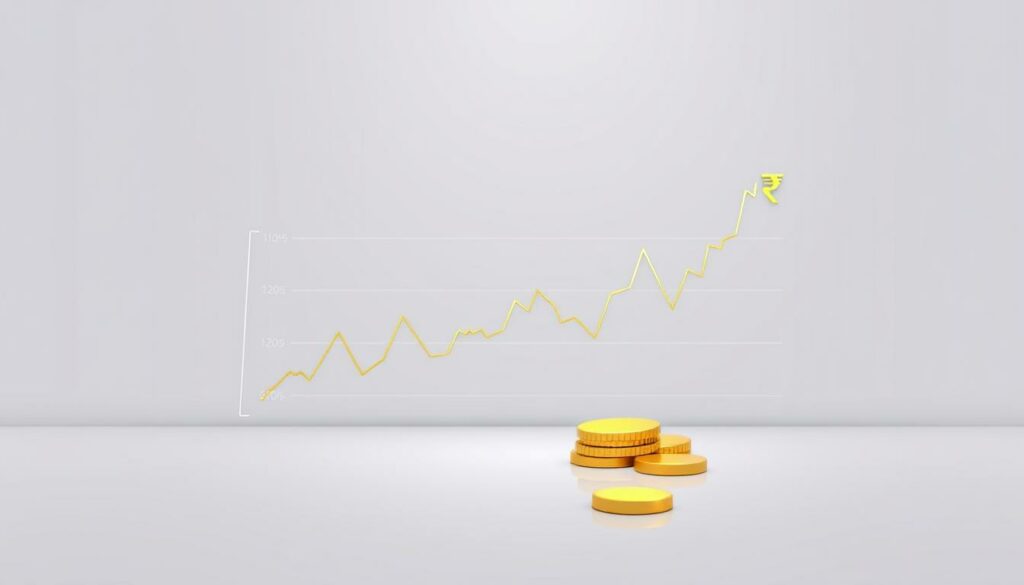
By grasping these connections, you can make smarter choices about investing in gold.
Gold’s Role in the Indian Investment Landscape
Gold is very important to Indian investors. It’s valued for its cultural and economic worth. For ages, gold has stood for wealth, safety, and cultural pride in India.
Cultural and Economic Significance
Gold is a big part of Indian culture. It’s used in many social and religious events. It’s given as a gift at weddings and festivals, showing luck and wealth.
From an economic view, gold protects against inflation and currency changes. This makes it a favorite choice for Indian investors.
Gold Demand Patterns in India vs. Global Markets
India is a top gold consumer worldwide. Its demand patterns are different from global ones. Global demand is influenced by central banks and investments. But in India, demand is mainly driven by culture and seasons.
Festival Season Impact
During festivals like Diwali and Navratri, gold demand goes up. People buy gold ornaments and coins for luck. This rise in demand often makes gold prices higher in India.
Wedding Season Trends
The wedding season, from October to December, sees a lot of gold demand. Gold jewelry is key in Indian weddings. Families buy a lot of gold for dowry or gifts.
| Season | Average Gold Demand Increase | Price Impact |
|---|---|---|
| Festival Season | 20-30% | Moderate to High |
| Wedding Season | 30-40% | High |
Knowing these demand patterns helps in making smart gold investments. By understanding gold’s cultural and economic value in India, you can predict price changes. This way, you can time your gold buys better.
Economic Factors That Simultaneously Affect Nifty and Gold
Many economic factors influence both Nifty and gold. These factors are crucial for investors to understand. They help in making smart decisions in the Indian market.
Interest Rate Cycles
The Reserve Bank of India’s (RBI) interest rate changes matter a lot. Higher rates can make the rupee stronger, which affects gold prices. It also changes borrowing costs for companies, impacting the Nifty.
Inflation Scenarios
Inflation is a big deal. When inflation rises, gold prices often go up as people look for safe investments. High inflation can also raise costs for companies, leading to higher interest rates and affecting the Nifty.
Rupee Depreciation/Appreciation Effects
The rupee’s value against the dollar matters a lot. If the rupee falls, gold becomes pricier in rupees. This also affects the Nifty by impacting exports and foreign investments.
Global Economic Uncertainties
Uncertainties in the global economy, like trade wars and conflicts, push investors towards gold. These issues can also sway the Nifty by affecting global markets and how investors feel.
Key Takeaways:
- Interest rate cycles affect borrowing costs and currency strength.
- Inflation scenarios drive investors to safe-haven assets.
- Rupee depreciation/appreciation impacts import costs and foreign investments.
- Global economic uncertainties influence investor sentiment and risk appetite.
Statistical Analysis of Nifty and Gold Correlation
Looking into the Nifty and gold correlation can help investors diversify their portfolios. This relationship is complex, shaped by many economic factors.
Long-term Correlation Coefficients (10-Year Analysis)
Over 10 years, the Nifty and gold correlation shows some trends. It has swung between positive and negative connections.
| Year | Nifty Average | Gold Average | Correlation Coefficient |
|---|---|---|---|
| 2013 | 5800 | 28000 | 0.25 |
| 2018 | 10500 | 31000 | -0.15 |
| 2023 | 18500 | 58000 | 0.40 |
The correlation coefficient has changed a lot over the years. This shows the Nifty and gold relationship is not always the same.
Short-term Divergence Patterns (1-3 Year Analysis)
In short periods, Nifty and gold sometimes move in opposite ways, especially when the economy is uncertain.
Divergence Patterns: In 2020, Nifty fell a lot because of the pandemic. But gold prices went up, showing a negative link.
Seasonal Trends in the Indian Market Context
Seasonal trends are key to understanding Nifty and gold’s connection.
Quarterly Performance Patterns
Nifty and gold’s performance changes with the seasons. For example, gold often does well in the fourth quarter because of holiday demand.
Pre-Budget and Post-Budget Movements
Before and after the budget, Nifty and gold react to government policies. Investors often change their portfolios based on these policies.
For example: Before the budget, investors might expect changes in taxes, affecting both Nifty and gold prices.
Market Sentiment: How Risk Perception Affects Nifty and Gold
Knowing how risk perception impacts Nifty and gold can change your investment game. Market sentiment is key in setting their prices. It often affects how they move together.
Risk-Off Environments and Gold Performance
In risk-off times, investors seek safe assets like gold, boosting its price. This is especially true when the economy is shaky or markets are volatile.
Key traits of risk-off times include:
- High market volatility
- Economic uncertainty
- Decline in investor confidence
Risk-On Rallies and Gold Price Pressure
On the flip side, gold prices may drop in risk-on rallies. Investors then choose riskier assets like stocks. This shift can lower gold prices as demand falls.
The effects of risk-on rallies on gold include:
- Less demand for gold
- More investment in stocks
- Possible drop in gold prices
Using VIX (Volatility Index) as a Signal for Gold Entry
The VIX, or Volatility Index, is a useful tool for timing gold buys. A high VIX suggests more market risk and volatility. This might be the best time to buy gold.
| VIX Level | Market Sentiment | Gold Investment Potential |
|---|---|---|
| Low (<20) | Low Volatility, Risk-On | Low |
| High (>30) | High Volatility, Risk-Off | High |
By grasping how market sentiment and risk perception shape Nifty and gold, you can make smarter choices. Using the VIX can help you time your gold buys better.
Technical Analysis Strategies for Timing Gold Purchases
Technical analysis gives investors a strategic edge in the gold market. It helps spot the best times to buy. By looking at past price data and chart patterns, you can predict future movements of Nifty and gold.
Key Chart Patterns That Signal Correlation Shifts
Chart patterns are key in technical analysis. They include head and shoulders, double tops, and triangles. These patterns can show when trends might change or continue. When they happen with changes in Nifty and gold’s relationship, they can be strong buy or sell signals.
Moving Average Relationships Between Nifty and Gold
Moving averages smooth out price data, making trends easier to see. By comparing Nifty and gold’s moving averages, you can see which is stronger. A crossover between short-term and long-term averages can signal a trend change.
Relative Strength Indicator Applications
The Relative Strength Index (RSI) measures price movement speed and change. It helps spot when an asset is overbought or oversold. This is true for both Nifty and gold.
Divergence Signals
Divergence happens when price and RSI move opposite ways. This often means a trend is about to flip. For example, if Nifty hits new highs but RSI falls, a downturn might be coming.
Overbought/Oversold Conditions
RSI over 70 means an asset is likely to pull back. RSI under 30 suggests it’s time to buy. These signals help predict price movements.
Using these technical analysis strategies, you can better understand Nifty and gold’s relationship. This knowledge helps make smarter investment choices.
Fundamental Indicators That Signal Optimal Gold Buying Opportunities
Understanding what affects gold prices is key for smart investing. In the world of gold investing, certain economic factors are important. They help spot the best times to buy gold.
RBI Policy Announcements and Their Impact
The Reserve Bank of India’s (RBI) policy changes can greatly affect gold prices. If the RBI lowers interest rates, gold becomes more appealing. Keep an eye on RBI announcements to see how they might change gold prices.
Quarterly GDP Data Releases
Quarterly GDP data gives us a peek into the economy’s health. If GDP growth slows, people might turn to gold as a safe choice. Use GDP data to guide your gold investment choices.
Foreign Institutional Investment Flows
Foreign Institutional Investor (FII) flows can also sway gold prices. When FIIs invest in India, gold prices often rise. Watch FII flows to predict gold price changes.
Domestic Institutional Buying Patterns
Domestic Institutional Investors (DIIs) also shape gold prices. Their buying habits show how people feel about gold. Track DII activity to understand gold price trends.
The Nifty and Gold Relationship During Major Market Events
The link between Nifty and gold is very telling during big market events. These can be financial crises or big changes in the economy. Such times often cause big swings in both Nifty and gold prices. This gives investors valuable clues.
Case Study: 2008 Financial Crisis Impact in India
In 2008, the Indian stock market, or Nifty, dropped sharply. But gold prices went up as people looked for safe places to put their money. This showed gold’s role as a shield during tough financial times.
Case Study: 2016 Demonetization Effects
India’s 2016 demonetization policy caused the stock market to wobble, with Nifty prices changing a lot. But gold prices stayed steady, showing a move towards safety. This showed gold’s ability to keep calm during big economic changes at home.
Case Study: 2020 Pandemic Market Movements
The COVID-19 pandemic brought global economic worries, making Nifty drop sharply in March 2020. But gold prices went up a lot as people around the world looked for safe places. This example shows gold’s role in reducing risk during big health crises.
Case Study: Recent Inflation Surge (2021-2023)
When inflation went up recently, Nifty showed it could handle the pressure. Gold prices also went up, showing worries about inflation eating into buying power. This time showed the tricky dance between Nifty and gold when inflation is high.
In conclusion, looking at how Nifty and gold interact during big market events is key for investors. By grasping their relationship in different economic times, you can make better investment choices.
- Key Takeaways:
- Gold acts as a safe-haven during financial crises.
- Domestic policy shocks can influence Nifty more than gold.
- Global events like pandemics impact both Nifty and gold.
- Inflationary periods see a complex interplay between Nifty and gold.
Creating a Balanced Portfolio Using Nifty and Gold
For Indian investors, knowing how to mix Nifty and gold is crucial. A mix of Nifty and gold can help manage risks and boost returns. The right mix can protect against market ups and downs and economic surprises.
Optimal Allocation Strategies for Indian Investors
Finding the best mix between Nifty and gold depends on several things. These include your investment goals, how much risk you can take, and the market’s state. A common approach is to put more in Nifty for long-term growth and less in gold as a safety net.
- Think about your investment time frame: Longer times might mean more Nifty.
- Look at your risk level: More risk means more Nifty.
- Watch the market: Change your mix based on market trends and economic signs.
Rebalancing Techniques Based on Correlation Shifts
It’s important to rebalance your portfolio regularly. This keeps your mix of Nifty and gold in line with your goals. When the relationship between Nifty and gold changes, you might need to adjust your investments.
- Check your portfolio often to see if it’s off track.
- Adjust your portfolio by buying or selling to get back on track.
- Think about taxes and costs when rebalancing.
Age-Based Asset Allocation Models
Age-based models suggest changing your investment mix based on your age. Younger people might put more in Nifty for growth. Older folks might choose more gold for stability.
Key Considerations:
- Younger investors (20-40 years): More Nifty for growth.
- Middle-aged investors (40-60 years): Balanced mix of Nifty and gold.
- Retirees (60+ years): More gold for keeping capital safe.
By using these strategies, you can build a balanced portfolio. It will meet your investment needs and handle the Indian market’s challenges.
Common Mistakes When Using Nifty Trends for Gold Timing
Using Nifty trends for gold purchases can lead to costly errors. Investors often make avoidable mistakes. Knowing the right strategies can help.
Misinterpreting Short-term Market Noise
One big mistake is seeing short-term market changes as major trends. Daily or weekly Nifty changes don’t always show long-term patterns. To avoid this, look at longer trends and use technical indicators to filter out market noise.
Ignoring Global Gold Price Drivers
Another error is overlooking global factors that affect gold prices. Nifty trends are valuable but not the only influence. Consider international trends, geopolitical issues, and currency changes for better decisions.
Overlooking Seasonal Factors Specific to India
Indian investors should watch for seasonal gold price impacts. The festival season and wedding months increase demand. Knowing these patterns helps in making better investment choices.
Gold Investment Vehicles Available to Indian Investors
Indian investors have many gold investment options. Each option has its own benefits and features. The right choice depends on your financial goals, how much risk you can take, and how long you plan to invest.
Physical Gold: Coins, Bars, and Jewelry
Buying physical gold is a common choice in India. You can find gold coins, bars, and jewelry at banks, jewelers, or online. Physical gold is real, but it costs more, like making charges for jewelry and storage.
Digital Gold Platforms
Digital gold platforms are a new and easy way to invest in gold. They let you buy, sell, and store gold online. You can also get physical gold if you want. Digital gold is cheaper and doesn’t need personal storage.
Gold ETFs and Gold Mutual Funds
Gold ETFs and gold mutual funds track gold prices. They trade on stock exchanges, making it simple to buy and sell. These funds are a paper form of gold investment, offering better liquidity and no need for physical storage.
Sovereign Gold Bonds and Their Advantages
Sovereign Gold Bonds (SGBs) are government securities backed by gold. They offer unique benefits, including:
- Earning interest on your gold investment
- Protection against gold price volatility
- Tax benefits
Interest Component
SGBs give a fixed interest rate, paid twice a year. This provides a steady income. It makes SGBs a good choice for those looking for income.
Tax Benefits
Investing in SGBs can save you on taxes. You won’t pay capital gains tax if you hold the bonds until they mature. The interest earned is taxable, but you can plan for it in your taxes.
In conclusion, Indian investors have many gold investment options. Each has its own benefits and things to consider. Knowing these options helps you make choices that fit your investment goals and risk level.
Tax Implications of Gold vs. Equity Investments in India
Investing in gold or equity in India comes with tax implications. Knowing how taxes work for each can boost your returns. Gold and equity investments are taxed differently, so understanding these differences is key.
Short-term vs. Long-term Capital Gains Treatment
Capital gains tax is a big factor in gold and equity investments. Long-term capital gains (LTCG) and short-term capital gains (STCG) have different tax rates. For equity, LTCG kicks in after 12 months. Gold’s LTCG applies after 36 months. Knowing these periods helps in planning your investments.
Physical Gold Taxation vs. Paper Gold Taxation
Gold investments are taxed differently based on whether they’re physical or paper. Physical gold, like coins or jewelry, faces capital gains tax when sold. Paper gold, like Gold ETFs, has its own tax rules. For example, Sovereign Gold Bonds are tax-free if held until maturity.
Tax-Efficient Investment Structures for Different Income Brackets
Your income level affects the tax efficiency of gold or equity investments. If you’re in a higher tax bracket, options like Sovereign Gold Bonds or Equity-Linked Savings Schemes (ELSS) can lower your taxes. It’s important to pick investments that fit your financial situation and reduce your tax burden.
Practical Strategies for Timing Gold Purchases Using Nifty Movements
The link between Nifty and gold can help you make smart investment choices. Knowing how they interact lets you plan the best times to buy gold.
The “Nifty Peak” Gold Buying Strategy
This strategy is about buying gold when the Nifty index hits its highest point. History shows that at these peaks, the Nifty often drops or goes into a bear phase. This makes investors turn to gold as a safe choice.
The “Correction Completion” Entry Method
Another way is to wait until the Nifty correction is over before investing in gold. This method needs patience and a solid grasp of market trends.
Systematic Investment Plans with Market Timing Overlays
You can also use systematic investment plans (SIPs) with market timing overlays for gold. This means investing a set amount regularly, adjusting it based on Nifty changes.
Dollar-Cost Averaging with Correlation Awareness
Dollar-cost averaging means investing a fixed amount in gold at set times, no matter the market. Knowing how Nifty and gold relate helps you improve your investment strategy.
| Strategy | Description | Risk Level |
|---|---|---|
| Nifty Peak | Buy gold when Nifty peaks | Medium |
| Correction Completion | Invest after Nifty correction completes | Low |
| SIP with Market Timing | Invest fixed amount with adjustments based on Nifty | Medium |
| Dollar-Cost Averaging | Invest fixed amount at regular intervals | Low |
Using these practical strategies can help you make better choices about when to buy gold. This could lead to higher returns.
Conclusion: Becoming a Strategic Gold Investor in the Indian Market
By learning about Nifty and gold, you’re ready to make smart investment choices. This knowledge helps you get the most out of your investments in the Indian market. It’s a step towards becoming a strategic gold investor.
The Indian market has many ways to invest in gold, like physical gold and digital options. Knowing how Nifty trends work can help you buy gold at the right time. This strategy can boost your returns.
To do well, keep up with market trends and global events. These factors affect both Nifty and gold. By staying informed, you can make choices that fit your financial goals.
Remember, being a strategic gold investor means always learning and staying alert. With dedication, you’ll improve your gold investments in the Indian market.