




Exclusive Deals & Trending Items




You might not see the link between weather and gold purchases at first. But, about 60% of India’s gold demand comes from rural areas. The country’s agricultural sector greatly influences gold price trends.
The monsoon season is key for farming success. This affects rural income and gold purchasing power. So, knowing how monsoons and historical gold prices in india are connected is important for both investors and buyers.
Key Takeaways
- The monsoon season significantly impacts India’s agricultural sector.
- Rural demand accounts for a substantial portion of India’s gold demand.
- Bountiful harvests enable Indian farmers to invest in gold.
- Understanding the monsoon-gold price relationship is vital for investors.
- Rural income and gold purchasing power are closely linked.
The Golden Connection: Monsoons and India’s Precious Metal Market
India’s gold market is closely tied to the monsoon cycle. This connection greatly affects annual gold price fluctuations in India. The monsoon season, from June to September, is key for the country’s crops. This season also impacts gold demand.
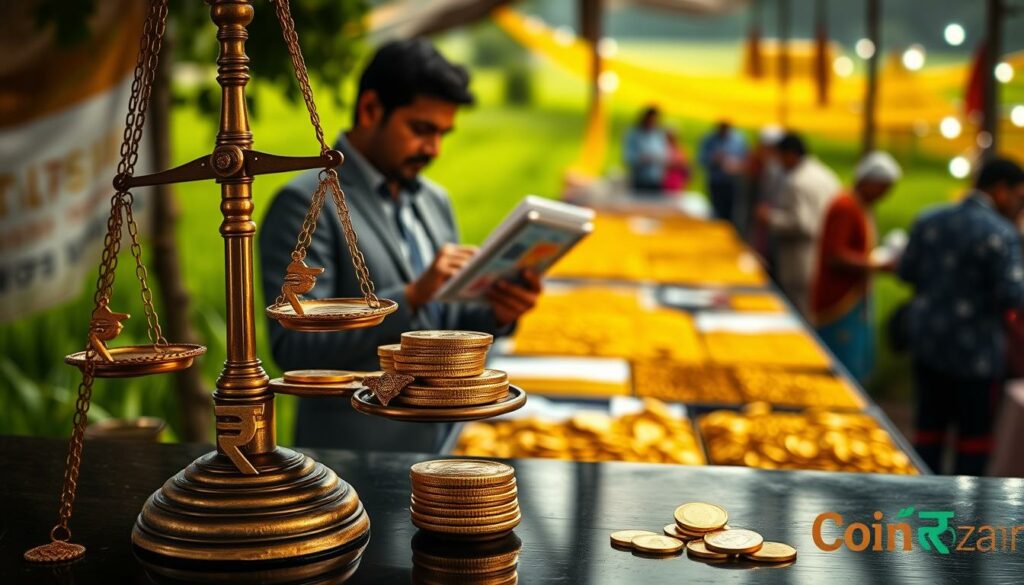
So, how do monsoons affect gold prices? It’s all about gold’s cultural importance in India.
The Cultural Significance of Gold in Indian Society
Gold is more than just a valuable metal in India. It plays a big role in religious events, family traditions, and as a financial safety net.
Gold in Religious Ceremonies and Family Traditions
In India, gold is a big part of weddings and festivals. Brides often wear gold jewelry to symbolize wealth and luck. Gold ornaments are also given to family members during important events, strengthening family ties and cultural heritage.
Gold as Financial Security in Indian Households
Many Indian families, mainly in rural areas, see gold as a way to save money. Gold jewelry is not just fashionable but also seen as an investment. This is because many farmers and rural people buy gold due to lack of bank access.
It’s important to understand the cultural side of gold to see how monsoons and rural demand shape india gold rate data and the indian gold market analysis. Monsoons impact farm income, which affects rural families’ ability to buy gold, influencing prices.
Understanding India’s Position in the Global Gold Market
India plays a big role in the global gold market. Its gold use affects prices worldwide. The country’s love for gold, economic activities, and monsoons all impact its demand.
India as a Major Gold Consumer
India is known for its love of gold. Gold is a big part of festivals and weddings. India is the second-largest gold-consuming country, affecting global prices.
Consumption Statistics and Global Ranking
India’s gold use is high, ranking it among the top globally. The success of the monsoon season also affects demand for the rest of the year.
| Year | Gold Consumption in India (Tonnes) | Global Ranking |
|---|---|---|
| 2020 | 600 | 2 |
| 2021 | 700 | 2 |
| 2022 | 800 | 2 |
Regional Distribution of Gold Demand Within India
Gold demand in India varies by region. Certain areas, like rural ones, have higher demand. Knowing these differences helps understand India’s gold use.
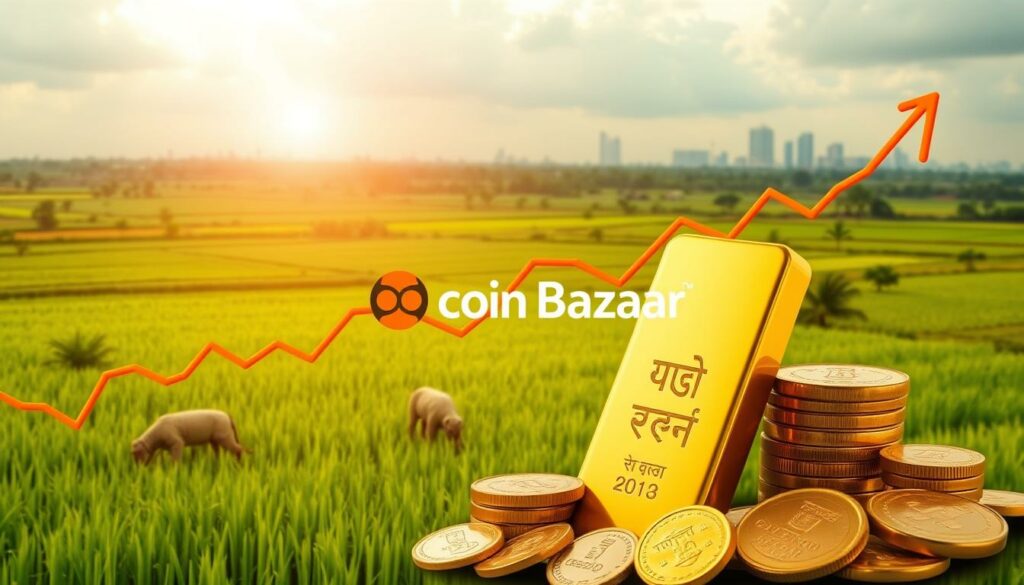
Looking at India’s role in the global gold market helps us see how local factors affect prices. Its big gold use, culture, and economy make it key in the global market.
The Monsoon Cycle and Its Economic Importance
Understanding the monsoon cycle is key to seeing its economic role and effect on gold prices in India. The monsoon season, from June to September, is vital for India’s farms. It brings most of the country’s rain. As Dr. S. S. Iyengar, a renowned climatologist, once noted, “The monsoon is not just a weather phenomenon; it’s the backbone of India’s economy.”
The monsoon’s economic value is huge. A strong monsoon boosts farm output, raises rural income, and affects gold demand. On the other hand, a weak monsoon can cause drought, lower farm productivity, and reduce gold buying power.
Timing and Regional Distribution of Monsoon Rains
The timing and where the monsoon rains fall are key to farm output. India’s monsoon season has two main types: the Southwest and Northeast monsoons.
Southwest and Northeast Monsoon Patterns
The Southwest monsoon starts in June and rains over most of India. The Northeast monsoon, from October to December, affects the south. Knowing these patterns helps predict farm productivity.
Critical Rainfall Periods for Agriculture
Certain times in the monsoon are critical for crops. For example, kharif crops like rice and cotton need the Southwest monsoon rains. As
“A good monsoon is like a blessing for Indian farmers, it can make or break their livelihood,”
said
Rural India: The Powerhouse of Gold Consumption
Rural India is key to the country’s gold demand. About 65% of Indians live in rural areas. Nearly half of them make their living from farming. This makes rural India a big part of the nation’s gold use.
Agricultural Income and Purchasing Power
The success of farming affects how much money rural families have. When farmers do well, they have more money to spend. This can mean more gold bought.
Crop Yield to Disposable Income Correlation
A good monsoon means better crops and more money for farmers. This extra money often goes to buying gold. Farmers see gold as a way to save and for cultural reasons.
Rural Credit and Gold Buying Capacity
Having access to credit is also important for buying gold. When farmers can get credit, they buy more gold, like during big festivals. Credit makes the impact of farming income on gold demand stronger.
Some key statistics show how important rural India is for gold:
- About 45% of Indian farmers rely on rain for their agricultural activities.
- Nearly half of the rural population derives their income from agriculture.
- Rural gold demand is significantly influenced by agricultural income and crop yields.
In conclusion, rural India’s gold use is closely tied to farming income and the farming sector’s success. Knowing this helps understand India’s gold prices each year and what affects them.
Seasonal Patterns in India’s Gold Prices Every Year
The price of gold in India changes with the seasons. This is due to things like monsoon forecasts and festival times. Knowing these trends helps investors and buyers make smart choices about gold.
Pre-Monsoon Market Behavior
Before the monsoon, the gold market in India gets excited. People buy more gold hoping for a good monsoon. This is because a good monsoon means more money for farmers and better buying power in rural areas.
Anticipatory Buying and Selling Trends
Investors and buyers change their plans based on monsoon forecasts. If they think the monsoon will be good, they buy more gold. This is because they expect farmers to have more money to spend.
Price Forecasting Based on Meteorological Predictions
Weather forecasts are key in predicting gold prices. When experts say the monsoon will be good, gold prices can go up. This is because people adjust their buying and selling plans based on these forecasts.
Here’s a quick look at how seasons impact gold demand in India:
| Season | Gold Demand Trend | Influencing Factors |
|---|---|---|
| Pre-Monsoon | Moderate | Monsoon forecasts, anticipatory buying |
| Monsoon | Low | Rural income uncertainty, festival demand |
| Post-Monsoon (Festival Season) | High | Harvest income, festival demand (e.g., Diwali) |
By grasping these seasonal trends and their reasons, you can navigate India’s gold market better. This helps you make more informed investment choices.
The Harvest-Gold Price Correlation
Kharif harvests lead to more money for farmers, which can increase gold demand. This affects gold prices in India. The link between farming and gold buying is clear.
Kharif Crop Harvest and Gold Purchasing
The kharif harvest is a big deal in India, impacting many farmers. A good harvest means more money for farmers. Some of this money goes into buying gold.
This higher demand for gold can push prices up across the country.
Rice, Cotton, and Sugarcane Regions’ Gold Demand
Places that grow rice, cotton, and sugarcane see more gold buying after a good harvest. Punjab and Haryana, for example, buy more gold after a successful wheat and rice season. Cotton and sugarcane areas in Maharashtra and Gujarat also see a jump in gold demand.
Timing of Post-Kharif Gold Price Movements
Gold prices often go up a few months after the harvest. This is because farmers invest their extra money in gold after the harvest. It takes time for the harvest’s benefits to reach farmers.
Knowing how the kharif harvest affects gold prices is useful. It helps investors and policymakers understand the market better. By watching farming and its impact on rural incomes, you can guess gold price changes.
Festival Season: When Gold Demand Peaks
In India, the festival season is when gold demand soars, hitting its peak around Diwali and Dhanteras. The end of the monsoon and the harvest season kick off this special time. It’s filled with cultural celebrations and a big jump in gold demand.
Diwali and Dhanteras Gold Buying Traditions
Dhanteras, just before Diwali, is India’s biggest gold buying day. Buying gold during Diwali is a tradition that brings prosperity and good luck. Knowing the trends and patterns of these festivals can be very helpful.
Gold buying during Diwali is more than just a tradition. It’s believed to bring luck and prosperity. This leads to a big increase in gold prices as jewelers and buyers get ready for the peak season.
Historical Price Trends During Festival Weeks
Gold prices have historically gone up during the festival season. Here are some key points:
- Gold prices often peak around Dhanteras due to high demand.
- The weeks before Diwali see a rise in gold purchases.
- After Diwali, prices might drop a bit as people sell off their gold.
Urban-Rural Differences in Festival Purchases
Gold buying patterns differ between urban and rural India during festivals. Urban areas prefer modern designs and see gold as an investment. Rural areas, on the other hand, prefer traditional designs and view gold as a symbol of prosperity.
These differences impact the types of gold products in demand. For example:
- Rural areas buy more traditional and heavy gold ornaments.
- Urban buyers often look for new designs and might prefer gold coins or bars as investments.
Knowing these differences can help you make better gold investment choices during the festival season.
Historical Analysis: Monsoon Failures and Gold Price Movements
Looking into the past can help us understand how monsoon failures affect gold prices in India. It shows how weather and economy are connected. By studying past trends, we can see how these factors influence each other.
In India, monsoons and gold demand are closely linked. When monsoons fail, droughts hurt farming. This reduces incomes in rural areas, making people buy less gold.
Case Studies of Drought Years
Let’s look at times when monsoon failures really impacted gold prices.
The 2009 Drought and Gold Market Response
In 2009, India saw a bad drought because of too little rain. This hurt farming, cutting rural incomes. As a result, people bought less gold jewelry, down by about 4% that year.
Key statistics for 2009:
- Monsoon rainfall: 77% of the long-term average
- Gold jewelry consumption change: -4%
- Silver demand change: -15%
The 2014-2015 Below-Average Rainfall Period
In 2014-2015, India again saw less rain, hurting farming. This cut rural incomes, affecting gold demand. During this time, global trends more than local demand influenced gold prices.
“The impact of drought on gold demand is significant, as it directly affects rural incomes and purchasing power.” – Industry Expert
Below is a table showing how monsoon rainfall and gold demand are linked in some years.
| Year | Monsoon Rainfall (% of average) | Gold Jewelry Consumption Change (%) |
|---|---|---|
| 2009 | 77 | -4 |
| 2014 | 88 | -2 |
| 2015 | 86 | -1.5 |
By studying these examples, we can grasp the complex link between monsoon failures and gold prices in India. This knowledge aids in making better gold investment decisions and predicting market trends.
Urban vs. Rural Gold Buying Patterns
India’s gold market shows different patterns in cities and rural areas. Knowing these differences helps us understand gold demand better.
Different Motivations for Gold Investment
In cities, people see gold as a smart investment. They use it to protect against inflation or to diversify their wealth. In contrast, rural folks buy gold for cultural reasons like weddings and festivals. They also see it as a traditional way to save wealth.
Investment vs. Cultural Purchasing Decisions
Urban Indians make gold investment choices based on financial goals and market trends. They buy gold when prices are low. Rural gold purchases, though, are often for cultural and social events. For example, gold jewelry is a key gift at weddings and festivals.
“Gold is not just a commodity in India; it’s a cultural phenomenon. In rural areas, it’s often seen as a symbol of prosperity and is used in various ceremonies and rituals.”
Gold Loan Trends in Different Demographics
Gold loan trends differ between cities and rural areas. In rural India, gold loans help farmers or people in financial need. Many farmers buy gold because they lack bank accounts. In cities, gold loans are used for personal or business needs.
| Demographic | Primary Motivation for Gold Purchase | Common Use of Gold Loans |
|---|---|---|
| Urban | Investment and diversification | Personal financial needs, business purposes |
| Rural | Cultural and traditional reasons | Agricultural purposes, financial emergencies |
Understanding these differences helps us see the complex role of gold in India. Gold serves many purposes, from investment to cultural practices, in both cities and rural areas.
Government Policies Affecting Gold Prices in India
It’s key for investors and buyers in India to grasp how government policies shape gold prices. The government’s moves on import duties, taxes, and rules can greatly affect gold’s cost.
Import Duties and Regulations
Import duties on gold are a big deal in India. The government uses these duties to manage gold imports and cut the current account deficit.
Historical Changes in Gold Import Rules
The Indian government has tweaked gold import rules over time. For example, in 2013, it raised import duty on gold from 2% to 10%. This move made gold pricier for buyers.
Tax Structure Impact on Retail Prices
The tax on gold also affects its retail price. The Goods and Services Tax (GST) in 2017 made taxes simpler. Yet, the tax load is heavy. Remember these taxes when looking at gold prices.
The government’s ban on 2,000-rupee notes in the second quarter might have boosted gold demand.
As an investor or buyer, knowing about these policies is vital. It helps you understand how they might change gold prices. This knowledge aids in better investment choices.
Climate Change: The New Variable in Gold Price Prediction
The impact of climate change on monsoon patterns is key to understanding gold price changes in India. Climate change is making weather patterns unpredictable, affecting the Indian monsoon.
Changing Monsoon Patterns
In 2024, India is expected to see 106 percent of normal rainfall for the first time in eight years. This is partly thanks to La Niña, which should help the monsoon. But, the long-term future is uncertain because of climate change.
Scientific Projections for Indian Monsoons
Scientists say the Indian monsoon will become more unpredictable. Some years might see a lot of rain, while others could face severe droughts.
Increased Volatility and Market Uncertainty
The changing monsoon patterns will likely make the market more volatile. This will affect gold demand. Investors should be ready for these changes.
| Year | Projected Monsoon Rainfall | Expected Impact on Gold Prices |
|---|---|---|
| 2024 | 106% of normal | Potentially stable or slightly higher |
| 2025 | Uncertain due to climate change | Possibly more volatile |
It’s important for investors to understand these changes and their impact on market volatility. As climate change introduces new variables to gold price predictions, staying updated is key for smart investment choices.
How to Track Monsoon-Gold Price Relationships
To understand how monsoons affect gold prices, you need to watch economic and weather signs closely. By tracking these, you can see how gold prices might change.
Key Indicators to Monitor
There are two main things to look at: weather data and reports on farming.
Meteorological Data Sources and Analysis
Weather data is key for knowing about monsoon patterns. You can find this data from government and private weather services. Looking at this data helps us see how it might affect farming and gold prices.
Farming is very much tied to monsoon rains. Reports on crops and forecasts tell us about rural income and buying power. This affects gold demand. Government and private groups publish these reports often.
Watching these signs helps you make better choices about gold investments. For example, investing in gold companies, like those in the royalty sector, can offer a good mix.
Future Outlook: Evolving Factors in India’s Gold Market
Are you curious about India’s gold market future? With the rural landscape changing, several factors will shape its future. These include demographic shifts and how people move from rural to urban areas.
Changing Rural Demographics
The shift in rural demographics is affecting the gold market. We need to look at two main points. These are the preferences of the young and how migration impacts gold demand.
Youth Preferences and Traditional Gold Buying
Young people in rural India are changing their views on gold. While traditional gold buying is strong, there’s a move towards new investment options. For example:
- More interest in digital gold
- Preference for modern gold jewelry designs
- Understanding gold as an investment
Rural-Urban Migration Effects on Gold Demand
Rural-urban migration is also changing gold demand. As people move to cities, their buying habits evolve. This could lead to:
- Switch to urban gold styles
- More digital gold investment
- Changes in when and how gold is bought
Will Indians keep buying gold and silver, even with higher prices? The changing demographics and migration will be key in shaping India’s gold market future.
Conclusion: The Enduring Relationship Between Monsoons, Rural Prosperity, and Gold
The link between monsoons, rural wealth, and gold prices in India is deep and complex. About 60% of gold demand comes from rural areas. Here, farming income and buying power greatly depend on the monsoon cycle.
The way monsoons, farming output, and rural demand interact shapes India’s gold prices yearly. When monsoons boost rural wealth, it boosts gold demand. This chain reaction affects gold prices.
It’s key for investors, buyers, and anyone into India’s gold market to grasp this. Knowing how monsoons and gold prices are linked helps in making better investment and buying choices.
As India’s economy grows, the bond between monsoons, rural prosperity, and gold demand will stay vital. It will keep influencing India’s gold prices every year.