




Investing in precious metals requires knowing the bullion industry. This industry has many players, like the Indian Mint, private mints, and international refiners. Each one has a special role in making and selling precious metals.
As an investor, it’s important to understand the differences between these players. The Indian Mint makes coins and bars with government guarantees. Private mints offer a variety of products with different qualities and authenticity. On the other hand, international refiners are known for their top-notch refining.
This article will help you understand the differences between these players. It will guide you through the complex world of precious metal investments.
Key Takeaways
- Understand the role of the Indian Mint in producing government-backed precious metals.
- Learn about the products offered by private mints and their varying quality.
- Discover the significance of international refiners in the global bullion industry.
- Gain insights into the factors to consider when choosing between Indian Mint, private mints, and international refiners.
- Make informed investment decisions with a deeper understanding of the bullion industry.
The Fundamentals of Minting and Refining
Minting and refining are key in the world of precious metals. They affect everything from coins to investment products. As an investor or collector, knowing these processes helps you make better choices.
The Critical Role of Mints in the Precious Metals Ecosystem
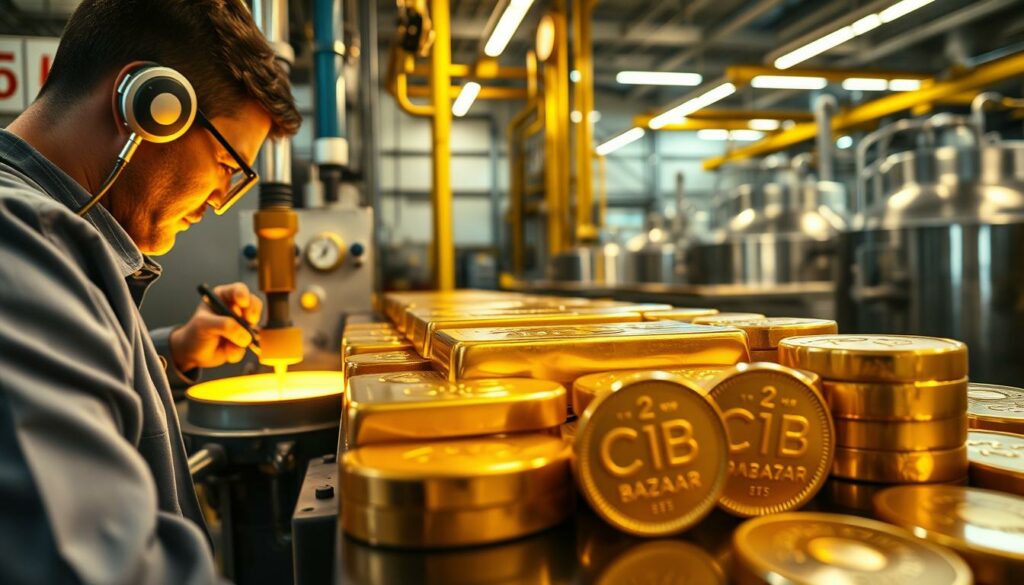
Mints are essential in the precious metals world. They create coins, bars, and more that investors and collectors want. These places make sure the quality and realness of precious metals products are top-notch.
Distinguishing Between Minting and Refining Processes
Minting turns precious metals into shapes like coins or bars. Refining, on the other hand, purifies metals to a high purity level. Knowing the difference helps you understand the value and realness of precious metals.
Understanding minting and refining helps you move through the precious metals market better. It leads to smarter investment choices.
The Indian Mint: Heritage and Authority
The Indian Mint is a place of great history and importance. It’s key to understanding numismatics. Knowing about the Indian Mint is essential.
Historical Evolution of India’s Sovereign Mint
The Indian Mint has a long history, starting in the colonial era. It was first set up by the British East India Company. Over time, it has changed a lot, keeping up with India’s growth.
The mint’s growth shows India’s rich numismatic history. It mirrors the country’s cultural and economic progress.
Now, the Indian Mint is important for making coins, medals, and special items. These are known for their quality and skill.
The Four Pillars: Mumbai, Kolkata, Hyderabad, and Noida Mints
The Indian Mint works in four main places: Mumbai, Kolkata, Hyderabad, and Noida. Each mint has its own story and helps make the mint’s products. They offer a wide range of items, meeting different needs and tastes.
- Mumbai Mint: Known for its high-quality coinage
- Kolkata Mint: One of the oldest mints in India, with a rich heritage
- Hyderabad Mint: Recognized for its precision and craftsmanship
- Noida Mint: A modern mint with state-of-the-art technology
Product Portfolio: Coins, Medals, and Commemorative Items
The Indian Mint makes many things, like coins, medals, and special items. These items are valuable not just for their money worth. They also hold historical and cultural value. The mint makes all sorts of coins, medals, and other numismatic items.
Private Mints in India: Entrepreneurial Innovation
India’s private mints are changing the precious metals industry. They use new ideas and focus on what customers want. Knowing about these mints is key when you look into bullion and coins.
Defining Characteristics
Private mints in India stand out for their entrepreneurial innovation and quickness to adapt. They listen to what the market and customers need. This lets them offer unique custom minting services, appealing to both investors and collectors.
Prominent Private Mints
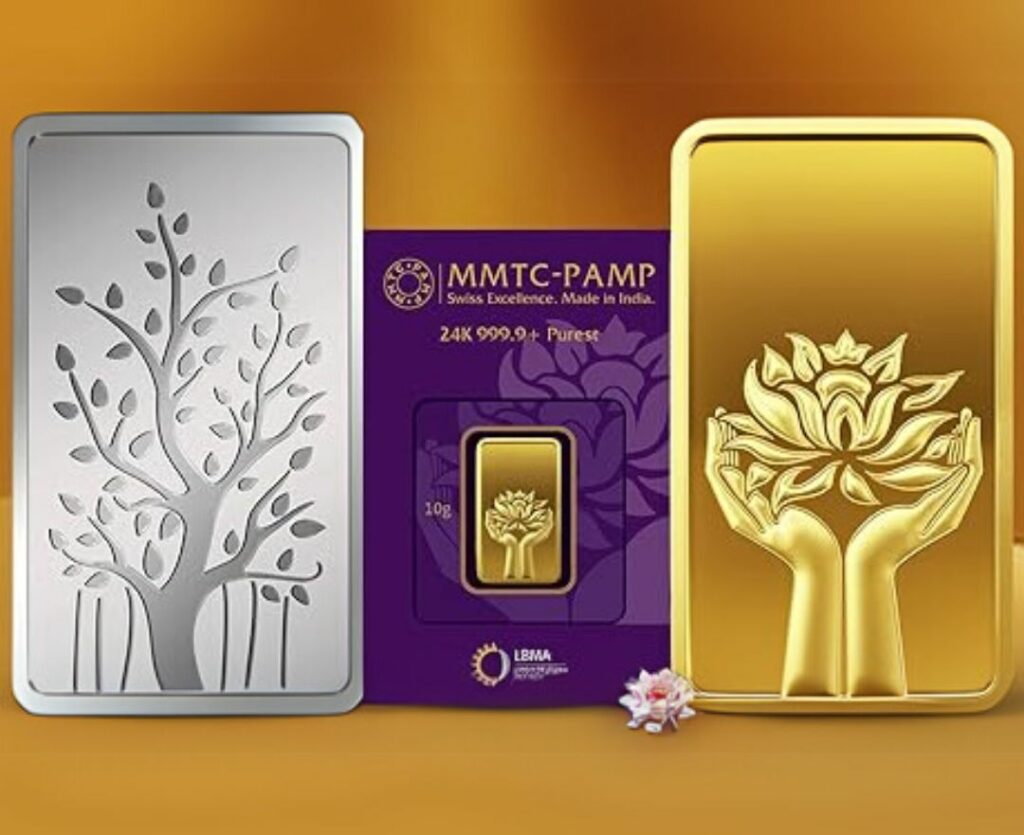
Some private mints in India have become well-known. Companies like MMTC-PAMP India Pvt. Ltd., Safid Metals, and others are praised for their quality and new minting methods. They make bullion coins and bars, and also provide customized minting services for businesses and special occasions.
Niche Markets
Private mints in India are also reaching out to special markets. They create unique items like commemorative coins, medals, and collectibles. Their ability to innovate and keep up with trends has helped them grow in the domestic bullion market. Knowing what these mints offer can help when you think about investing in precious metals.
International Refiners: Global Standards and Reach
International refiners like PAMP and Valcambi lead in setting global standards in the precious metals industry. Their work affects the global bullion market, even beyond their own areas.
Industry Giants such as PAMP and Valcambi are known for their quality and integrity. They refine and mint precious metals that investors and collectors all over the world want.
Industry Giants: PAMP, Valcambi, and Other Major Players
PAMP (Produits Artistiques Métaux Précieux) and Valcambi are famous for their top-quality products and wide distribution. Other big names like Metalor and Rand Refinery also play a big part in the global precious metals market.
Product Diversity and Market Penetration
These international refiners make a wide range of products, like coins, bars, and more. Their success in reaching different markets shows their global influence and the trust investors have in them.
| Refiner | Notable Products | Market Presence |
|---|---|---|
| PAMP | Coins, Bars, Ingots | Global |
| Valcambi | Bars, Coins, CombiBars | Global |
| Metalor | Bars, Coins, Jewelry | Global |
International Accreditations and Industry Recognition
International refiners are praised for sticking to strict quality standards. They have earned many accreditations. These show their dedication to excellence and their role in setting global standards.
By keeping high standards and innovating, refiners like PAMP and Valcambi make sure their products meet the global market’s changing needs.
Indian Mint, Private Mints & International Refiners: A Comparative Look
Choosing between Indian Mint, Private Mints, and International Refiners can be tough. It’s important to know the differences to make smart choices.
Operational Scale and Manufacturing Capabilities
The size and ability of these entities differ a lot. The Indian Mint, backed by the government, can make lots of coins and other items. Private Mints are flexible and innovative, serving specific markets. International Refiners like PAMP and Valcambi have big global presence and advanced tech.
Indian Mint has four big branches, making it great for large production. Private Mints might not make as much but offer unique solutions. International Refiners use top technology for big refining and minting jobs.
Quality Assurance Protocols and Standards
All three focus on quality, but in different ways. The Indian Mint sticks to strict government rules for quality. Private Mints have their own quality checks, sometimes getting international approval. International Refiners are known for their strict quality standards, meeting global benchmarks.
The Indian Mint follows Bureau of Indian Standards guidelines. Private Mints might get ISO 9001 certification. International Refiners get approval from many international groups, showing their trustworthiness.
Market Position and Brand Recognition
Being well-known in the market is key for success. The Indian Mint is respected in India because of its government link. Private Mints focus on certain products or customers. International Refiners, like PAMP and Valcambi, are leaders worldwide for quality.
The brand recognition of International Refiners stands out, trusted globally. The Indian Mint’s history and government support help its market standing.
Production Technologies and Methodologies
Mints now use advanced technologies to make coins, medals, and more. This change aims to improve quality and efficiency. It’s all about meeting high standards.
Traditional vs. Modern Minting Techniques
For centuries, mints have used traditional methods like hammering. Now, they use computer-aided design (CAD) and CNC machining. This makes designs more complex and precise.
“The integration of technology has revolutionized the minting process, enabling the production of complex designs with high precision and consistency.”
Precision Engineering and Die Craftsmanship
Precision engineering is key in making minting dies. Advanced techniques make dies last longer and produce better coins. This has greatly improved the quality of minted items.
Technological Innovations Across Different Mint Types
Government, private, and international mints use new tech to improve. Some use laser technology for security features. These innovations boost quality, cut costs, and speed up production.
In summary, mints have made big strides in technology. This is to meet quality demands and work more efficiently. We’ll likely see more advancements in the future.
Quality Standards and Authentication Processes
Keeping precious metal products genuine is key. As a buyer, you want to know your items are top-notch. Hallmarking and certification are vital in ensuring this.
Hallmarking Systems and Certification Protocols
Hallmarking checks the purity of metals. In India, the Bureau of Indian Standards (BIS) handles this. BIS standards make sure products are pure, protecting buyers.
BIS Standards for Indian Products
The BIS sets strict rules for metal products in India. These rules are a must for items sold here. They ensure products are pure enough.
International Certification Bodies
Worldwide, groups like PAMP and Valcambi are known for their quality checks. They follow global rules. This means products are real and of high quality.
Anti-Counterfeiting Measures and Security Features
Mints and refiners fight fake products with special security steps. They use detailed designs, micro-engraving, and more. These steps make it hard to fake products.
| Feature | Description | Benefit |
|---|---|---|
| Hallmarking | Purity certification | Ensures authenticity |
| Micro-engraving | Intricate designs | Deters counterfeiting |
| Serial Numbering | Unique identifiers | Enhances traceability |
Knowing about quality and checks helps you choose the right precious metal items.
Pricing Dynamics and Value Considerations
When you explore the market for precious metals, knowing the pricing dynamics is key. The value of your investments is shaped by several factors. These include the type of mint, the refining process, and market demand.
Premium Structures Across Different Mint Types
The premium for precious metal products changes with different mints. Indian Mints usually have lower premiums because of lower costs. Private mints might offer good prices but can vary based on their reputation and products.
Cost Drivers in Minting and Refining
Many factors affect the cost of minting and refining precious metals. These include raw material costs, labor, technology, and regulatory compliance. For example, adding advanced security features can raise production costs. Knowing these costs helps you make better choices when buying precious metals.
Long-term Value Retention Analysis
Investing in precious metals means thinking about long-term value. These metals have kept their value, but how much they appreciate can change. The table below shows how different precious metal products hold their value over time.
| Product | 1-Year Retention | 5-Year Retention | 10-Year Retention |
|---|---|---|---|
| Indian Mint Gold Coins | 5% | 20% | 50% |
| International Refiner Gold Bars | 4% | 18% | 45% |
| Private Mint Silver Coins | 3% | 15% | 40% |
Understanding the pricing and value of precious metals helps you invest wisely. This way, you can reach your financial goals.
Market Accessibility and Distribution Channels
How you get precious metal products can really change your investment journey. Knowing the different ways to buy is key to smart choices.
Purchasing Directly from the Indian Mint
Buying from the Indian Mint means you get real quality and trust. The Indian Mint, backed by the government, guarantees top-notch products. You can find coins and special items on their website or at approved places.
Private Mint Distribution Networks
Private mints in India have their own ways to sell their products. They use dealers and online sites. Private mints have a wide variety of items for all kinds of investors.
Importing and Acquiring International Refiner Products
If you want products from international refiners, you have choices. You can buy directly from big names like PAMP or Valcambi through dealers or online. This opens up more options and might save you money.
Investment Considerations: Collectibility vs. Bullion Value
As an investor, you’ll find many precious metal products. Each has its own mix of collectibility and bullion value. Knowing these two key areas can greatly shape your investment choices.
Numismatic Premium Factors
The numismatic premium is key for both collectors and investors. It’s the extra value given to a coin or medal because of its rarity, history, or beauty. Numismatic premium factors can greatly affect a product’s total cost. For example, rare coins or those with special minting errors often have a higher premium because of their rarity.
When looking at numismatic premium factors, think about:
- Rarity and mintage numbers
- Historical or cultural significance
- Condition and grading
- Market demand
Liquidity Comparison Between Different Mint Products
Liquidity is important for investors. It shows how easy it is to buy or sell a product without big price changes. Different mint products have different levels of liquidity. For instance, common bullion coins like the American Gold Eagle are more liquid than rare numismatic items.
When comparing liquidity, look at:
- Market popularity and recognition
- Resale market availability
- Dealer networks and distribution channels
Historical Performance as Investment Vehicles
Precious metals have long been a safe haven against inflation and market ups and downs. The performance of different mint products varies. Bullion products usually follow the metal’s spot price. But numismatic items can grow in value over time because of their rarity and history.
“Precious metals have been a store of value for centuries, and their role in investment portfolios continues to be significant.”
When looking at historical performance, consider both the intrinsic value of the metal and the collectible premium. This two-part view helps investors make smart choices about their precious metal investments.
Custom and Bespoke Minting Services
Bespoke minting is changing how businesses and collectors get personalized metal items. It lets you make unique coins, medals, and more. This opens up new ways for branding, events, and personal collections.
Corporate Minting Programs and Business Solutions
Many mints have programs for businesses. They help companies make branded items for promotions, employee rewards, or gifts. Custom designs, logos, and messages can be added, making them special and meaningful.
Commemorative and Limited Edition Capabilities
Custom minting also excels in making commemorative and limited edition items. These can be for anniversaries, special events, or limited releases. These items are often sought after by collectors, adding value beyond their metal worth.
Production Requirements and Timeline Expectations
Understanding production needs and timelines is key for custom minting. Design complexity, material choice, and how many you need affect the time it takes. Mints usually give detailed schedules to help plan.
Custom and bespoke minting services let you create unique items. They’re great for business, events, or personal use. These services offer flexibility and creativity, making them a good choice for many needs.
Regulatory Framework and Compliance
Understanding the rules for minting and refining is key. The rules help keep precious metal products real and safe. They protect buyers and investors.
Indian Government Regulations for Minting Operations
In India, the government has strict rules for minting. The Indian Mint works under the Ministry of Finance. This ministry makes sure coins and other items are made right.
Private mints follow rules from the Bureau of Indian Standards (BIS) and the Ministry of Consumer Affairs. These rules make sure everything is of high quality and pure.
| Regulatory Body | Responsibility |
|---|---|
| Ministry of Finance | Oversees the Indian Mint’s operations |
| Bureau of Indian Standards (BIS) | Sets quality and purity standards for precious metals |
Import Policies for International Mint Products
Bringing in products from abroad needs following India’s rules. The Directorate General of Foreign Trade (DGFT) checks imports. They make sure products are up to standard.
Knowing these rules helps when buying or investing in precious metals. This is true for items from home or abroad.
Selecting the Right Mint for Your Needs
Choosing the right mint is key, whether you’re investing, collecting, or running a business. The mint you pick can greatly affect your experience and results.
Investment Portfolio Considerations
Investors look at the mint’s reputation, metal purity, and weight, and how easy it is to sell. Reputable mints like the Indian Mint and PAMP Suisse are top choices. They are known for quality and are recognized worldwide.
- Assay marks and hallmarking for authenticity
- Product range and diversity
- Premium over spot price
Collector-Focused Selection Criteria
Collectors focus on numismatic value, rarity, and beauty. Private mints create unique, limited items that collectors love.
- Artistic design and craftsmanship
- Limited mintage numbers
- Historical or cultural significance
Business and Institutional Requirements
Businesses and institutions need custom minting services, reliable supply chains, and to follow rules. Being able to make customized products and deliver on time is important.
Emerging Trends in the Minting Industry
The minting industry is changing fast. Digital integration, sustainability, and new players are leading the way. It’s important to keep up with these trends to understand the future.
Digital Integration and Smart Minting Technologies
Digital tech is making minting better and safer. Blockchain technology could improve how we check if things are real. This could make minted items more trustworthy and open.
Sustainable and Ethical Minting Practices
Mints are now focusing on being green. They’re using eco-friendly methods and choosing materials wisely.
“We’re seeing a significant shift towards sustainability in our supply chain, ensuring that our products not only meet but exceed environmental standards.”
People want products that are good for the planet. This is why mints are changing their ways.
Market Evolution and New Entrants
New companies and ideas are coming into minting. New technologies are making it easier for small mints to join the big leagues. This competition is bringing new ideas and products to the table.
| Trend | Description | Impact |
|---|---|---|
| Digital Integration | Use of blockchain and other digital technologies | Increased security and transparency |
| Sustainable Practices | Adoption of environmentally friendly practices | Enhanced brand reputation and consumer trust |
| New Entrants | Emergence of new mints and business models | Increased competition and innovation |
As the minting world keeps changing, it’s key to stay updated. This is true for investors, collectors, and those in the industry.
Dispelling Common Myths About Mints and Refiners
When you explore the world of precious metals, it’s vital to know the truth about mints and refiners. Misinformation can confuse you and lead to bad investment choices. Let’s clear up some myths about government mints, private mints, and international refiners.
Government vs. Private Mint Misconceptions
Many think government mints are always better than private ones. But, the quality of coins and bars really depends on the minting process. Private mints can make products just as good as government mints, with unique designs and better prices.
Another myth is that government mints can’t be counterfeited. While they have strong security, no mint is completely safe. Always check if a product is real, no matter who made it.
Understanding True Quality and Value Differentiators
To judge mints and refiners, knowing what really matters is important. Metal purity, minting techniques, and security features are key to a product’s value.
| Quality Factor | Government Mints | Private Mints | International Refiners |
|---|---|---|---|
| Metal Purity | High | High | High |
| Security Features | Advanced | Varies | Advanced |
| Product Variety | Limited | Diverse | Diverse |
Knowing these differences helps you make better choices when buying precious metals. Whether you pick a government mint, private mint, or international refiner, make sure it meets your standards.
Conclusion
You now know the main differences between Indian Mint, Private Mints, and International Refiners. This summary wraps up the key points. It makes sure you remember the main ideas.
The Indian Mint is known for its long history and government backing. Private Mints in India focus on new ideas and special products. International Refiners like PAMP and Valcambi are famous for their high standards worldwide.
Choosing between these mints depends on what you need. Whether you’re investing, collecting, or running a business. This summary helps you make smart choices. Think about quality, price, and how easy it is to get what you need.
Knowing what each mint offers helps you pick the best one for you. This ensures your investment or collection is valuable and enjoyable.