





Exclusive Deals & Trending Items


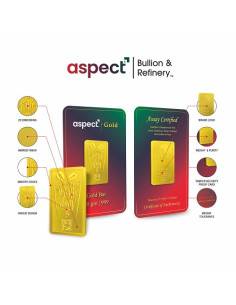

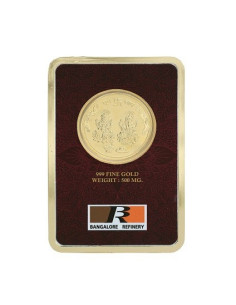
Bangalore Refinery Lakshmi Ganesh Gold Foil Coin 500 Milli Gram in 24 Kt 999 Purity Fineness
Shop NowGold prices are soaring as the market responds to Trump’s trade policies. The halt in tariffs has excited gold bulls, driving prices up.
Now, investors are looking at the $3500 mark. This could be a key moment in the gold market analysis. The global economy’s health is tied to trade policies.
Key Takeaways
- The pause in tariff policies has led to a surge in gold prices.
- Investors are now eyeing the $3500 mark for gold.
- Trade policies continue to influence the gold market.
- Market analysis suggests a potential for further growth.
- Investors should keep a close eye on trade developments.
The Current Gold Market Rally
The gold market is seeing a big rally. This is due to many factors. As an investor, you’re probably watching closely to understand why prices are rising.

Recent Price Movements and New Highs
Gold prices have hit new highs recently. Kitco NEWS says this is because of Trump’s tariffs and global economic issues. The effect of these factors on gold prices has been huge, pushing the market up.
This price surge is not just a quick event. It’s part of a bigger trend. This trend is influenced by global economic uncertainty and trade tensions. Knowing these trends is key to your investment strategy.
Key Drivers Behind the Gold Surge
Several factors are driving the gold surge. Trade policies, especially tariffs, have greatly influenced market feelings. The uncertainty about trade deals and their effects on the global economy has made investors turn to gold.
Also, global economic conditions, like low interest rates and central bank actions, have helped gold prices go up. These conditions have made the market more favorable for gold.
Market Sentiment and Positioning
Market sentiment on gold is very positive. Many investors are betting on more gains. This positive feeling is because of ongoing economic uncertainty and possible trade tensions. It’s important to keep up with what’s affecting gold prices as you move through the market.
Understanding the Trump Tariff Pause and Its Immediate Effects
The Trump tariff pause has caused big waves in the financial markets. Investors are now trying to figure out what it means for the future. Some see it as a good sign, especially for tech companies, while others are still unsure.
Details of the Recent Tariff Announcement
The Trump administration’s latest tariff move has everyone talking. The pause on some tariffs has left the markets confused. Key aspects of the announcement include the temporary suspension of tariffs on certain goods, which has been seen as a positive move for some industries.
The specifics of the tariff pause are as follows:
| Category | Description | Impact |
|---|---|---|
| Tariff Suspension | Temporary halt on tariffs for certain goods | Positive for affected industries |
| Affected Industries | Primarily tech and manufacturing sectors | Relief for companies with significant imports |
| Market Reaction | Mixed response with both positive and negative sentiments | Uncertainty among investors |
Political and Economic Context
The Trump tariff pause is part of a bigger picture in politics and economics. It shows a shift in trade policy, which is complex. Knowing this helps investors make better choices in the market.
Things like global trade tensions, the state of the economy, and elections play a big role. They all affect how the market reacts to the tariff pause.
Initial Market Reaction to the Pause
The market’s first reaction to the Trump tariff pause was mixed. Tech companies saw benefits from lower costs and better competition. But others were more cautious, unsure about the pause’s long-term effects.
Investors should watch the market closely and adjust their plans as needed. The impact on stocks, bonds, and gold will show how the tariff pause is really affecting things.
Historical Perspective: Gold and Trade Policies
Gold has always been a safe place for investors when the economy is shaky. Knowing how gold prices and trade policies have worked together in the past can help you now.
The link between gold and trade policies is complex. Trade tensions often lead to economic instability, making investors turn to gold. This pattern has shown up many times in history.
Previous Tariff Impacts on Precious Metals
Gold prices have jumped when trade tensions rise. For example, when the US and China had trade issues, gold prices went up. Investors were worried about the economy.
| Year | Event | Gold Price Change |
|---|---|---|
| 2018 | US-China Trade Tensions Begin | +5% |
| 2019 | Tariff Escalation | +10% |
| 2020 | Trade Deal Announcement | -3% |
This table shows how big trade events affect gold prices. It shows gold’s sensitivity to trade policies.
Gold Performance During Trade Tensions
Gold does well when trade tensions are high. The metal’s safe-haven status draws investors looking to protect their money.
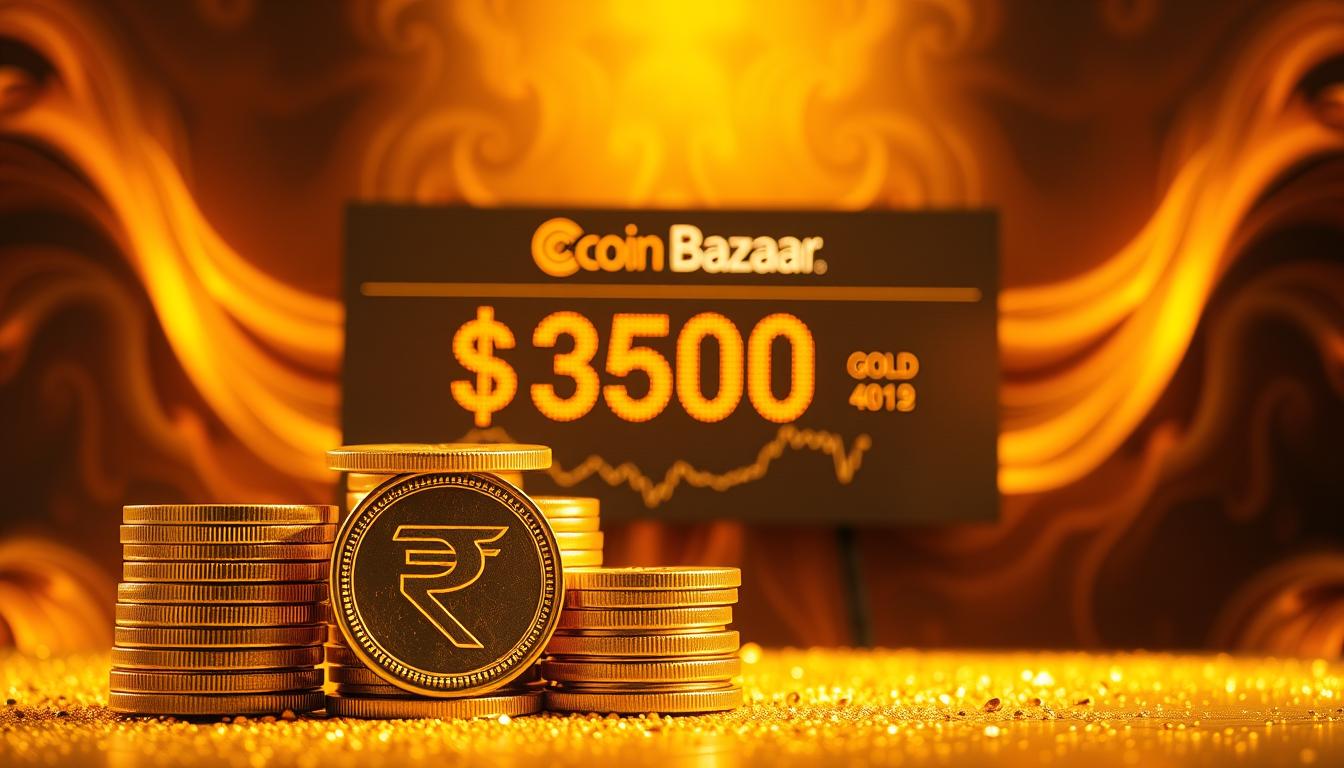
The image above shows gold’s price during big trade tensions. It shows gold’s strength as a safe-haven asset.
Lessons from Past Market Cycles
Looking at past market cycles, gold does well with long trade tensions. Investors should think about these trends when deciding what to invest in today.
By knowing how gold and trade policies have interacted in the past, you can better understand today’s gold market. This knowledge helps you make smarter investment choices.
The Path to $3500 Gold: Analysis and Probability
Gold hitting $3500 is a topic of interest for investors and analysts. Looking at the technical and fundamental factors is key. This helps us understand if gold prices will keep rising.
Technical Analysis Supporting the Bullish Case
Technical analysis shows gold is likely to go up further. Indicators like moving averages and the relative strength index (RSI) point to a positive trend. Sources like Kitco NEWS say gold’s price is supported by strong technical signs.
Important technical points include:
- The current price is above key moving averages, showing a strong uptrend.
- The RSI is not in overbought territory, leaving room for growth.
- Chart patterns, like higher highs and higher lows, support the bullish trend.
Fundamental Factors That Could Drive Prices Higher
Fundamental factors also play a big role in gold’s potential to hit $3500. Trade tensions between big economies keep gold’s safe-haven status strong. Monetary policies and inflation expectations also drive gold prices.
Key fundamental factors to watch are:
- Trade tensions, which can boost demand for gold as a safe-haven asset.
- Monetary policy decisions, especially on interest rates and quantitative easing.
- Inflation expectations, as gold is seen as a hedge against inflation.
Timeframe Considerations for the $3500 Target
The timeframe for gold to reach $3500 is important. While the potential is there, challenges lie ahead. Market volatility and economic surprises can affect the timeline.
Consider the following:
- The current market sentiment and positioning.
- Potential economic indicators that could influence gold prices.
- The impact of international relations on gold’s safe-haven status.
Understanding these factors helps you navigate the gold market. It aids in making informed investment choices.
Financial Markets Reaction to the Trump Tariff Pause
Financial markets have shown a mixed reaction to the Trump tariff pause. This pause has added uncertainty, affecting different assets in various ways.
Equity Markets Response
The equity markets have had a varied response to the pause. Some sectors feel relief, while others are concerned. Technology and consumer goods sectors, which rely heavily on trade, have seen big changes.
Some companies see the pause as a positive, as they were hit hard by tariffs. Yet, the ongoing trade policy uncertainty keeps investors cautious.
Bond Market Implications
The bond market has been very sensitive to the pause. Investors are moving to safe assets due to the economic uncertainty it brings.
Long-term bond yields have dropped, showing the market’s fear of long-term uncertainty. This change is important for those looking at fixed-income investments.
Correlation with Other Asset Classes
The pause has also changed how different assets relate to each other. Gold, seen as a safe asset, has seen its price rise.
The link between gold and other assets, like stocks and bonds, is complex. It’s influenced by many factors, including market mood and economic signs. Knowing these connections is key for smart investing.
Market Volatility and Risk Assessment
Investors face challenges with uncertain trade policies. They look for ways to handle market volatility risks. The US tariffs policy changes add to the complexity, making it key to understand current and future market conditions.
Measuring Current Volatility Levels
Investors use tools like the VIX index to gauge market volatility. The VIX index shows the market’s expected volatility for the next 30 days. Recent data shows an increase in the VIX index, indicating uncertainty about trade policies and their global economic impact.
The table below gives a quick look at current volatility levels in various asset classes:
| Asset Class | Current Volatility Level | Historical Average |
|---|---|---|
| Gold | 15% | 12% |
| Stocks | 20% | 18% |
| Bonds | 8% | 6% |
Hedging Strategies During Uncertain Trade Policies
Investors can use several hedging strategies to reduce volatility risks. One method is to diversify portfolios across different assets, like stocks, bonds, and commodities like gold. Gold is seen as a safe-haven asset and often does well when the economy is uncertain.
Another strategy is to use derivatives, such as options and futures, to protect against losses. For example, buying put options on stocks or indices can shield against market downturns.
Volatility Forecasts and Their Impact on Gold
Forecasting market volatility is tough, but analyzing trends and economic indicators can offer insights. Factors like inflation expectations, geopolitical tensions, and central bank policies greatly influence market volatility.
For gold, increased market volatility often boosts demand as investors seek safe assets. As a result, gold prices tend to rise with market volatility. Knowing this relationship helps investors make better gold investment decisions.
The Indian Perspective on Gold’s Rally
Gold prices rising globally has big effects on India. Here, gold is more than just a metal; it’s a big part of our culture. It touches our lives in many ways, from celebrations to investments.
Gold’s Cultural and Investment Significance in India
In India, gold is very special. It’s a key part of our weddings, festivals, and important events. It’s also seen as a safe investment, protecting against rising costs.
Gold is loved in India for:
- Its deep cultural roots
- Being a safe choice
- Its potential to grow in value over time
How US-China Trade Relations Affect Indian Gold Markets
Trade issues between the US and China affect gold markets worldwide, including India’s. US tariffs on China can cause gold prices to change.
Here’s how it impacts India:
- Gold prices can be unpredictable due to trade worries
- Changes in currency value can affect gold prices in rupees
- More people see gold as a safe place to put their money
Opportunities for Indian Investors
Indian investors have many ways to invest in gold. They can choose from physical gold, digital gold, and other financial products.
Physical Gold vs. Digital Gold Options
Many Indians like to buy physical gold, like jewelry or coins. But, digital gold is becoming more popular. It’s easy to use and you can invest in small amounts.
Gold ETFs and Sovereign Gold Bonds in India
Gold ETFs and Sovereign Gold Bonds let investors buy gold without keeping it. They’re backed by the government or track gold prices. This makes investing in gold easy and safe.
Gold ETFs and SGBs offer:
- No worries about storing gold
- The chance for higher returns through interest or dividends
- Tax benefits
Tax Considerations for Indian Gold Buyers
Gold investors need to think about taxes. Capital gains tax applies, and the rate depends on the investment and how long you hold it.
Knowing about taxes helps investors make better choices with their gold investments.
Impact of Economic Stability on Gold Prices
The link between economic stability and gold prices is intricate. It’s shaped by many global economic signs. For investors, grasping these connections is key to wise choices.
Global Economic Indicators to Watch
Signs like GDP growth, job rates, and factory health indexes greatly sway gold prices. When economies slow down, gold demand often rises. This is because investors look for safe places to put their money. For example, gold prices soared in 2008 as global economies hit hard times.
It’s important to keep an eye on the Purchasing Managers’ Index (PMI) and U.S. non-farm payroll data. These show how well manufacturing and jobs are doing. This can tell us a lot about gold prices in the future.
Inflation Expectations and Gold Correlation
Inflation expectations are a big deal for gold prices. Gold is often seen as a shield against inflation. When inflation goes up, gold’s value usually does too. Investors often buy gold to shield their wealth from inflation’s bite.
The bond between inflation hopes and gold prices is clear. When people think inflation will rise, they buy more gold. This pushes gold prices up. Central banks’ moves on interest rates also shape these inflation hopes.
India’s Economic Outlook and Gold Demand
India is a huge gold buyer, and its economy greatly influences gold demand. A booming economy means more gold spending, especially during big festivals and weddings. But, if the economy is shaky, gold demand drops.
India’s gold import rules, like duties on gold, also affect demand. Knowing these factors is vital for those wanting to invest in gold in India.
Investment Strategies in the Current Gold Market
Gold prices are rising, and investors need a smart plan. The market offers both chances and hurdles. It’s key to know the different ways to invest.
You can invest in gold in several ways. This includes physical gold, gold ETFs, and mining stocks. Each choice has its own benefits and risks. For example, physical gold is a real asset, while gold ETFs are liquid and diverse.
Portfolio Allocation Recommendations
Figuring out how much gold to include in your portfolio is important. Experts suggest 5% to 10% of your portfolio for gold. This depends on how much risk you’re willing to take and your investment goals.
To pick the right amount of gold for your portfolio, think about these:
- Check if your current mix of investments needs more diversity.
- Think about how much risk you can handle and how long you can invest.
- Remember, gold can protect against inflation and market ups and downs.
| Investment Option | Risk Level | Potential Return |
|---|---|---|
| Physical Gold | Low | Moderate |
| Gold ETFs | Medium | High |
| Mining Stocks | High | Very High |
Entry Points and Risk Management
Finding the best time to invest is crucial for good returns. Dollar-cost averaging can help smooth out price swings.
Managing risk is also key when investing in gold. You can do this by:
- Setting stop-loss orders to cap losses.
- Spreading your gold investments across different types of assets.
- Regularly checking and adjusting your investment mix.
Alternative Precious Metals to Consider
Gold is popular, but other metals like silver, platinum, and palladium are worth looking at too. Each has its own market and can add diversity to your investments.
Silver is more volatile than gold but can offer higher gains in certain times. Platinum and palladium, used in cars and industry, can protect against specific economic risks.
By exploring different investment strategies and options, you can make smart choices. This helps you optimize your portfolio and handle the current gold market well.
Potential Risks to the Bullish Gold Thesis
Gold prices are rising, but there are risks that could stop this trend. The market is boosted by trade tensions and economic uncertainty. Yet, several factors could affect the gold rally’s future.
Scenarios That Could Halt the Rally
Several scenarios could stop the gold rally. If the global economy improves, gold’s appeal might drop. Also, resolving trade tensions could lower gold prices, as less uncertainty means less need for safe assets.
Another risk is a change in investor mood. If investors start to favor stocks over gold, gold demand could fall. This could end the rally.
Central Bank Policy Shifts
Central banks’ policies are key to the gold market. Tighter policies, like higher interest rates, could make the US dollar stronger. This might make gold less attractive, leading to lower prices.
Conversely, if central banks keep policies loose, gold prices might keep rising. Watching central bank actions and statements is crucial to see if policies change.
Technical Warning Signs to Monitor
Technical analysis shows warning signs to watch. The Relative Strength Index (RSI) can show if gold is overbought. If it is, a price drop might be coming.
Also, look at gold price trends. A drop below key support levels could mean a trend reversal. This could risk the bullish gold thesis.
Conclusion: Navigating Gold’s Future Amid Policy Shifts
Investing in gold requires understanding how policy changes affect its price. The recent pause in Trump tariffs has boosted gold prices to record levels. Keeping up with these changes is key to making smart investment choices.
Gold’s future is heavily influenced by policy shifts, especially in trade. With gold prices possibly hitting $3500, knowing what drives these increases is essential. Looking at gold’s history with trade policies can also guide your investment strategy.
To succeed in the gold market, you must be ready for its ups and downs. Knowing how financial markets react to policy changes helps. This knowledge lets you make better decisions about investing in gold.