





Exclusive Deals & Trending Items





Have you seen how gold prices have been rising sharply in India? They hit historic highs in 2025. This jump is due to many reasons, like economic worries, global tensions, and a weaker rupee.
The average gold price in India went up to Rs. 71,385 per 10 grams in 2024. It’s expected to hit Rs. 96,480 in 2025. This increase is because people want safe investments, US interest rate cuts, and a weaker dollar. Knowing these reasons helps you make better investment choices.
Key Takeaways
- Gold prices in India have surged to historic highs in 2025.
- The surge is driven by economic uncertainty and geopolitical tensions.
- A weakening rupee has also contributed to the rise in gold prices.
- Strong demand for safe assets is a key factor.
- Interest rate cuts in the US have impacted gold prices.
Understanding the Current Gold Price Surge
The rise in gold prices is caused by many economic and geopolitical factors. Gold has become a key interest for both investors and buyers today.
Overview of Recent Price Trends
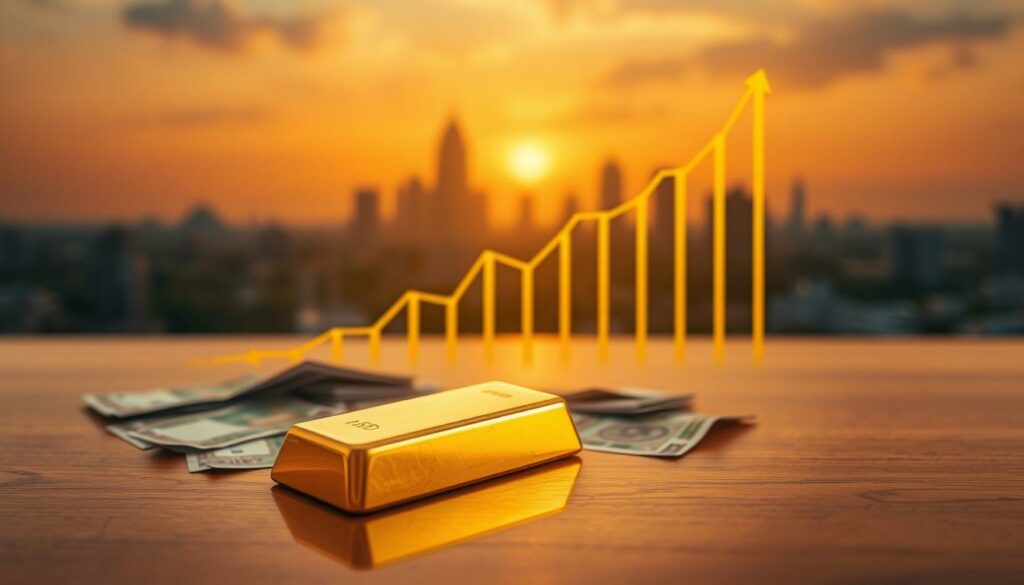
Gold prices have been going up over the last few years. In 2016, gold was Rs. 28,500 per 10 grams. By 2023, it hit Rs. 64,500, and in 2024, it reached Rs. 71,385. This increase is due to factors affecting gold price like economic uncertainty and global tensions.
Historical Context of Gold Prices
Gold prices have generally gone up, with some dips along the way. Knowing the gold price historical data helps us understand today’s market. Gold’s steady rise is partly because it’s seen as a safe investment during economic hard times.
Factors Influencing Market Perceptions
Many things shape how people view the market, like inflation concerns, currency fluctuations, and global economic instability. A detailed market analysis gold price shows these factors play a big role in gold’s price swings.
By looking at these factors and the past, you can get a better grasp of the gold market. This helps you make smarter choices.
Economic Factors Driving Gold Prices Up
Understanding the economic factors behind rising gold prices is key. The recent increase in gold prices is not random. It’s due to several important economic indicators and trends.
Inflation Concerns and Gold’s Safe-Haven Appeal
Inflation is a major factor. When inflation goes up, money’s value drops. This makes gold more appealing as an investment. Gold is seen as a safe asset, and its value goes up when inflation is high.
Key points to consider:
- Inflation reduces the purchasing power of currency.
- Gold tends to perform well during inflationary periods.
- Investors often turn to gold as a hedge against inflation.
Currency Fluctuations Impacting Gold Value
Currency changes also play a big role. A weaker rupee, for example, raises gold import costs. This leads to higher domestic prices. Exchange rates are key in setting gold prices in India.
The impact of currency fluctuations on gold prices can be significant. For instance, a weaker rupee makes gold pricier for Indians. But gold’s safe-haven appeal can help during economic uncertainty.
Global Economic Instability: A Catalyst for Gold Demand
Global economic instability boosts gold demand. Investors look for safe assets, and gold is top choice. Geopolitical tensions, trade wars, and economic downturns cause this instability.
The following factors contribute to global economic instability:
- Geopolitical tensions and conflicts.
- Trade wars and protectionist policies.
- Economic downturns in major economies.
Knowing these factors helps you make better gold investment choices.
Geopolitical Factors Affecting Gold Prices
Geopolitical factors are key in shaping gold price trends. Knowing these factors helps you make smart investment choices. Global events, tensions, trade relations, and political uncertainty all affect gold’s value. This makes gold a safe choice for investors.
Tensions in Key Regions and Their Impact
Conflicts in important areas create market uncertainty. This pushes investors towards safe assets like gold. For example, Middle East tensions or big power conflicts can boost gold demand and prices.
Even the threat of war can cause gold price swings. So, investors keep an eye on global events to guess market shifts.
Trade Relations and Tariff Issues
Trade disputes and tariffs also shape gold prices. Rising tensions or tariffs create economic doubt. This doubt often leads investors to gold as a protection against economic drops.
Investors watch trade talks and deals closely. Big trade news can sway market feelings and gold prices.
Political Uncertainty and Investor Behavior
Political instability affects how investors act. In unstable times, they seek safe, stable investments. Gold, being a traditional safe asset, gains from this.
Gold prices can be shaky during elections or political shifts. Knowing the political scene helps you better understand the gold market.
Supply and Demand Dynamics in the Gold Market
Ever wondered what affects gold prices? It’s mainly about supply and demand. The gold market is shaped by mining trends, recycling, and how people invest in gold.
Mining Production Trends
Mining is key to the gold supply. Lately, mining has seen ups and downs. This is due to mine closures, new finds, and cost changes.
For example, higher costs and rules in big gold-producing countries have cut production. Knowing these trends helps predict gold prices and guide investments.
Investors and analysts keep a close eye on mining trends. The gold price forecast often considers mining output changes. This makes mining trends a big part of market analysis.
Recycling and Its Role in Gold Supply
Recycling is also important in the gold supply, like in India where gold holds cultural value. Recycling can change the gold supply, affecting prices during economic uncertainty or when gold prices are high. Recycling gold also adds to the gold supply, shaping gold price historical data.
Recycling helps stabilize the gold market. It provides extra gold, reducing the need for new mining. This is key when looking at economic indicators gold price and how they affect investors.
Changing Investment Patterns Among Consumers
Gold investment patterns are changing. This is due to economic conditions, culture, and new investment options. In India, there’s a rise in investment gold, like coins and ETFs. These shifts in investment patterns influence gold demand and price.
As investment patterns evolve, it’s important to understand these changes. The growth of digital gold investment platforms is a trend to watch. It offers more ways for people to invest in gold.
The Role of Central Banks in Gold Prices
Central banks play a big role in gold prices by buying and selling gold. They hold gold as a way to keep their economy safe. But their role goes beyond just keeping gold.
Gold Reserves and Economic Security
Central banks keep gold reserves to protect against economic ups and downs. Gold helps settle international deals and boosts confidence in a country’s money. Gold reserves help diversify a nation’s wealth, making it less dependent on one currency or asset.
Gold helps central banks deal with currency changes and economic troubles. This is key for countries with big foreign exchange risks.
Recent Buy/Sell Trends by Major Countries
In recent years, central banks have been buying more gold. They want to spread out their assets and avoid currency risks. China and Russia have been big buyers of gold, pushing gold prices up.
These big countries’ gold purchases affect global demand and how investors see gold. As central banks buy more gold, it makes gold seem like a safe investment.
How Central Bank Policies Affect the Market
Central bank policies, like interest rates, greatly influence gold prices. Lower interest rates make gold more appealing as an investment. This is because gold doesn’t earn interest, unlike other assets. On the other hand, higher interest rates make gold less attractive.
Investors and analysts watch how central bank policies affect gold prices closely. Knowing these effects is key to making smart gold investments.
The Impact of Consumer Behavior on Gold Pricing
Consumer behavior is key when it comes to gold pricing. You, as a consumer, have a big role in shaping gold demand. This demand affects gold’s price.
Trends in Jewelry Demand
Jewelry demand is a big part of gold consumption, mainly in India. Gold jewelry is a big deal during festivals and weddings. During these times, gold prices go up.
During the wedding season, people want more gold jewelry. This means prices go up because of the extra work needed. Also, there’s a growing trend towards hallmarked jewelry. This means people want gold of the right quality and purity. This change in what people want affects gold prices.
Gold as an Investment Vehicle
Gold is not just for show; it’s also a popular investment. When the economy is shaky, people turn to gold. This makes its price go up. Gold investment products like sovereign gold bonds and gold ETFs are getting more popular. They offer a way to invest in gold without having to buy physical gold.
Investing in gold is now easier thanks to digital platforms. This makes gold more appealing as an investment. More people investing in gold means higher demand. This, in turn, affects gold prices.
Cultural Significance of Gold in India
In India, gold is more than just a metal. It’s deeply tied to culture and emotions. Gold is a big part of many rituals and celebrations. You might have seen that during festivals like Diwali and Akshaya Tritiya, gold demand goes up. This affects its price.
The love for gold in India is strong. Understanding this is key to understanding gold pricing in India. Your views and actions towards gold are shaped by these cultural factors. This, in turn, impacts gold prices.
The Influence of Investment Trends on Gold Prices
Investment trends have a big impact on gold prices. Knowing these trends is key for smart investment choices.
Growth of Gold ETFs and Digital Gold
Gold Exchange-Traded Funds (ETFs) and digital gold have changed how people invest in gold. These options make it easier and cheaper to invest in gold without owning it physically.
Gold ETFs offer several benefits:
- Liquidity: They can be bought and sold easily on stock exchanges.
- Diversification: They help investors spread their money without needing physical gold.
- Transparency: You can see exactly what you own, making it clear.
A recent report shows the global gold ETF market is growing fast. Assets under management have gone up by over 10% in the last year.
| Year | Assets Under Management (in billion USD) | Growth Rate (%) |
|---|---|---|
| 2022 | 120 | 5 |
| 2023 | 132 | 10 |
Role of Retail Investors in the Market
Retail investors are big in driving gold demand, more so in countries like India. Gold is not just an investment but also a cultural symbol there.
“The rise of digital platforms has made it easier for retail investors to invest in gold, contributing to the surge in gold prices.” –
More retail investors are using digital gold platforms. This is because they are easy to use and allow for small investments.
Institutional Investment Strategies in Gold
Institutional investors, like pension funds and sovereign wealth funds, are big in the gold market. They often put a part of their money into gold to protect against economic risks.
When investing in gold, institutional investors look at:
- Economic indicators: Inflation, interest rates, and GDP growth.
- Geopolitical events: Tensions, conflicts, and political instability.
- Currency fluctuations: Changes in currency values, like the US dollar.
Understanding these trends helps you predict gold price changes. This knowledge is key for making smart investment choices.
The Technological Factors Shaping Gold Trading
The gold trading world is changing fast thanks to new tech. You might notice how gold trading is now different, thanks to technology.
New tech is making gold trading more efficient and changing how the market works. A big area where tech is making a big difference is in gold trading platforms.
Innovations in Gold Trading Platforms
Gold trading platforms are getting smarter, making it easier and safer to buy and sell gold. They use advanced tech like AI and blockchain to make transactions better.
For example, some platforms use AI for real-time market analysis and predictions. This helps investors make better choices. As John Doe, a gold market analyst, says, “AI in gold trading platforms is changing how we look at market trends.”
“The future of gold trading lies in the adoption of cutting-edge technologies that enhance transparency and security.”
| Technological Innovation | Impact on Gold Trading |
|---|---|
| Artificial Intelligence | Real-time market analysis and predictions |
| Blockchain | Enhanced security and transparency in transactions |
Cryptocurrency vs. Gold: Impact on Demand
The rise of cryptocurrency is changing the gold market. More investors are looking at cryptocurrency as an alternative to gold, which is affecting gold demand.
Cryptocurrency’s volatility is a big factor in how investors act. Some see cryptocurrency as risky but rewarding, while others prefer gold as a safe choice.
The competition between cryptocurrency and gold is changing how investors act. Some are adding both to their portfolios. As the market keeps changing, knowing how cryptocurrency and gold interact is key for investors.
By keeping up with these tech changes and their effects on gold trading, you can make smarter investment choices.
Predictions for Future Gold Price Movements
Investors are watching gold prices closely due to economic uncertainty. We’ll look at what might happen to gold prices in the future. Several factors will play a role in this.
Market Analysts’ Forecasts
Market analysts think gold prices will keep going up. This is because of economic uncertainty, global tensions, and a weak rupee. They say these factors will keep gold prices rising.
Many economic indicators are affecting gold price forecasts. Things like inflation, currency changes, and global economic issues are boosting gold demand. Gold is seen as a safe investment by many.
Long-Term Trends vs. Short-Term Volatility
Gold prices are expected to keep rising over the long term. But, short-term price swings are a worry. Changes in central bank policies, trade issues, and global tensions can cause these swings. Investors need to be ready for these changes.
It’s important to know the difference between long-term trends and short-term price changes. By studying market trends and economic signs, investors can make better choices in the gold market.
Factors That Could Stabilize Gold Prices
Several things could help make gold prices more stable. For example, changes in central bank policies can affect gold demand and prices. Also, better global economic stability and a stronger rupee could help stabilize the gold market.
Investors should keep an eye on these factors. By staying updated on market trends and economic indicators, they can make smarter choices about their gold investments.
Regional Differences in Gold Pricing
The gold market in India shows different trends in various regions. These trends are influenced by culture, economy, and society. Knowing these differences is key for investors and buyers.
How India’s Market Compares to Global Trends
India is a big gold consumer worldwide. Its market trends mix local and global factors. Local festivals and weddings boost gold demand in places where gold is very important.
For example, gold demand goes up a lot during Diwali and Akshaya Tritiya. This can cause prices to change in different areas. Knowing these trends helps investors make better choices.
State-Specific Factors Influencing Gold Prices
Different states in India have their own gold price factors. Southern states like Kerala and Tamil Nadu want more gold jewelry because of their culture. Northern states might have different tastes and needs.
State taxes and local policies also affect gold prices. Knowing these can help predict price changes in different places.
The Role of Local Festivals and Traditions
Local festivals and traditions greatly influence gold demand and prices in India. As a market expert said, “Festivals like Diwali and Navratri increase gold demand, causing prices to change.”
“The cultural importance of gold in Indian society is deeply intertwined with festivals and celebrations.”
Keep an eye on these festivals and plan your gold investments wisely. Gold’s cultural value in India means demand goes up during festivals and weddings.
Understanding regional differences and gold pricing factors helps with better investment choices. Whether you’re an experienced investor or just buying gold, knowing these trends is useful.
Conclusion: Navigating Gold’s Price Surge
Understanding the gold price surge is key. It’s driven by economic uncertainty, geopolitical tensions, and a weak rupee. For investors, knowing these factors is vital for smart choices.
Key Drivers of Gold Prices
Economic indicators greatly affect gold prices. Things like inflation, currency changes, and global stability are important. Knowing these helps investors predict and make better choices.
Investment Strategies
Investors should diversify their portfolios to tackle the gold market. Keeping up with gold price forecasts is helpful. Economic indicators also guide gold prices.
Future Outlook
The gold market will likely stay unpredictable. Watching economic indicators and geopolitical news is critical. Staying informed helps investors make smart moves.