





Exclusive Deals & Trending Items
![Omkar Mint Queen King Kaju Shape (Queen Rose Gold Coated ) Silver Coin of 10 Grams [5 grams X 2 ] in 999 Purity](https://www.coinbazaar.in/48442-home_default/omkar-mint-queen-king-kaju-shape-queen-rose-gold-coated-silver-coin-of-10-grams-5-grams-x-2-in-999-purity.jpg)
Omkar Mint Queen King Kaju Shape (Queen Rose Gold Coated ) Silver Coin of 10 Grams [5 grams X 2 ] in 999 Purity
Shop Now

Muthoot Pappachan Swarnavarsham Gold BIS Hallmarked Ganesh Pendant of 2 gms in 22 KT 916 Purity Fineness
Shop Now

For investors in India, knowing the gold-silver ratio is key. It shows the value of gold compared to silver. This helps investors decide when to buy gold or silver.
In 2025, the Reserve Bank of India changed the rules. They set a fixed 10:1 ratio for gold and silver as bank collateral. This move highlights the gold-silver ratio’s role in India’s economy and investment world.
Grasping the gold-silver ratio helps you invest better. It’s a key tool for those adding precious metals to their portfolios. This ratio is essential for diversifying investments.
Key Takeaways
- The gold-silver ratio is a key guide for investment choices.
- The Reserve Bank of India’s framework sets a fixed ratio for gold and silver.
- Knowing the ratio helps investors make better timing decisions.
- The ratio is important for India’s economy and investment scene.
- Investors can use the ratio to spread out their investments.
Understanding the Gold-Silver Ratio
To do well in the precious metals market, knowing the gold-silver ratio is key. This ratio shows how many ounces of silver it takes to buy one ounce of gold. It helps investors see the value of these metals compared to each other.

What Is the Gold-Silver Ratio?
The gold-silver ratio is found by dividing gold’s price by silver’s price. For example, if gold costs ₹5,000 per gram and silver ₹50, the ratio is 100:1. This means gold is worth as much as 100 ounces of silver.
Over the last five years, the ratio has changed a lot. It has gone up to 107:1 and down to 68:1. These changes give investors chances to make smart choices about buying gold or silver.
Historical Context of the Ratio
The gold-silver ratio has been around for centuries. At first, governments set it to keep money stable. But over time, it has changed due to many economic and market factors.
“The gold-silver ratio is a valuable tool for investors, providing insights into the relative pricing of these precious metals.”
Looking back, we see the ratio has been shaped by supply and demand, economic conditions, and how investors feel.
| Year | Gold Price (₹/gram) | Silver Price (₹/gram) | Gold-Silver Ratio |
|---|---|---|---|
| 2020 | 4,500 | 60 | 75:1 |
| 2021 | 4,800 | 65 | 74:1 |
| 2022 | 5,200 | 70 | 74:1 |
Significance for Investors
In India, knowing the gold-silver ratio is very important. It helps investors decide when to buy gold or silver, based on their prices.
By studying the gold-silver ratio, investors can spot trends in the precious metals market. This knowledge helps them plan their investments, considering the current market and economic factors.
Why the Gold-Silver Ratio Matters in India
In India, the gold-silver ratio is more than just a number. It shows the country’s deep cultural and economic values. This ratio affects investment choices, cultural practices, and economic trends.
Cultural Significance of Gold and Silver
Gold and silver have been key in Indian culture for ages. They’re used in jewelry, coins, and decorations. Gold is seen as a sign of wealth and is used in weddings and festivals.
During festivals like Diwali, the demand for gold and silver goes up. This affects their prices. Knowing this can help investors understand market trends better.
“The cultural significance of gold in India cannot be overstated. It’s not just a matter of investment; it’s about tradition, status, and family heirlooms.”
Current Market Trends
Now, the gold-silver ratio in India is shaped by market trends. Recent policy changes have boosted silver demand, making its price jump. Investors are watching these trends closely.
The table below shows recent gold and silver price trends in India:
| Month | Gold Price (INR/10g) | Silver Price (INR/kg) |
|---|---|---|
| January | 50,000 | 60,000 |
| February | 51,000 | 62,000 |
| March | 52,000 | 65,000 |
Economic Factors Influencing the Ratio
Economic factors like inflation, currency changes, and global conditions affect the gold-silver ratio. In India, domestic demand and supply also play a role.
Inflation’s Impact: High inflation makes people want gold and silver more. They see these metals as safe investments. This can push their prices up.
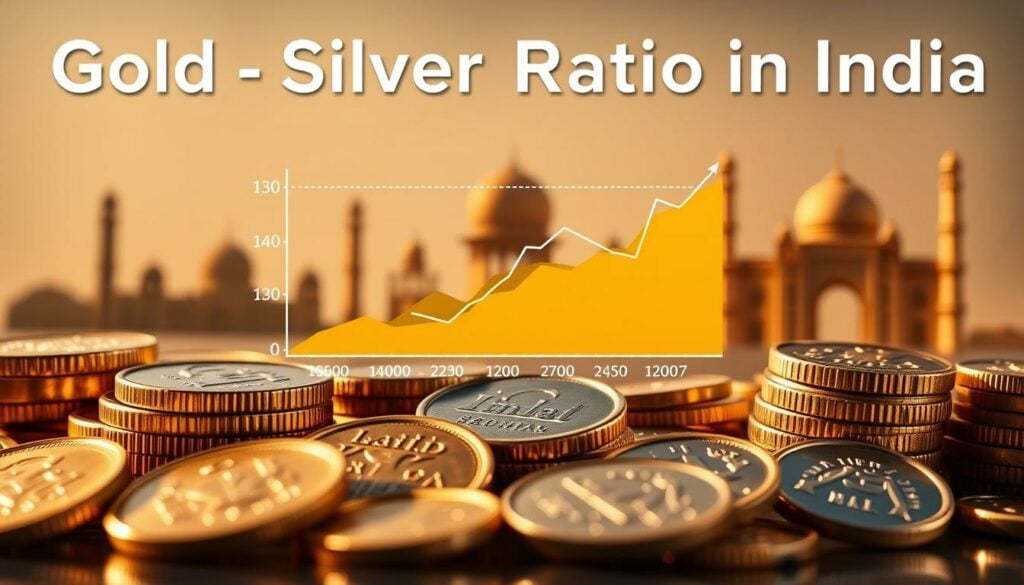
As an investor, knowing about these economic factors is key. It helps you make better choices about investing in gold and silver.
How to Calculate the Gold-Silver Ratio
Understanding the gold-silver ratio is key for those investing in precious metals. It shows the value of gold compared to silver. This ratio helps investors make smart choices.
The Simple Formula Explained
The gold-silver ratio is found by dividing gold’s price by silver’s price. For example, if gold costs ₹5,000 per gram and silver ₹50, the ratio is 100:1. This means you need 100 ounces of silver to buy one ounce of gold.
Formula: Gold-Silver Ratio = Price of Gold / Price of Silver
Using Real-Time Data Sources
To get the gold-silver ratio right, you need current prices of gold and silver. Look for these on financial websites, commodity exchanges, or bullion market updates in India. Keeping up with prices is key for good investment choices.
Some reliable sources for real-time data include:
- Financial news websites
- Commodity exchanges like MCX India
- Bullion market platforms
Tools and Resources for Calculation
There are many online tools and resources for calculating the gold-silver ratio. Here are a few:
| Tool/Resource | Description |
|---|---|
| Online Calculators | Websites with free calculators that figure out the ratio for you. |
| Mobile Apps | Apps that give you real-time prices and ratio calculations. |
| Financial Software | Software that tracks precious metal prices and ratios. |
By using these tools and keeping up with bullion market updates in India, you can make better investment choices in gold and silver.
Analyzing Historical Trends
Looking at the gold-silver ratio’s history can guide investors. It shows how the market has changed over time. This knowledge helps in making smart investment choices.
Past Gold-Silver Ratio Movements
The gold-silver ratio has swung between 50:1 and 70:1 most of the time. But, it hit 104.98:1 in 2020, breaking its usual range. Knowing these changes helps figure out if gold or silver is a better buy.
At times, the ratio has been as low as 15:1 or over 100:1. These big swings show big changes in how people value gold and silver.
Key Events Impacting the Ratio
Many events have changed the gold-silver ratio. Economic downturns, mining changes, and shifts in investor views have all played a part. For example, when the economy is shaky, more people buy gold, making the ratio go up.
- Big economic troubles, like the 2008 crisis, boost gold demand, affecting the ratio.
- Changes in silver use by industries also sway the ratio.
- Central bank policies, like interest rate changes, can make gold or silver more appealing.
Long-term Investment Insights
Studying the gold-silver ratio’s history offers long-term investment wisdom. Knowing the ratio’s usual range and what moves it helps in deciding when to buy gold or silver.
If the ratio is way above average, silver might be cheaper than gold. This could be a good time to buy silver. On the other hand, a ratio below average might mean gold is cheaper than silver.
Watching the gold-silver ratio and its history can improve your precious metals investment strategy. This is even more important in India, where gold and silver are both culturally and economically significant.
The Role of Gold and Silver in a Diversified Portfolio
Gold and silver are key to a stable and strong investment portfolio. They help protect your money over time. Knowing how they can help your financial goals is important.
Balancing Your Investment Strategy
Investing in gold helps keep your portfolio stable over the long term. Silver, on the other hand, can offer more growth. Mixing both can make your portfolio more resilient against market ups and downs.
Key Considerations for Balancing:
- Know your risk level and financial goals.
- Figure out the right mix of gold and silver for you.
- Keep checking and tweaking your strategy as needed.
Risk Management with Precious Metals
Precious metals like gold and silver are great for managing risk. They often do well when the economy is shaky. They help protect against inflation and market swings.
Benefits of Precious Metals in Risk Management:
- Diversification: Spreads out your investments.
- Hedging: Shields against inflation and currency changes.
- Safe-haven assets: Keeps your portfolio stable during downturns.
Performance Comparison with Other Assets
It’s important to compare gold and silver with other investments. This helps you make smart choices for your portfolio.
| Asset | Average Annual Return | Volatility |
|---|---|---|
| Gold | 5% | Moderate |
| Silver | 7% | High |
| Stocks | 8% | High |
| Bonds | 4% | Low |
Understanding how gold, silver, and other assets perform helps you build a diverse portfolio. This aligns with your investment goals and risk level.
Factors Influencing the Ratio in India
In India, the gold-silver ratio is influenced by several factors. These include domestic market conditions and global economic trends. Knowing these factors helps investors make better choices.
Domestic Demand and Supply Dynamics
The demand and supply of gold and silver in India affect the gold-silver ratio. Domestic demand is driven by cultural events like festivals and weddings. These metals are traditionally used in these celebrations. The supply is influenced by imports and recycling.
For example, during festivals, demand for gold and silver increases. This can make the gold-silver ratio higher if demand for one metal grows faster. Changes in government policies on imports also impact the supply chain, affecting prices.
Inflation’s Impact on Precious Metals
Inflation is a key factor in the gold-silver ratio. When inflation is high, investors often choose precious metals like gold and silver as a hedge. Gold is often seen as a better hedge against inflation, which can change the ratio.
Inflation’s effect on the gold-silver ratio is seen in how investors allocate their investments. If gold prices rise more than silver during inflation, the ratio goes up.
| Year | Inflation Rate | Gold Price (INR) | Silver Price (INR) |
|---|---|---|---|
| 2020 | 4% | 45,000 | 60,000 |
| 2021 | 5% | 50,000 | 70,000 |
| 2022 | 6% | 55,000 | 75,000 |
Global Economic Conditions
Global economic conditions also shape the gold-silver ratio. Factors like global economic growth, trade tensions, and currency fluctuations affect investor sentiment. This can influence the choice between gold and silver.
For instance, during economic uncertainty, investors might choose gold over silver. This can widen the ratio. But if the global economy improves, silver demand might rise, narrowing the ratio.
Understanding these dynamics is key for investors in India. It helps them navigate the complexities of the gold-silver ratio.
Investment Strategies Based on the Ratio
Knowing the gold-silver ratio is key for smart investing in India. It helps you know the best time to buy gold or silver. This way, you can get the most out of your investments.
When to Buy Gold vs. Silver
The gold-silver ratio shows if gold or silver is cheaper. If the ratio is high, silver is a better deal. When the ratio is low, gold is the better choice for Gold bars India.
For example, a ratio of 80 means one ounce of gold buys 80 ounces of silver. This makes silver cheaper, a good time to buy. If the ratio falls to 60, gold is more expensive, a sign to buy gold.
Timing Your Investments
Timing is critical in investing in precious metals. Watching the gold-silver ratio helps spot the best times to invest. It’s important to keep up with market trends and economic signs that affect Silver price in India and gold.
Also, think about the economy and market mood when investing. For example, gold does well in uncertain times because it’s seen as safe.
Diversification Techniques
Diversifying is a smart move, and the gold-silver ratio helps balance your portfolio. Investing in both gold and silver can spread risk and boost returns. The ratio guides how much of each to invest.
One way to diversify is to keep a set ratio of gold to silver. Say 60% gold and 40% silver. Adjust your mix as the ratio changes to keep your desired balance.
By using the gold-silver ratio wisely, you can improve your investment strategy. This leads to better decisions on Gold bars India and silver.
Understanding Market Sentiment
To understand the gold-silver ratio, knowing market sentiment is key. This sentiment comes from how investors act and what the media says. It greatly affects the gold-silver ratio in the Indian bullion market.
Investor Psychology and Its Effects
Investor psychology is very important. Fear, greed, and what investors expect shape their choices. When people feel good about the economy, they might choose stocks over gold and silver. But, when times are tough, they often turn to gold as a safe choice.
Knowing what drives investors helps you make better choices. For example, if many investors think gold is a good bet because of economic worries, gold’s price might go up. This change can affect the gold-silver ratio.
Spotting Trends in Buyer Behavior
How buyers act also shapes market sentiment. Changes in buyer behavior can show shifts in the gold-silver ratio. For example, if more people want silver for industrial uses, silver might become more expensive than gold.
To catch these trends, look at data on gold and silver sales. Keeping up with market news helps predict changes in the gold-silver ratio.
The Impact of Media and Social Signals
What the media says and what people talk about on social media really matters. Good or bad news about the economy or world events can change how investors feel. This can affect the gold-silver ratio.
For example, if people start talking more about inflation on social media, they might buy more gold. This could make gold more expensive than silver. Keeping an eye on news and social media helps you guess when the gold-silver ratio might change.
| Factor | Impact on Gold-Silver Ratio | Investor Action |
|---|---|---|
| Investor Psychology | Fear and greed influence demand | Monitor market sentiment indicators |
| Buyer Behavior | Trends in gold and silver purchases | Analyze purchase data and market trends |
| Media and Social Signals | News and social media impact sentiment | Stay updated on market news and social media |
Gold-Silver Ratio Forecasting
Forecasting the gold-silver ratio is key for smart investment choices in the precious metals market. Knowing future trends helps you improve your portfolio and increase your earnings.
Expert Opinions on Future Trends
Experts say gold and silver prices will go up in 2026. This is due to central bank purchases and growing industrial demand. A recent report states, “the increasing demand for precious metals is expected to drive up prices, making it a lucrative time for investors.” Many market analyses and expert opinions back this up.
A leading market analyst notes,
“The gold-silver ratio is a critical indicator for investors. By understanding its trends, investors can make more informed decisions about when to buy or sell.”
This shows how vital it is to keep up with market predictions.
Analyzing Market Predictions
To analyze market predictions well, you must look at several factors. These include economic indicators, industrial demand, and central bank actions. Here are some key points to think about:
- Economic indicators like inflation rates and GDP growth can greatly affect gold and silver prices.
- Industrial demand for silver, mainly in electronics and renewable energy, can push its price up.
- Central bank buying plays a big role in gold prices.
Tools for Effective Forecasting
There are many tools to help forecast the gold-silver ratio well. These include:
- Market analysis software that gives real-time data and trend analysis.
- Financial news platforms that offer expert insights and market updates.
- Economic calendars that track important economic indicators and events.
By using these tools and staying updated on market trends, you can make better predictions about the gold-silver ratio. This helps you improve your investment strategy.
Common Misconceptions About the Ratio
Investors in India often have wrong ideas about the gold-silver ratio. This can affect their investment plans. The gold-silver ratio is a key tool for investors, but it’s often misunderstood.
Debunking Investment Myths
One myth is that a high gold-silver ratio means it’s a good time to buy silver. But this isn’t always true. The ratio changes due to many factors like market demand and economic conditions.
For example, when the economy is down, the ratio might go up because people want gold as a safe haven. This doesn’t always mean silver is a bad investment. It’s important to understand these details to make smart choices.
Understanding Fluctuations
The gold-silver ratio changes for many reasons. These include shifts in silver’s industrial use and gold’s investment appeal. It’s key to look at these changes in the context of the whole market.
An increase in the ratio might mean people are turning to gold because of economic worries. On the other hand, a decrease could show more trust in silver’s industrial uses.
Beyond Simple Metrics
The gold-silver ratio is useful, but it’s not everything. To make good investment choices, you need to look at more than just this ratio. Consider market trends, economic signs, and how investors are feeling.
| Investment Factor | Impact on Gold-Silver Ratio | Investment Decision |
|---|---|---|
| Economic Downturn | Increases due to safe-haven demand for gold | Consider diversifying into gold |
| Industrial Demand for Silver | Decreases as silver becomes more valuable | Look into silver investment opportunities |
| Market Sentiment | Can cause fluctuations based on investor confidence | Monitor market trends closely |
By grasping the complexities of the gold-silver ratio and avoiding common mistakes, investors in India can make better choices.
Physical vs. Digital Investments
Investing in gold and silver comes down to two main choices: physical assets or digital investments. Your goals, risk level, and personal taste guide your decision.
Buying Physical Gold and Silver
Buying physical gold and silver means getting bullion, coins, or bars. This traditional way lets you hold a real asset securely. The current gold price in India and silver price in India set the investment cost. It offers a tangible sense of security, not tied to banks.
But, storing physical gold and silver is a big deal. You must keep it safe, like in a bank vault or home safe. Also, selling can mean proving the metal’s authenticity, which costs more.
Investment Options for Digital Assets
Digital gold and silver investments are a different path. You can use ETFs, mutual funds, or online platforms to buy and sell digitally. These are backed by real metals but you don’t own them physically.
Digital investments shine with liquidity and diversification. They let you invest in gold and silver without storage worries. Plus, digital platforms show prices in real-time and let you trade anytime.
“The future of gold and silver investment is digital, promising ease and diversification.”
Comparing Benefits and Risks
Physical and digital investments each have pluses and minuses. Physical gold and silver protect against inflation and currency changes but need safe storage. Digital investments are easy and liquid but face market risks and counterparty issues.
- Physical investments: Real assets, not bank-dependent, but need storage and verification.
- Digital investments: Handy, liquid, and varied, but face market and counterparty risks.
Combining physical and digital investments can meet your goals. Keeping up with the current gold price in India and silver price in India is key for smart decisions.
Regulatory Considerations for Investors
Investing in gold and silver in India comes with its own set of rules. The government has put in place several regulations that affect how you invest. Knowing these rules is key to following the law and getting the best returns.
Understanding Import Duties
Import duties on gold and silver are a big deal for investors. The Indian government charges customs duties on precious metals. This can change the cost of your investment.
For example, changes in import duties can affect the bullion market updates India. This, in turn, can change the prices of gold and silver.
- The current import duty on gold is a critical factor that affects the cost of investment.
- Understanding how import duties are calculated can help you make more informed decisions.
- Staying updated on any changes to import duties is vital for investors.
Tax Implications When Selling
When you sell your gold or silver, you need to know about taxes. In India, you have to pay capital gains tax on selling precious metals. The tax rate depends on how long you held the investment.
- If you sold it in less than three years, it’s short-term capital gain. The tax rate is based on your income tax slab.
- For more than three years, it’s long-term capital gain. The tax rate is usually lower.
- Keeping records of your transactions is important for accurate reporting.
Legal Regulations in India
India has strict laws for trading gold and silver. Investors must follow these laws to avoid legal trouble. The Precious Metals Market Regulation in India is overseen by government bodies. This ensures the market is transparent.
To stay compliant, you should:
- Purchase from authorized dealers.
- Make sure your investments are hallmarked by recognized centers.
- Know about any anti-money laundering (AML) regulations for your transactions.
By following these regulations, you can have a smoother investment journey in the Indian gold and silver market.
Using the Ratio to Gauge Economic Health
Looking at the gold-silver ratio can help you understand the economy better. It’s not just about comparing gold and silver prices. It shows us about economic stability, trouble, and how precious metals act in tough times.
Indicators of Economic Stability
A steady gold-silver ratio means the economy is balanced. It shows gold and silver are used right in investments. A stable ratio means the economy is steady, with no big changes soon.
Key signs of economic stability are:
- A consistent gold-silver ratio over time
- Low price swings in precious metals
- Steady demand for gold and silver
Evaluating Economic Turbulence
Big changes in the gold-silver ratio show economic trouble. When the economy is shaky, people turn to gold. This makes the ratio go up.
| Economic Condition | Gold-Silver Ratio Trend | Investor Behavior |
|---|---|---|
| Stability | Stable or slightly decreasing | Balanced investment in gold and silver |
| Turbulence | Increasing | Shift towards gold as a safe-haven asset |
| Recovery | Decreasing | Increased investment in silver due to industrial demand |
Role of Precious Metals in Crisis
Gold and silver are key during economic crises. They protect against inflation, currency loss, and market ups and downs.
The value of precious metals in crises is clear:
- They offer a safe place for investors
- They protect against economic downturns
- They help diversify investment portfolios
Understanding the gold-silver ratio helps you make smarter investment choices. Watching this ratio and its trends helps you navigate the precious metals market.
Practical Tips for Investors
Investing in India’s gold and silver market needs careful planning. A good strategy is key to success.
Making Informed Decisions
Successful investing in Gold bars India and Silver coins India starts with informed choices. Keep up with market trends and analysis. Use financial experts or reliable data to guide your decisions.
Understanding the gold-silver ratio is also important. This includes knowing about demand, supply, inflation, and global economics. This knowledge helps you decide when to buy or sell.
Setting Investment Goals
Clear goals are essential for success in gold and silver markets. Decide what you aim to achieve, whether it’s long-term wealth or quick gains. Specific goals lead to better investment choices.
Think about your risk level and financial situation when setting goals. Diversifying your portfolio with gold, silver, and other assets is wise. It reduces risks and can increase returns.
Staying Updated on Market Trends
Keeping up with market trends is vital for timely and smart investments. Follow trusted financial news and analysis. This keeps you informed about the gold and silver market.
Use online tools for real-time gold and silver price data. This helps you quickly respond to market changes. It maximizes your investments in Silver coins India and Gold bars India.
Conclusion: Making the Most of the Gold-Silver Ratio
You now know how important the gold-silver ratio is for smart investing in India. This ratio is a key tool for timing your investments in the precious metals market.
Key Takeaways
The gold-silver ratio shows the value difference between gold and silver. It helps you make smart investment choices. By looking at past trends and current market, you can spot good times to buy or sell these metals.
Investment Timing
Getting the timing right is key in the precious metals market. Watching the gold-silver ratio helps you decide when to invest in gold or silver. This way, you can get the best returns in the Indian market.
Future Investments
As you keep exploring the precious metals market in India, staying informed and flexible is essential. Keep an eye on the gold-silver ratio and other market signs. This will help you make the most of your investments.
By doing this, you’ll be ready to reach your investment goals in the fast-changing precious metals market of India.