



You are about to explore the captivating world of Indian collectible coins. Here, mythology, temples, and national events come together in unique treasures.
Indian numismatics has caught the eye of collectors and investors. They are drawn to the rich cultural heritage and historical significance in these coins.
As you explore this fascinating realm, you’ll find coins that tell various stories. These include mythological tales, revered temples, and key national events.
Key Takeaways
- Indian collectible coins are a unique blend of mythology, culture, and history.
- Numismatics has become a popular investment option in India.
- Coins often represent significant national events and mythological tales.
- The cultural heritage of India is reflected in its collectible coins.
- Temples and gods are common themes in Indian numismatics.
The Rich Heritage of Indian Numismatics
Exploring Indian numismatics opens a window to a rich heritage spanning thousands of years. It’s not just about rare coins. It’s a journey through India’s history, culture, and economic growth.
Ancient Origins of Indian Coinage
Indian coins have a long history, from ancient times to today. They reflect the country’s economic and cultural past. Ancient India was among the first to use coins worldwide.
Punch-Marked Coins of the Mahajanapadas
The first Indian coins were punch-marked, made by ancient kingdoms like the Mahajanapadas. These coins were of silver and copper. They were stamped with symbols like animals, plants, and shapes.
These symbols often showed who made the coin or had spiritual meaning.
Mauryan and Gupta Era Innovations
The Mauryan and Gupta eras brought big changes to Indian coins. The Mauryans started making coins the same size. The Guptas made coins with detailed designs and mythological stories.
The art of making coins reached new levels during these times. It showed the cultural and economic success of the era.
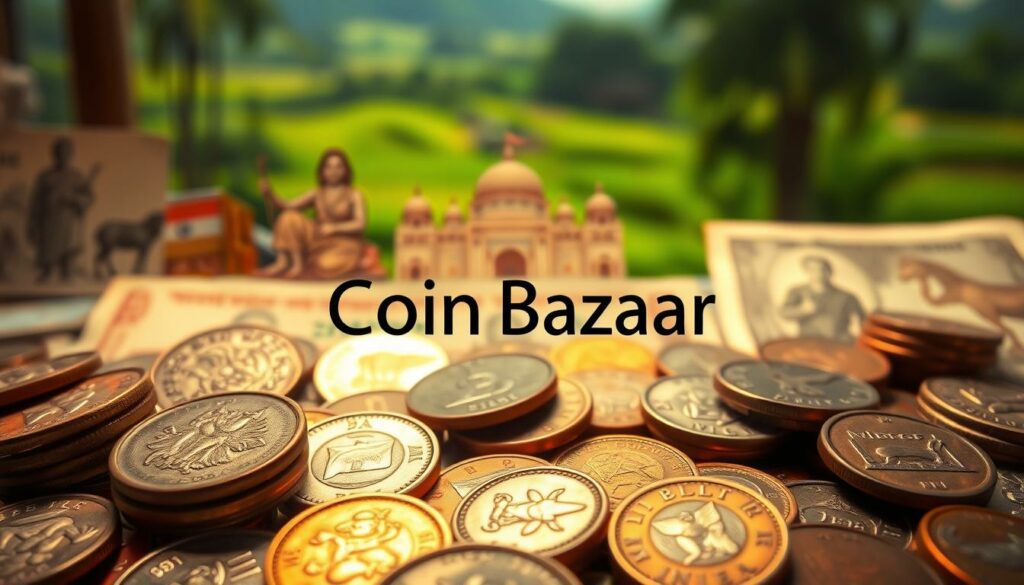
Knowing about numismatics and coin grading helps us understand the value of these ancient coins. As you learn more about Indian numismatics, you’ll see the deep cultural and historical value in these coins.
Historical Journey of Indian Coins
Exploring Indian collectible coins reveals a rich and diverse history. This journey is shaped by dynasties, cultural exchanges, and colonial rule. It’s a story of complexity and beauty.

Pre-Colonial Coinage Systems
Before colonial rule, Indian coins showed great diversity. This was due to many regional kingdoms and empires. The Gupta period is famous for its art, architecture, and culture. Coins from this time are highly valued for their beauty and history.
Regional Variations in Design and Metal
Coins from the pre-colonial era varied greatly. They had unique designs and were made from different metals. For example, punch-marked coins were early and had symbols punched into the metal. Each dynasty had its own designs and minting methods.
Trade Coins and Their Significance
Trade coins were key in ancient India’s economy. They helped in trade within the region and with other lands. These coins were often made of precious metals and had designs that were easy to recognize.
Colonial Era Coins
The colonial era changed Indian numismatics a lot. Coins were introduced by the East India Company and later by the British Crown. This led to a standardization of coinage, affecting the economy and culture of India.
East India Company Issues
The East India Company’s coins started by copying local currencies. But soon, they had their own designs. These coins are now prized by collectors for their historical value.
British India Standardization
Under British rule, Indian coins became standardized. This made economic transactions easier. Coins from this time often had the British monarch’s portrait, showing British power.
Investing in rare coins can be rewarding. Valuable coins can sell for high prices at auctions. Collecting coins from different eras is a great way to learn about India’s history.
Mythological Narratives in Indian Coins
India’s mythological past comes alive through its coins. These small pieces of art reflect the country’s rich culture. They often tell stories from the Ramayana and Mahabharata.
Ramayana-Inspired Coin Designs
The Ramayana, a beloved Indian epic, has inspired many coin designs. These coins show key characters and events from the story. They are highly sought after by collectors.
Lord Rama and Sita Depictions
Coins often show Lord Rama and Sita. They represent duty, loyalty, and righteousness. These images reflect the epic’s influence and India’s cultural values.
Hanuman and Other Characters
Hanuman, the monkey god, is also featured on coins. His strength and devotion are celebrated. These coins add to the diversity of collector’s items.
Mahabharata References in Numismatics
The Mahabharata has also influenced Indian coins. Coins with characters and symbols from this epic are highly valued. They are important for their historical and cultural significance.
Krishna and Arjuna Imagery
Coins often show Krishna and Arjuna. They highlight the Mahabharata’s key figures. These coins showcase the designers’ skill and offer a glimpse into the epic’s legacy.
Pandava and Kaurava Symbolism
The Pandavas and Kauravas are also featured on coins. They symbolize the struggle between good and evil. These coins offer insights into India’s cultural narratives.
As a collector, these coins add beauty and depth to your collection. They connect you to India’s rich culture. The numismatic market shows growing interest in these coins, making them valuable additions.
Temple Architecture on Indian Collectible Coins
Temples are key parts of Indian history and culture. They are featured on collectible coins, showing their beauty and importance. These temples hold art, architecture, and culture.
South Indian Temple Coins
South Indian temples are famous for their grand designs and detailed carvings. Many coins celebrate these temples, showing their cultural and historical value.
Meenakshi and Brihadeeswara Temple Commemoratives
The Meenakshi Amman Temple in Madurai and the Brihadeeswara Temple in Thanjavur are well-known. Coins honor these temples’ beauty. The Meenakshi Temple coins show the goddess Meenakshi and the temple’s gopurams. The Brihadeeswara Temple coins highlight the temple’s massive vimana and the Nandi statue.
Kerala Temple Token Coins
Kerala’s temple token coins were once offerings to deities. Now, they are prized by collectors. The Sree Padmanabhaswamy Temple in Trivandrum is famous for its gold coins and treasures.
North Indian Temple Representations
North Indian temples are also significant for their architecture and culture. Coins featuring these temples show their importance in Indian numismatics.
Varanasi and Mathura Sacred Sites
The temples in Varanasi and Mathura are sacred in North India. Coins celebrate the Kashi Vishwanath Temple in Varanasi and the Dwarakadhish Temple in Mathura. They highlight these sites’ religious and cultural importance.
Himalayan Temple Coins
The Himalayas are home to many revered temples. Coins like the Kedarnath Temple show the temples’ architecture and peaceful surroundings.
These temple coins help preserve cultural heritage and appreciate India’s numismatic history. As a collector, you can learn about different architectural styles and historical contexts.
Divine Imagery: Gods and Goddesses on Indian Coins
Exploring Indian collectible coins reveals a world of divine imagery. These coins show various deities and mythological figures. They reflect India’s deep religious and cultural roots.
Lord Shiva and Vishnu Depictions
Lord Shiva and Vishnu are highly revered in Hinduism. Their images on coins are detailed and full of meaning. Each depiction holds its own significance.
Nataraja and Lingam Symbolism
Nataraja, Lord Shiva’s dancing form, is often seen on coins. It symbolizes the cosmic dance and the fight against ignorance. The Lingam, a symbol of Shiva, represents the cosmic axis and is also found on coins.
Dashavatar Series Coins
The Dashavatar series coins show the ten avatars of Lord Vishnu. These coins are highly sought after by collectors. They highlight the artistic and cultural aspects of the time.
Goddess Lakshmi and Other Female Deities
Goddess Lakshmi, the symbol of prosperity and good fortune, is a common figure on coins. Deities like Durga and Kali are also featured. Each carries its own significance and symbolism.
Prosperity Symbols and Iconography
Lakshmi is often shown with symbols of prosperity, like the lotus flower. These images are not just beautiful but also carry deep meanings. They are highly valued by collectors of rare coins and collector’s coins.
Durga and Kali Representations
Durga, the goddess of strength, and Kali, the goddess of time and change, are on various coins. These coins show their importance in Hindu mythology. They reflect India’s rich cultural heritage and the numismatic market trends that interest collectors today.
Looking at these divine images on Indian coins offers a glimpse into India’s rich culture and religion. Collecting such coins is both rewarding and enlightening.
Commemorating National Milestones Through Coinage
Explore India’s history through its coins. These coins celebrate important events and figures. They are valuable for both their monetary worth and historical significance.
Independence and Republic Day Special Issues
India celebrates Independence Day on August 15 and Republic Day on January 26. These days are marked with special coins.
These coins often show key figures and symbols from the freedom struggle.
Freedom Movement Leaders on Coins
Coins honor leaders of India’s freedom fight. For example, coins with Mahatma Gandhi’s image are released on special anniversaries.
Anniversary Commemoratives
Anniversary commemoratives are a big part of Indian coins. Coins are made to celebrate important events in India’s history, like independence.
Birth Anniversaries of National Leaders
Birth anniversaries of national leaders are celebrated with special coins.
These coins honor the leaders and remind us of their contributions to the nation.
Gandhi and Nehru Series
Coins have been made to honor Jawaharlal Nehru and Mahatma Gandhi’s birth anniversaries. These coins are highly sought after by collectors.
Modern Indian Luminaries
Other modern Indian leaders have also been honored with commemorative coins. These coins celebrate the contributions of various individuals to India’s growth.
| Year | Event | Coin Description |
|---|---|---|
| 1947 | Independence Day | First Indian coin after independence, featuring the Indian emblem |
| 1950 | Republic Day | First Republic Day coin, with a design symbolizing unity and strength |
| 1997 | 50th Anniversary of Independence | Commemorative coin featuring Mahatma Gandhi |
Collecting these coins is more than just investing. It’s about preserving a part of Indian history. As you grow your collection, think about the stories and meanings behind each coin.
The Rise of Collectible Coins in Modern India
In India, collectible coins are becoming more popular, thanks to the young crowd. These coins mix history, culture, and art in a unique way. This makes them very appealing.
Growing Popularity Among New Generations
Young people in India are really into collectible coins. They see these coins as a way to connect with their heritage. For them, numismatics is a hands-on way to learn about India’s history and culture.
Young Collectors and Their Motivations
Young collectors are drawn to coins for many reasons. They love the history, beauty, and the excitement of finding rare ones. They also want to understand India’s past and its stories.
Educational Value of Numismatics
Numismatics is more than just a hobby. It teaches young collectors about history, economics, and art. It encourages them to research and think critically, making it great for students.
Digital Platforms and Coin Collecting Communities
Digital platforms have changed how coin collectors in India connect. Online forums, social media, and apps make it easy to buy, sell, and trade coins. They also help collectors share knowledge and experiences.
Online Forums and Social Media Groups
Online communities for numismatics have grown a lot. They offer a place for collectors to talk about their collections, get advice, and learn from others. Social media also helps by letting collectors show off their collections and share their stories.
Mobile Apps for Indian Coin Collectors
There are many mobile apps for Indian coin collectors. These apps help with cataloging, pricing, and buying and selling coins. They make it easier for collectors to manage their collections and keep up with market trends.
The love for collectible coins is growing in India, thanks to the young crowd. Digital platforms play a big role in this growth. They help collectors connect and appreciate India’s numismatic heritage.
Navigating the Indian Numismatic Market
The demand for rare coins is rising. Knowing the Indian numismatic market is key. It’s a complex world with many players and platforms.
Authorized Dealers and Auction Houses
Buying rare coins means working with trusted dealers and auction houses. They ensure the coins are real and trustworthy.
Major Players in the Indian Market
Spink India and Maharaja Sawai Man Singh II Museum are big names. They’re known for their knowledge and vast collections.
Auction Etiquette and Strategies
Auctions need a smart plan. Research the coins, know the auction rules, and stick to your budget. Understanding market trends helps too.
Online Marketplaces for Indian Coins
Online platforms have changed how we buy coins. They offer a wide selection, from rare to common coins.
Specialized Numismatic Websites
Sites like CoinIndia focus on numismatics. They have detailed catalogs and expert tips.
General E-commerce Platforms
Platforms like Amazon India and eBay India sell coins too. But, always check the seller’s reputation.
Mastering the Indian numismatic market takes knowledge and strategy. By exploring different channels, collectors can build valuable collections.
Building Your Indian Coin Collection
Starting your Indian coin collection is exciting. You’ll learn about the rich history and stories each coin tells. It’s not just about collecting coins. It’s about understanding their historical and cultural backgrounds.
Thematic Collection Approaches
One great way to build a collection is by choosing a theme. You might focus on certain dynasties, materials, or designs that interest you.
Dynasty-Specific Collections
Collecting coins from a specific dynasty, like the Mughal or British era, offers a deep look into history. For example, Mughal coins show off the artistry of the time with their detailed designs and calligraphy.
Material and Design-Based Themes
You could also collect coins based on their material or design. This might include coins made of gold or silver. Or those with unique designs that show India’s cultural variety.
Essential Tools for Coin Collectors
To truly enjoy and keep your coins, you need the right tools. These include magnification tools for close looks and reference materials for understanding your coins’ history.
Magnification and Examination Equipment
A magnifying glass or coin loupe helps you see details you can’t see with your eyes. This includes mint marks or wear patterns.
Reference Books and Catalogs
Reference books and catalogs are key for identifying and verifying your coins. They offer detailed info on coin issues, how many were made, and more.
By choosing a theme and using the right tools, you can create a fulfilling Indian coin collection. It will show your love for numismatics and your interests.
Most Sought-After Indian Collectible Coins
Indian collectible coins are loved for their unique designs and history. They attract collectors and investors. People value these coins for their beauty and the chance to increase in value over time.
Rare Princely State Coins
Coins from the Princely States of India are highly sought after. They are prized for their historical importance and detailed designs.
Hyderabad Nizams’ Issues
The Hyderabad Nizams created some of India’s most stunning and rare coins. These coins, made from gold and silver, showcase the area’s rich culture through unique designs.
Travancore and Cochin Rarities
Coins from the Travancore and Cochin kingdoms are also highly valued. They often depict local deities and rulers, adding to their historical and cultural worth.
| Coin Type | Metal | Issuer | Value |
|---|---|---|---|
| Hyderabad Nizam | Gold | Nizam of Hyderabad | High |
| Travancore Rupee | Silver | Kingdom of Travancore | Moderate |
| Cochin Fanam | Gold | Kingdom of Cochin | High |
Limited Edition Commemorative Releases
Limited edition commemorative coins are also highly sought after. These coins celebrate important events and anniversaries.
Platinum Jubilee and Centenary Coins
Coins for the Platinum Jubilee and Centenary celebrations are very valuable. They are often made from precious metals and have unique designs.
International Event Commemoratives
Commemorative coins for international events, like sports and cultural festivals, are also prized. They have innovative designs and are minted in small quantities.
As a collector, you can find these valuable coins through authorized dealers and auction houses. It’s important to research and check the coins’ authenticity before buying.
Understanding Coin Grading and Authentication
In the world of numismatics, coin grading and authentication are key. They help figure out a coin’s value and if it’s real. This is important for both collectors and investors.
Indian Grading Standards
Coins from India are graded by certain rules. These rules look at the coin’s condition and how rare it is. Knowing these standards helps you make smart choices in the numismatic market.
Condition Categories Explained
The condition of a coin is judged in different ways. Here are some common ones:
- Poor: Very worn with lots of damage.
- Fair: Worn but some details are left.
- Very Fine: Some wear but most details are clear.
- Extremely Fine: Just a bit of wear with sharp details.
- Mint State: Looks brand new, no wear at all.
Professional Grading Services in India
Professional services give an unbiased look at a coin’s state and if it’s real. In India, many groups offer these services. They help make grading fair and consistent.
Authentication Processes and Certificates
Checking if a coin is real is very important. This step looks at the coin’s material, design, and more. It makes sure it’s not a fake.
Technical Analysis Methods
There are special ways to check if a coin is real. These include:
- X-ray Fluorescence (XRF): Checks the coin’s elements.
- Electro-Chemical Analysis: Looks at the coin’s surface and material.
Provenance Documentation
Provenance is the coin’s ownership history. Having proof of this can really boost a coin’s value and make it more believable.
Investment Opportunity in Indian Collectible Coins
Indian collectible coins mix cultural heritage with investment chance. They appeal to collectors and investors alike. Their rich history and numismatic value are key draws.
Short-term vs. Long-term Investment Strategies
Investing in Indian collectible coins can be short-term or long-term. Short-term strategies aim to sell coins for a profit soon. They follow market trends closely.
Market Timing Considerations
Timing is everything in short-term investing. Keeping up with numismatic market trends is vital. Being ready to buy or sell coins quickly is necessary.
Portfolio Diversification with Coins
Adding Indian collectible coins to your portfolio can diversify it. Coins can act differently than stocks or bonds.
Risk Factors in Numismatic Investments
Indian collectible coins carry their own risks. It’s important to understand these risks to make smart choices.
Authenticity and Condition Risks
The authenticity and condition of a coin greatly affect its value. Fake coins or those in bad shape can cause big losses.
Market Liquidity Challenges
Liquidity is another big factor. Selling coins quickly can be hard, even if they’re rare or in demand.
To avoid these risks, choose reputable dealers. Stay updated on market trends. Always check a coin’s condition and authenticity before buying.
Preservation and Display Techniques
To keep your Indian coin collection in top shape, using the right preservation and display methods is key. As a collector, you know how vital it is to protect your investment.
Optimal Storage Conditions for Indian Coins
Keeping your coins in the best storage conditions is essential. This means controlling the environment to avoid damage.
Humidity and Temperature Control
It’s best to keep humidity between 30% to 60% and temperature between 15°C to 25°C. Avoiding big changes in these can help prevent damage to your coins.
Protective Materials and Cases
Using materials like acid-free paper, coin flips, and cases can shield your coins from harm. They protect against environmental damage and accidental damage from handling.
| Storage Material | Purpose |
|---|---|
| Acid-free Paper | Prevents chemical reactions that can damage coins |
| Coin Flips | Protects coins from handling and environmental exposure |
| Coin Cases | Provides a secure environment for storing and displaying coins |
Display Options for Collectors
Displaying your coins is a wonderful way to enjoy them and share with others. There are many ways to display coins safely and beautifully.
Museum-Quality Presentation Methods
For a professional look, consider using museum-quality displays. Glass or acrylic cases with UV protection are great options.
Home Display Security Considerations
When showing off your coins at home, keep them out of direct sunlight. Also, make sure they’re in a safe spot to avoid theft.
Conclusion: The Enduring Allure of Indian Collectible Coins
Indian collectible coins have a special charm for collectors and investors. They mix history, culture, and beauty in a unique way. The rise of these coins shows India’s deep numismatic heritage.
Exploring Indian coinage themes and motifs reveals numismatics’ importance. It helps us understand India’s history and culture. Whether you’re new or experienced, these coins offer a fascinating look into India’s past and culture.
Indian collectible coins bring a sense of nostalgia and pride. They connect us to India’s rich cultural legacy. As the numismatic market grows, so will the interest in these coins and their stories.