





The U.S. tariffs on diamond exports from India have caused big problems. Surat, a key diamond processing center, is hit hard. This move has greatly affected the global diamond trade.
The 27% tariff by US President Donald Trump has stopped orders and left many offices empty. This has hurt the jobs of many in the industry. Now, the diamond industry trends are changing, and companies are finding it hard to adjust to the new diamond trade world.
Key Takeaways
- The U.S. tariffs have severely impacted India’s diamond exports.
- Surat’s diamond processing hub is facing significant challenges.
- The global diamond trade is being reshaped by the tariffs.
- Businesses are struggling to cope with the new trade landscape.
- The industry is looking for ways to mitigate the effects of the tariffs.
The Current Crisis in Surat’s Diamond Hub
Surat’s diamond industry is facing a big downturn. This is mainly because of U.S. tariffs on diamond exports. The crisis is hitting the industry hard in many ways.
Stalled Orders and Their Immediate Economic Impact
Stalled orders are causing a big economic hit. Diamond export businesses are finding it hard to keep going. Orders from the U.S. have almost stopped.
Kirit Bhansali, chairman of the Gem & Jewellery Export Promotion Council (GJEPC), says more retailers will ask to stall orders. This is shown in the diamond export statistics, which have dropped a lot.
The top diamond exporters in Surat are losing a lot. This problem is affecting everyone, from makers to sellers.
Empty Offices and Idle Cutting Units
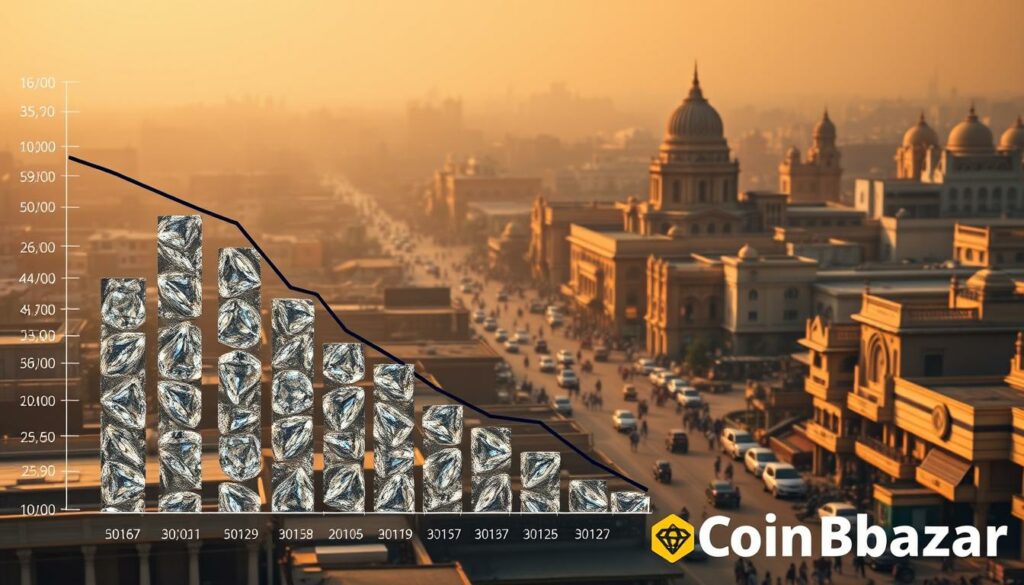
Surat’s empty offices and idle cutting units show the crisis. What was once busy is now quiet. These idle units mean no work for many workers.
- The economic strain is clear, with many businesses at risk of closing.
- The future of the industry is uncertain because of U.S. tariffs.
- Surat’s diamond hub, once a key global center, is facing a big challenge.
The situation needs quick action and smart planning. We must find ways to deal with the tariffs and help the industry recover.
Understanding India’s Diamond Exports Landscape
Did you know India is the biggest exporter of polished gems, natural diamonds, and jewelry to the U.S.? It’s worth $11 billion every year. This shows how key it is to get the inside scoop on India’s diamond exports.
Historical Growth of India’s Diamond Industry
India’s diamond industry has seen remarkable growth over the years. It has become a major player in diamond processing and exports. This growth is thanks to government support, skilled workers, and new technology.
“The Indian diamond industry has come a long way, leveraging its strengths to become a dominant player in the global diamond trade.”
India’s diamond industry has always been able to adjust to the world market. This has helped it stay strong and keep growing.
Surat’s Rise as a Global Diamond Processing Center
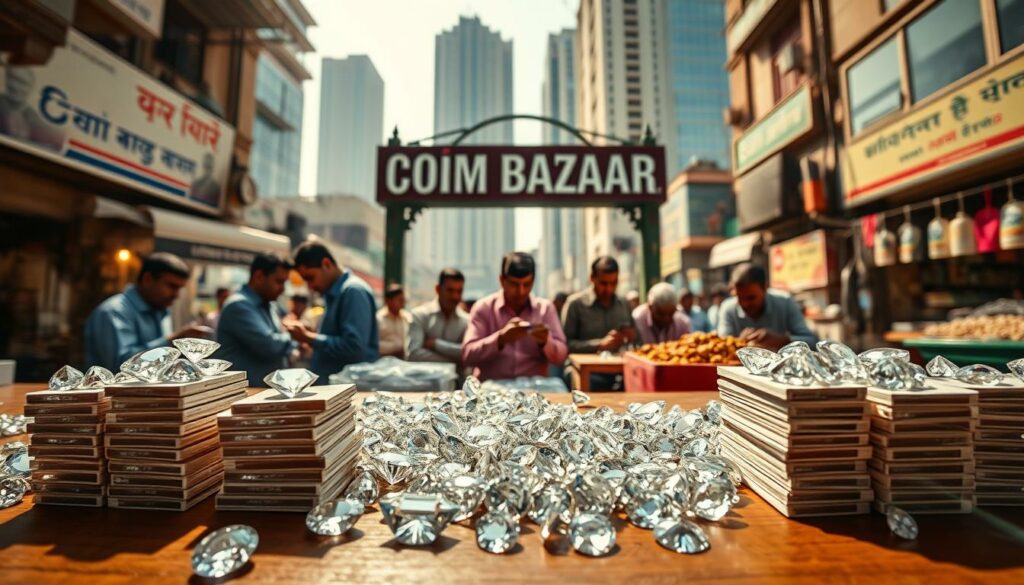
Surat, in Gujarat, India, is now a leading global diamond processing center. Its success comes from its great location, good infrastructure, and skilled workers. Surat is known for its top-notch diamond processing, meeting many customer needs.
As the diamond market changes, Surat’s importance is set to stay high. This is because of its strong points and the industry’s knack for innovation and change.
The U.S. Tariff Implementation: What You Need to Know
It’s important to understand how U.S. tariffs impact diamond exports. The latest tariff announcements have big effects on India’s diamond industry. This is especially true for exporters in Surat.
Timeline of Tariff Announcements and Implementation
The U.S. government set a 10% tariff on all foreign goods. They will also have specific rates for different countries. Knowing when these tariffs start is key for diamond exporters.
Specific Tariff Rates Affecting Diamond Trade
The exact tariff rates for diamond exports are still being decided. But, it’s important to know how they compare to other luxury goods.
Polished Diamond Categories Under Tariff
Polished diamonds are affected by the new tariffs. The type of diamond will decide the tariff rate.
Comparative Tariff Rates with Other Luxury Goods
Here’s a comparison to understand the tariffs better:
| Luxury Goods | Tariff Rate |
|---|---|
| Polished Diamonds | 10% |
| Gold Jewelry | 5% |
| Luxury Watches | 8% |
Keeping up with these changes is vital for diamond exporters. They need to follow new rules and adapt to the shifting trade scene.
Economic Impact on India’s Diamond Exports
The U.S. tariffs have hit many industries hard, including India’s diamond exports. The U.S. is a big market for India’s diamond sales, making the tariffs tough for the industry.
Statistical Analysis of Export Decline
Looking at the numbers, we see a big drop in diamond exports. Recent data shows a sharp decrease in these exports.
Quarter-by-Quarter Export Figures
Looking at the numbers over time, we see a steady fall since the U.S. tariffs started. Exports fell by 15% in the first quarter and another 10% in the second quarter compared to last year.
Comparison with Pre-Tariff Periods
When we compare these numbers to before the tariffs, the impact is clear. Diamond exports to the U.S. were growing by 5% each year before the tariffs. But since then, they have dropped.
Financial Losses Across the Value Chain
The financial hit isn’t just for exporters. It affects everyone in the diamond business, from makers to sellers.
Experts say, “The tariffs have messed up the diamond supply chain. This has put a strain on businesses and workers.”
“The impact is not just economic; it’s also social, affecting the livelihoods of thousands of workers in the diamond industry.”
The industry is now looking for new markets to lessen these losses and keep the diamond trade stable.
Behind the U.S. Decision: Trade Policies and Motivations
The U.S. has put tariffs on diamond exports as part of a larger trade plan. This plan affects India’s diamond industry a lot. Knowing the political and trade policies behind this helps understand the impact on diamond exports.
Political Context of the Tariffs
The tariffs have a complex political background. The U.S. wants to cut its trade deficit and ensure fair trade. Tariffs are a way to do this, especially in areas like diamonds where trade is not balanced.
U.S. Trade Strategy with India
The U.S. aims to improve trade with India through its strategy. But, the tariffs on diamonds show a more protective stance. These tariffs could change the diamond export game.
| Trade Policy Aspect | Impact on Diamond Exports |
|---|---|
| Tariff Rates | Increased costs for U.S. importers, potentially reducing demand |
| Trade Agreements | Potential for renegotiation to reduce or eliminate tariffs |
| Geopolitical Relations | Influences diplomatic efforts to resolve trade tensions |
It’s key for India’s diamond industry to understand these issues. By keeping up with trade policy changes, you can adapt and face the U.S. tariffs better.
How Surat’s Diamond Cutting and Polishing Units Are Coping
U.S. tariffs have hit Surat’s diamond industry hard. To cope, companies are using new strategies. They are looking at different markets and changing how they work.
Adaptation Strategies of Large Enterprises
Big diamond units in Surat are changing. They are sending diamonds to more places and focusing on the most valuable ones. They also invest in new tech to work better and save money.
Struggles of Small and Medium Businesses
Small and medium businesses are really struggling. They face cash flow problems and can’t get credit easily. The drop in orders and strict diamond export rules are making it tough for them to keep going.
Liquidity Challenges and Credit Issues
Many small businesses are worried about money. They might have to cut down or close. Getting credit is hard, making it tough to get the money they need.
Operational Adjustments and Downsizing
Businesses are making big changes. They are cutting staff and talking to suppliers about better deals. Some are looking at new markets to lessen their U.S. reliance.
| Business Size | Adaptation Strategies | Challenges Faced |
|---|---|---|
| Large Enterprises | Diversifying export destinations, investing in technology | High compliance costs, market volatility |
| Small and Medium Businesses | Operational adjustments, exploring new markets | Liquidity challenges, credit issues |
The Human Cost: Workers and Families Affected in Surat
U.S. tariffs are hitting Surat’s diamond workers hard. It’s not just about money; it’s about people’s lives. Thousands of workers and their families are feeling the pain.
Unemployment Rates and Job Insecurity
U.S. tariffs have led to more job losses in Surat. About 100,000 workers in SEEPZ might not work for three months. This is causing a lot of worry among diamond industry workers.
Social Impact on Diamond Worker Communities
The diamond worker communities in Surat are feeling the stress. Money worries are affecting not just workers but their families too. The tight-knit community is facing hard times.
Migration Patterns of Skilled Workers
Some skilled workers might leave for other jobs or places. This could hurt Surat’s diamond industry. It might make Surat less important in the global diamond market.
Economic Ripple Effects on Surat’s Local Economy
The local economy in Surat is feeling the effects of the crisis. Less spending and possible business closures are happening. Even businesses that serve diamond workers are struggling.
| Category | Pre-Tariff | Post-Tariff |
|---|---|---|
| Workers Employed | 150,000 | 100,000 |
| Export Value | $10 Billion | $6 Billion |
| Business Operations | Active | Stalled |
“The tariffs have brought our industry to its knees. We’re not just worried about our businesses; we’re concerned about the livelihoods of our workers and their families.”
The situation in Surat’s diamond industry shows the human side of trade policies. As the industry faces tough times, workers’ strength and local support are key.
Global Diamond Market Analysis in the Wake of Tariffs
The global diamond market is undergoing a significant change due to tariffs on diamond exports. The U.S.’s recent tariffs have greatly affected the diamond trade. This has led to a change in market dynamics and a shift in the competitive landscape among top diamond exporters.
Shifting Market Dynamics
India, a major player in the global diamond market, has seen a decline in diamond exports due to tariffs. This has opened up opportunities for other countries. The market is now diversifying, with countries exploring new markets and trade routes.
The changing dynamics are not only affecting the exporters but also the consumers, as prices and availability of diamonds are being influenced by these tariffs.
Competitive Advantage Changes Among Top Diamond Exporters
The tariffs have changed the competitive advantage among top diamond exporters. Some countries are benefiting, while others are facing challenges.
Belgium and Israel’s Position
Belgium and Israel, known for their diamond cutting and polishing industry, are adapting to the new market conditions. They are using their expertise and infrastructure to stay competitive.
Emerging Competitors from Africa and Russia
Countries in Africa and Russia are becoming new competitors in the diamond market. They are using their natural resources and investing in infrastructure to increase their market share.
| Country | Pre-Tariff Export Value | Post-Tariff Export Value |
|---|---|---|
| India | $10 billion | $7 billion |
| Belgium | $8 billion | $9 billion |
| Israel | $6 billion | $7 billion |
The table shows how tariffs have affected the export values of major diamond-exporting countries. India’s exports have declined, while Belgium and Israel have seen an increase. This highlights the shifting competitive dynamics in the global diamond market.
Diamond Export Statistics and Changing Trade Patterns
You are witnessing a big change in diamond export volumes and where they go. This change comes after the U.S. started charging tariffs. The tariffs have hit India’s diamond industry hard, changing how they export and trade.
Pre-Tariff vs. Post-Tariff Export Volumes
Before the tariffs, India sent a lot of diamonds to the U.S. and they were growing. But after the tariffs, the number of diamonds sent to the U.S. went down a lot. There was a 20% drop in diamond exports to the U.S. after the tariffs. This drop is because it costs more to send diamonds to the U.S. now.
- Pre-tariff export volume: $X billion
- Post-tariff export volume: $Y billion (a decline of Z%)
Geographical Redistribution of Export Destinations
Because of the U.S. tariffs, Indian diamond exporters are sending their diamonds to other places. Now, the top places are Hong Kong, Belgium, and the UAE. They are sending their diamonds to these places to avoid the tariffs.
- Hong Kong has become a big place for exports, with a rise of A%
- Belgium and the UAE are also getting more diamonds, thanks to their strong diamond trade networks
The trade patterns are changing, showing the need for Indian diamond exporters to find new markets. By looking at other places and using their strengths, they can deal with the U.S. tariffs.
Alternative Markets: Where Indian Diamond Exports Are Redirecting
India’s diamond sector is looking to new markets after the U.S. imposed tariffs. This shift is opening up new opportunities for Indian diamond exports.
Growing Importance of Asian Markets
The Asian market is becoming more important for Indian diamond exports. Expect to see more diamond trade with countries in this region.
China and Hong Kong as Alternative Buyers
China and Hong Kong are becoming major buyers of Indian diamonds. These countries are not only big consumers but also key players in the global diamond trade.
Southeast Asian Emerging Markets
Southeast Asian countries are also showing promise. Countries like Thailand and Vietnam are becoming key destinations for Indian diamond exports.
Opportunities in European and Middle Eastern Markets
European and Middle Eastern countries are also worth exploring. These regions offer chances to diversify your export base.
- The European market, with its high demand for luxury goods, including diamonds, offers a promising outlet.
- The Middle East, known for its affluent consumer base, is another region where Indian diamond exporters can expand their presence.
By moving diamond exports to these new markets, India is ready to face the U.S. tariffs. It aims to keep its strong position in the global diamond trade.
Diamond Industry Trends Accelerated by the Tariff Situation
The diamond industry is changing fast because of U.S. tariffs. New tech and a push for ethical sourcing are leading the way. Companies are finding new ways to stay ahead in this new world.
Technological Innovations in Response to Crisis
The tariff situation has pushed the diamond industry to use new tech. Artificial intelligence and blockchain are helping companies work better and faster. For example, blockchain makes sure diamonds are real and their journey is clear.
Sustainability and Ethical Sourcing as Competitive Advantages
Now, being green and ethical is key in the diamond world. Companies that care about these things are winning in the market. As one expert said, “the future of the diamond industry lies in its ability to adapt to changing consumer preferences and environmental concerns”.
Businesses are working hard to get diamonds in a responsible way. They want to please the growing number of people who care about the planet.
Indian Government’s Response and Support Measures
The Indian government is stepping up to help the diamond industry. The U.S. tariffs have made things tough for diamond export businesses. So, the government is taking action to lessen the blow.
Policy Interventions to Support the Industry
The government is making changes to help the diamond industry. They are updating diamond export regulations to make trade easier. They are also offering support to businesses hit by tariffs.
Financial Relief Packages and Their Effectiveness
The government is offering financial help to diamond export businesses. This includes:
- Credit Guarantees: Giving credit guarantees to keep businesses liquid.
- Loan Restructuring: Making loan payments easier for exporters.
Credit Guarantees and Loan Restructuring
The credit guarantee scheme aims to boost confidence and provide much-needed cash. Loan restructuring helps businesses manage their debt better.
Export Promotion Initiatives
The government is starting new projects to boost diamond exports. They want to find new markets and make Indian diamonds more competitive. This includes supporting trade fairs and marketing efforts.
| Support Measure | Description | Benefit |
|---|---|---|
| Credit Guarantees | Providing credit guarantees to businesses | Liquidity support |
| Loan Restructuring | Restructuring loans for exporters | Eases financial burden |
| Export Promotion | Initiatives to explore new markets | Enhances competitiveness |
“The government’s timely intervention is crucial in helping the diamond industry navigate through these challenging times.”
Industry Associations’ Advocacy and Diplomatic Efforts
Industry associations in the diamond sector are working hard to fight U.S. tariffs on exports. They play a big role in looking out for diamond exporters. They help them deal with the tough world of international trade.
Lobbying Strategies with U.S. Trade Representatives
The diamond industry groups are using strong lobbying to get U.S. trade reps to rethink the tariffs. They show important data and talk about how good trade is for everyone. They hope to change policies for the better.
Collaborative Approaches Within the Industry
Working together is essential in the diamond industry. Companies and groups are sharing the cost of tariffs and finding ways to overcome them. This teamwork makes the industry stronger and more competitive worldwide.
Thanks to advocacy and diplomatic efforts, the diamond industry is showing it can grow even when things get tough. As it keeps changing, it will need to be good at handling complex global trade issues.
Diamond Export Documentation Requirements Under New Regulations
The diamond export industry is facing new rules. It’s key to know what documents you need. This helps you follow the rules and avoid trouble.
Compliance Challenges for Exporters
Exporters find it hard to meet the new rules. They must gather and check documents carefully. It’s important to do this right and on time.
Streamlining Processes to Minimize Delays
To avoid delays, make your process better. Use technology and train your team well.
Digital Documentation Solutions
Digital tools can make things easier. They help you manage and track your documents. This cuts down on mistakes and delays.
Training Programs for Compliance Teams
It’s vital to train your team. They need to know the new rules and handle documents well. Regular training is a good investment.
| Documentation Type | Required Information | Submission Deadline |
|---|---|---|
| Commercial Invoice | Detailed description of goods, quantity, and value | Before shipment |
| Certificate of Origin | Country of origin, manufacturer’s details | With shipping documents |
| Export License | License number, issuing authority | Before customs clearance |
Future Outlook for India-U.S. Diamond Trade Relations
The U.S. tariffs on Indian diamond exports have raised concerns about the future of their trade. The industry faces challenges but also has opportunities to shape its future. Several factors will influence the path of India-U.S. diamond trade.
Potential for Tariff Negotiations and Revisions
Talks between India and the U.S. could lead to changes in tariffs. Diplomatic efforts aim to help the diamond industry. A good outcome could ease the burden on exporters.
One key goal is to make Indian diamonds more competitive in the U.S. Industry leaders hope for a deal that benefits both sides.
Long-term Strategic Adjustments for the Industry
The Indian diamond industry might need to change its approach to stay ahead. This could mean expanding to new markets, using new technology, and improving how diamonds are made.
| Strategic Adjustment | Potential Benefits |
|---|---|
| Diversifying Export Markets | Reduced dependence on the U.S. market, increased resilience to trade fluctuations |
| Investing in Technology | Improved efficiency, enhanced product quality, and competitiveness |
| Enhancing Sustainability | Better environmental and social outcomes, appeal to eco-conscious consumers |
By making these changes, the Indian diamond industry can overcome current hurdles. It can also set itself up for success in the global market.
Conclusion: The Resilience and Future of India’s Diamond Industry
The U.S. tariffs have hit India’s diamond exports hard, especially in Surat. But India’s diamond industry is ready to bounce back. It’s all about adapting to new trends in the global diamond trade.
India’s diamond industry is known for its ability to change and grow. It’s looking into new markets and using the latest technology. This will help it keep its place in the global diamond trade.
India’s diamond industry is set to face the future with confidence. It will focus on being sustainable, ethical, and technologically advanced. This will secure a bright future for diamond exports from India.