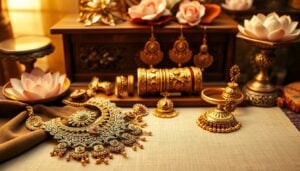





You are about to rediscover the rich heritage of Indian jewelry. Specifically, the traditional gem-set gold designs from Rajasthan. These designs have been a part of Indian culture for centuries.
These exquisite pieces have deep roots in India’s royal era. They are now a key part of the traditional bridal wedding trousseau and heirloom collections. The intricate designs and craftsmanship are truly remarkable.
Key Takeaways
- Revival of traditional Kundan designs in modern times.
- Significance of Indian jewelry in cultural heritage.
- Importance of gem-set gold designs in traditional weddings.
- Rajasthan’s contribution to the richness of Indian jewelry.
- Heirloom collections featuring traditional designs.
The Rich Heritage of Kundan Jewellery
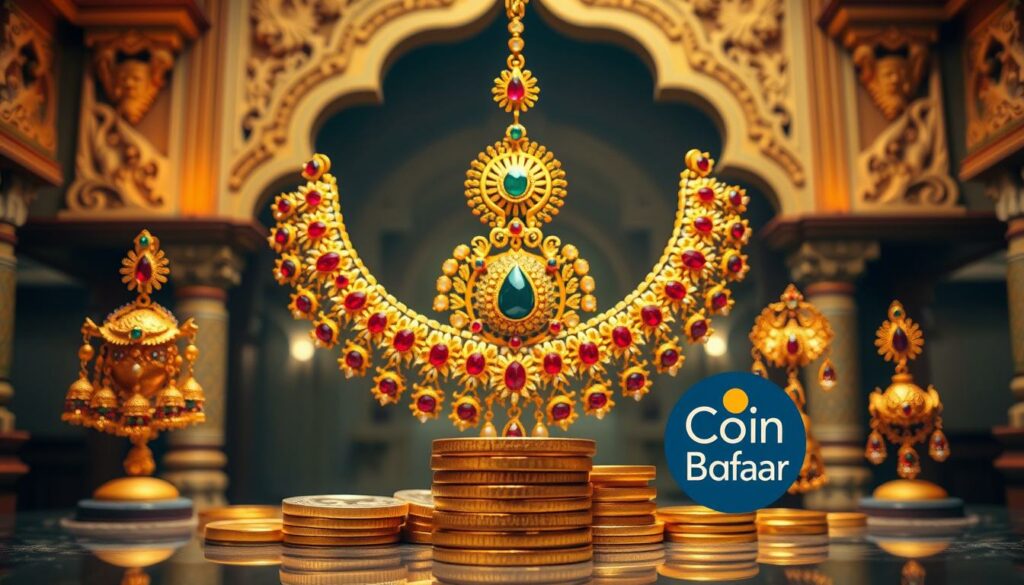
Kundan jewellery has a deep history in India, especially in Rajasthan’s royal courts. It’s known for its detailed designs and precious stones. This tradition is a big part of Indian culture.
Origins in the Royal Courts of Rajasthan
Kundan jewellery started in the 3rd century BCE, with big changes during the Mughal era. Rajasthan’s royal courts were key in growing this craft. Craftsmen worked hard to create new designs and techniques under royal support.
Some key features of Kundan jewellery from this time include:
- Intricate designs that showed the wealth of royal courts
- Use of precious stones and gold foil
- Outstanding craftsmanship passed down through generations
Evolution Through Centuries
Over time, Kundan jewellery has changed, influenced by culture and history. It kept its traditional feel while trying new things. New techniques and materials were added to the old ways.
Key points in its evolution are:
- The impact of Mughal and other styles on Kundan designs
- Using old techniques and new ones together
- Kundan jewellery’s role in Indian ceremonies and traditions
Understanding the Art of Kundan Craftsmanship
Have you ever wondered how Kundan jewelry is made? The art of Kundan craftsmanship is a detailed process. It requires skill and precision. Kundan jewelry, like kundan necklace sets and kundan earrings, is known for its beauty and detail.
The Unique Technique of Kundan Setting
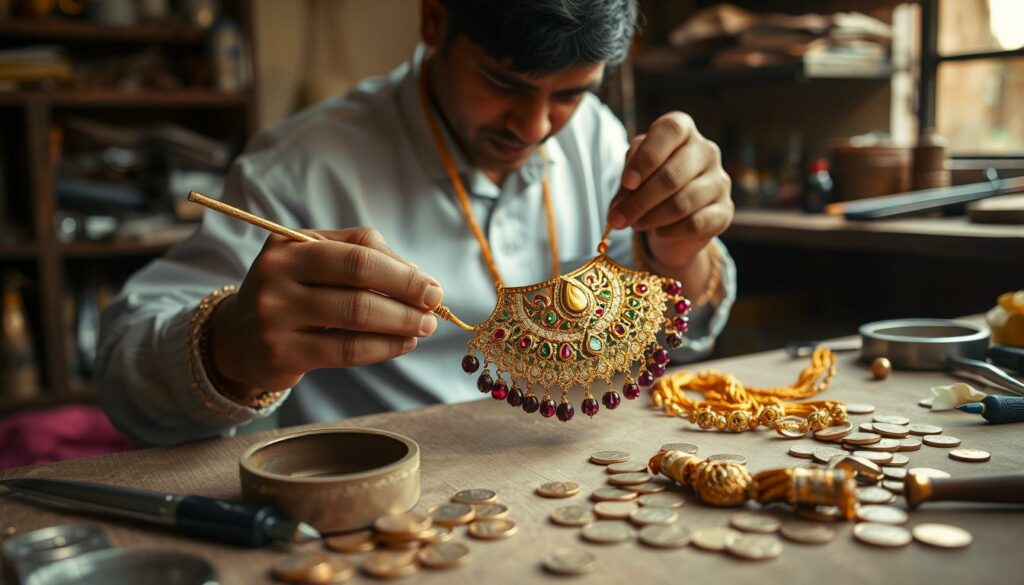
Kundan setting uses pure molten gold foil to mount gemstones. This traditional method needs great craftsmanship. The gold foil is shaped and molded around the stones to create intricate designs.
Tools and Materials Used in Traditional Kundan Making
Making Kundan jewelry involves special tools and materials. The main material is gold foil, known as “kundan.” It’s melted and molded to create the framework for the gemstones.
Gold Foil (Kundan) and Its Preparation
Preparing gold foil is key in Kundan craftsmanship. The gold is melted and hammered into thin sheets. Then, it’s cut into shapes. This process needs care, as the gold foil must be the right thickness to hold the gemstones.
Gemstones and Their Selection Process
Choosing gemstones is crucial in Kundan jewelry making. Gemstones are picked for their quality, color, and size. Rubies, emeralds, and diamonds are often used in kundan necklace sets and kundan earrings.
| Material | Description | Use in Kundan Jewellery |
|---|---|---|
| Gold Foil (Kundan) | Pure molten gold foil | Framework for gemstones |
| Gemstones | Rubies, emeralds, diamonds | Decorative elements |
| Clay | Special mixture for molding | Holding gemstones in place |
Understanding Kundan craftsmanship helps you appreciate the skill in these beautiful pieces. Whether it’s a kundan necklace set or kundan earrings, the details and craftsmanship are impressive.
The Distinctive Features of Authentic Kundan Jewellery
Authentic Kundan jewellery stands out for its detailed craftsmanship. It has unique features that make it different from other jewellery. Genuine Kundan pieces are known for their elaborate settings and use of precious materials.
Gold Foil and Precious Stone Settings
Kundan jewellery is famous for its gold foil construction. Skilled artisans set precious stones into detailed designs. This creates a stunning look.
The gold foil makes the jewellery look rich and luxurious. The settings are often complex, with layers of gold foil and precious stones.
Setting stones in Kundan jewellery is a hard and skilled task. Artisans shape and mold gold foil around stones. This makes the jewellery durable and beautiful.
Enameling (Meenakari) Work on Reverse Side
Kundan jewellery is also known for its enameling, or Meenakari, work on the back. This colorful enamel adds beauty and complexity. The designs feature vibrant colors and delicate patterns.
Color Symbolism in Meenakari
The colors in Meenakari work have special meanings. Red stands for love and passion, while green means prosperity and good luck. Knowing these meanings can make you appreciate Kundan jewellery more.
Regional Variations in Enameling Techniques
India’s different regions have their own enameling styles in Kundan jewellery. For example, Rajasthani Kundan is known for its bold colors. Other regions have more subtle designs. Exploring these variations can show the wide range of Kundan jewellery beauty.
Regional Variations of Kundan Across India
Kundan jewellery has spread across India, with each region adding its own twist. It started in Rajasthan but has been reimagined in many ways across the country.
Rajasthani Kundan: The Original Style
Rajasthani Kundan is the heart of this jewellery style. It’s famous for its detailed designs and precious stones. The skill in Rajasthan is unmatched, thanks to traditional techniques passed down through generations.
Delhi Kundan: The Royal Influence
Delhi Kundan was shaped by royal courts and the Mughal era. It’s known for its fine craftsmanship and meenakari (enameling) work. This makes it a favorite for its elegance and sophistication.
Other Regional Adaptations
Gujarat and Hyderabad have also put their own spin on Kundan jewellery. Gujarati Kundan uses bright colors and complex patterns. Hyderabadi Kundan, on the other hand, features large, eye-catching pieces.
The different Kundan styles across India show the country’s rich craftsmanship and the art’s flexibility. Whether it’s the traditional Rajasthani style, the royal touch of Delhi, or the unique takes from other regions, Kundan jewellery remains a treasure of beauty and heritage.
- Rajasthani Kundan: Known for intricate designs and traditional techniques.
- Delhi Kundan: Characterized by delicate craftsmanship and meenakari work.
- Gujarati and Hyderabadi Kundan: Showcase local flavors with vibrant colors and statement pieces.
Traditional Kundan Jewellery Pieces and Their Significance
Traditional Kundan jewelry is more than just something pretty. It holds deep meaning in Indian culture. The detailed work in these pieces is amazing. They are often used in important cultural and religious events.
Necklaces and Chokers (Hasli, Aad, Gulband)
Necklaces and chokers are favorites among Kundan jewelry. Hasli, Aad, and Gulband have been loved for ages. They are decorated with precious stones and detailed designs, making them essential in Indian jewelry.
Earrings (Chandbaali, Jhumka)
Earrings like Chandbaali and Jhumka are symbols of Indian culture. They are not just pretty but also carry a deep cultural meaning. Kundan earrings are a must-have for special events.
Head Ornaments (Maang Tikka, Borla, Rakhdi)
Head ornaments such as Maang Tikka, Borla, and Rakhdi are key in Indian weddings and festivals. They add elegance and are often kept in families for generations.
Hand and Arm Ornaments (Bajuband, Kangan)
Bajuband and Kangan are traditional arm ornaments. They have been part of Indian jewelry for centuries. These pieces are cherished for their beauty and the skill of Indian artisans.
In conclusion, traditional Kundan jewelry is a big part of Indian culture. Each piece, from necklaces to arm ornaments, has its own special meaning. They show the incredible talent of Indian artisans.
The Cultural Significance of Kundan in Indian Traditions
In Indian culture, Kundan jewellery is more than just decoration. It holds deep meaning in many ceremonies and traditions. You might have seen how Kundan jewellery is a big part of Indian customs. It shows status, wealth, and spirituality.
Kundan in Wedding Ceremonies
Kundan jewellery is key in Indian wedding ceremonies. The bride wears a stunning Kundan necklace set that’s believed to bring luck. The detailed designs and precious stones in Kundan jewellery represent the strong bond of marriage.
- Kundan jewellery marks the bride’s marital status.
- The skill in making Kundan pieces is highly valued.
- Kundan jewellery is often kept in families as a treasured heirloom.
Kundan in Religious and Royal Ceremonies
Kundan jewellery is also important in religious and royal events. In temples, it decorates deities. In royal settings, it shows power and prestige. Its use in these areas highlights its cultural and historical value.
At cultural festivals and royal events, Kundan jewellery is displayed beautifully. Its craftsmanship and beauty continue to amaze people. This makes Kundan jewellery a vital part of Indian heritage.
The Decline and Near Extinction of Kundan Craftsmanship
Kundan craftsmanship was once celebrated for its detailed designs. But, as mass production grew, it started to fade. What caused this decline? It was due to changes in how things were made and what people wanted to buy.
Impact of Industrialization and Mass Production
Industrialization brought mass production, making jewellery cheaper and faster to make. This change hurt the demand for handmade Kundan pieces, like kundan earrings and kundan bridal jewelry. The handcrafted beauty of each piece was lost as machine-made jewellery became more popular.
- Mass-produced jewellery became more affordable for everyone.
- Handmade Kundan jewellery’s unique charm was overlooked by those who wanted cheaper, quicker options.
- Artisans found it hard to keep up with the speed and scale of industrial production.
Changing Consumer Preferences
Consumer tastes also played a big part in Kundan’s decline. As fashion trends changed, people wanted newer, simpler designs. Modern jewellery often has sleeker looks and uses different materials, attracting a new market.
- Today’s buyers prefer easier-to-wear, more flexible jewellery.
- The excitement of fresh designs pushed traditional Kundan pieces aside.
- Changing lives meant fewer people wanted elaborate, traditional jewellery.
Knowing these reasons helps us understand the struggles of Kundan artisans. It shows why this traditional craft almost disappeared.
The Modern Revival of Traditional Kundan Jewellery
In recent years, Kundan jewellery has seen a big comeback. This is thanks to a growing interest in cultural heritage. It’s not just in India, but all over the world, with Kundan meenakari jewelry catching everyone’s eye.
Factors Driving the Resurgence
Several things are making Kundan jewellery popular again. The main reasons are a growing love for cultural heritage and international recognition.
Growing Interest in Cultural Heritage
Younger people are starting to appreciate traditional crafts and cultural heritage more. Kundan jewellery, with its deep history and detailed work, connects people to India’s royal past and cultural identity.
International Recognition and Appreciation
Kundan jewellery is now known worldwide. Many designers are mixing traditional elements with modern styles. This global love for Kundan has encouraged local artisans to keep their craft alive, knowing there’s a big market for it.
| Factor | Description | Impact |
|---|---|---|
| Cultural Heritage | Growing interest in traditional Indian crafts | Preservation of traditional skills |
| International Recognition | Global appreciation for Kundan jewellery | Increased demand and support for artisans |
Role of Fashion Industry and Celebrities
The fashion world and celebrities are key in making Kundan jewellery popular. Designers are adding Kundan to their designs, and celebrities wear it on the red carpet and at parties. This has made Kundan even more sought after.
By embracing Kundan, the fashion industry is not just celebrating cultural heritage. It’s also giving artisans a chance to show off their talents. This mix of old craftsmanship and new fashion is what’s bringing Kundan jewellery back into the spotlight.
Contemporary Adaptations of Traditional Kundan Designs
Exploring the latest in Indian jewelry, you’ll see a mix of traditional Kundan and modern styles. Designers are blending modern elements with Kundan designs. This creates a unique look that attracts a new crowd of jewelry lovers.
Fusion of Modern and Traditional Elements
Modern and traditional Kundan jewelry is now a big trend. Designers mix modern designs, like simple settings and geometric shapes, with Kundan. This mix makes Kundan jewelry more appealing to many people.
Key Features of Modern Kundan:
- Simplified designs for everyday wear
- Incorporation of modern materials like silver and palladium
- Experimentation with new textures and patterns
Lightweight and Everyday Kundan Pieces
Modern Kundan jewelry now includes lightweight, everyday pieces. These are great for daily wear. They offer comfort and keep the traditional Kundan charm.
Office-Wear Kundan Collections
Designers have made Kundan collections for the modern office worker. These pieces are elegant and subtle. They add traditional Indian elegance to formal outfits.
Casual Kundan Accessories
Casual Kundan accessories are also popular. They add traditional charm to casual outfits. They’re perfect for social events or everyday wear.
| Type of Kundan Piece | Description | Occasion |
|---|---|---|
| Office-Wear Kundan | Elegant, subtle designs for formal wear | Workplace, formal events |
| Casual Kundan Accessories | Traditional charm for casual outfits | Social gatherings, everyday wear |
The Artisans Behind Kundan Jewellery
Every piece of Kundan jewellery is made with skill and dedication by artisans. These craftsmen have spent centuries perfecting their craft. They keep alive the tradition of Kundan jewellery, passing it down through generations.
The art of making Kundan jewellery is more than just the final product. It’s about the journey of creating each piece. This journey is filled with craftsmanship and tradition.
Traditional Family Lineages of Kundan Craftsmen
Kundan jewellery making is a family tradition. Skills and techniques are shared among family members from a young age. This has created a legacy of craftsmanship that spans generations.
For example, a Kundan necklace set is the result of years of hard work. Artisans spend years perfecting their craft to create these beautiful pieces.
Modern Initiatives to Support Kundan Artisans
Recently, there’s been a push to support Kundan artisans. These efforts aim to keep the traditional craft alive while making it work in today’s market. This has led to a renewed interest in traditional Kundan jewellery.
Government Programs and Subsidies
Government programs offer financial help to Kundan artisans. They provide subsidies for materials, training, and marketing. This support helps artisans keep their craft alive.
For example, some programs offer workshops. These help artisans learn about modern designs and trends.
Private Organizations and Cooperatives
Private groups and cooperatives also support Kundan artisans. They work with artisans to create products that meet market demands. They also help artisans reach wider markets, both at home and abroad.
By supporting Kundan artisans, we help preserve a cultural treasure. We also improve the artisans’ lives. As a consumer, buying authentic Kundan jewellery helps support these artisans and their craft.
How to Identify Authentic Kundan Jewellery
To make sure you buy real Kundan jewelry, it’s important to know how it’s made. Real Kundan jewelry shows off the skill of its creators. It has detailed designs and stones set with great care.
Quality Markers and Craftsmanship Details
Real Kundan jewelry uses top-notch materials like gold foil and precious stones. The making of each piece is done with great care. Look for intricate designs and strong construction that shows the artist’s talent.
Also, check the back of the jewelry for enameling or Meenakari work. This adds beauty and complexity to the piece.
Distinguishing Between Real and Imitation Kundan
To tell real from fake Kundan, look closely at the details. Real Kundan jewelry feels heavier because of the gold foil and detailed setting. Fake pieces might feel lighter and less detailed.
When you examine a piece, check the stone settings and finish. Real Kundan has stones set well and a smooth finish.
Caring for Your Kundan Jewellery Collection
Your Kundan jewellery collection needs the best care to keep its traditional beauty. Kundan meenakari jewelry is more than just a pretty accessory. It’s a piece of art that needs careful care to stay stunning.
Proper Storage Techniques
To keep your Kundan jewellery looking great, proper storage is key. Here are some tips:
- Store each piece separately to avoid tangling or scratching.
- Use a soft pouch or a lined box to prevent damage.
- Keep your jewellery away from direct sunlight and moisture.
Cleaning and Maintenance Tips
Cleaning your Kundan jewellery needs to be done with care. Avoid using harsh chemicals or ultrasonic cleaners that can harm the stones or metal.
- Use a soft, dry cloth to wipe away dirt or oils.
- For more thorough cleaning, use a mild soap solution and a soft-bristled brush.
- Dry your jewellery thoroughly after cleaning to prevent water spots.
By following these simple steps, you can keep your Kundan meenakari jewelry looking vibrant and beautiful for years to come.
Where to Buy Authentic Kundan Jewellery in India
Authentic Kundan jewellery is easy to find in India’s traditional and modern markets. If you want a real piece, you have many places to check out.
Traditional Markets and Heritage Jewelers
Traditional markets and heritage jewelers are top spots for authentic Kundan jewellery. These places have been around for ages, known for their fine craftsmanship.
Johari Bazaar in Jaipur
Johari Bazaar in Jaipur is famous for Kundan jewellery. This historic market has been a favorite of royal families and is still loved by those seeking real Kundan pieces.
Contemporary Boutiques and Online Platforms
Modern boutiques and online sites are also great for authentic Kundan jewellery. These places mix traditional designs with modern styles, making Kundan jewellery more accessible.
Some top online sites include:
- E-commerce sites focused on Indian jewellery
- Social media where artisans and brands show off their Kundan jewellery
- Online marketplaces that connect buyers with Kundan craftsmen
When buying Kundan jewellery online or in person, make sure to buy from a trusted seller. This way, you can be sure it’s authentic.
Conclusion: Embracing the Timeless Elegance of Kundan
You’ve learned about the rich history and skill behind traditional kundan jewelry. This elegant form of Indian jewelry is still loved today. It started in Rajasthan’s royal courts and has changed over time, keeping its cultural value.
When you look at traditional kundan jewelry, you’re seeing more than just a piece of jewelry. You’re connecting with a long-standing tradition. The special Kundan setting, gold foil, and precious stones make it truly unique.
If you want to own traditional kundan jewelry or just admire it, it’s sure to impress. Its timeless beauty makes it ideal for special events or as a standout piece in your collection.