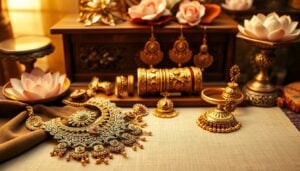





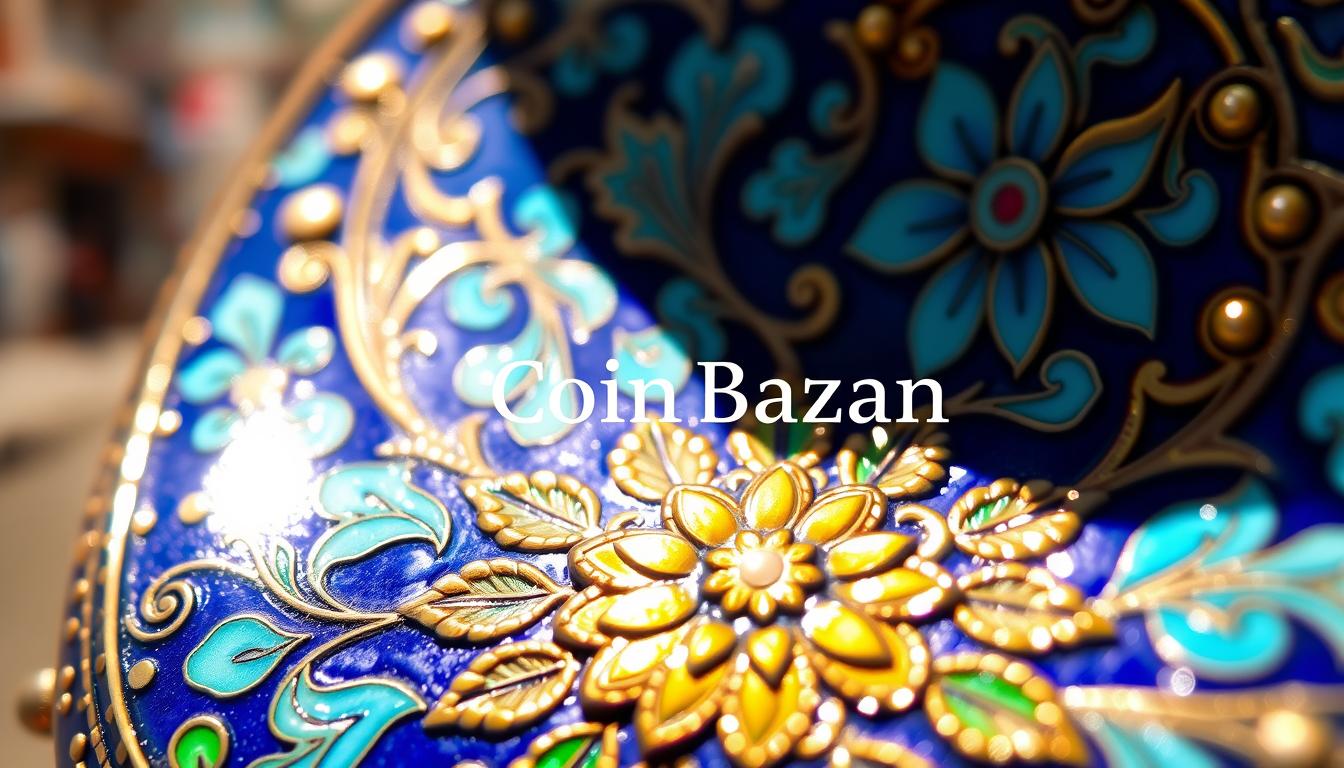
You’re seeing a beautiful comeback of traditional Indian crafts in city markets. One standout is the revival of enameling techniques, or “meenakari.” This ancient art decorates metal with colored glass powders. Then, it’s fired to create bright, lasting designs.
This results in breathtaking enamel art that shows India’s rich culture. As people seek out unique, handmade items, meenakari is becoming more popular. It’s loved for its detailed beauty and the talent that goes into it.
Key Takeaways
- The revival of traditional Indian enameling techniques is driven by consumer interest in unique, handmade products.
- Meenakari, or enameling, involves decorating metal surfaces with colored glass powders.
- The craft is gaining popularity in urban markets due to its cultural significance and beauty.
- Enamel art is characterized by its vibrant, durable designs.
- The resurgence of meenakari reflects a broader interest in traditional Indian crafts.
The Rich Heritage of Indian Enameling
The art of metal enameling in India has a long history. It has evolved over centuries, with many forms and techniques passed down through generations.
Origins and Historical Significance
Indian enameling comes from the country’s rich cultural and artistic traditions. It shows the diverse cultural influences of India. Different rulers and dynasties have shaped enameling techniques over time.
Trade and cultural exchange have influenced Indian enameling. This has made it a unique mix of styles and techniques. The vibrant colors and intricate designs are key to Indian enameling.
Regional Variations Across India
India has many different enameling styles, each with its own flair. Places like Jaipur and Varanasi have their own unique styles.
| Region | Enameling Style | Characteristics |
|---|---|---|
| Jaipur | Vibrant Red Enameling | Known for its bold and vibrant red colors, intricate designs |
| Varanasi | Delicate Pink Enameling | Characterized by its delicate pink hues, intricate patterns |
| Other Regions | Unique Local Styles | Reflect local cultural influences, diverse techniques |
These regional variations show the diversity of Indian enameling. They highlight the skill and creativity of local artisans. Exploring these styles lets you see the unique techniques and designs of each region.
Traditional Indian Enameling Techniques and Their Unique Characteristics
Indian enameling techniques are a big part of the country’s rich culture. Meenakari stands out as a unique art form. It’s known for its detailed designs and bright colors.
Meenakari: The Quintessential Indian Enameling Art
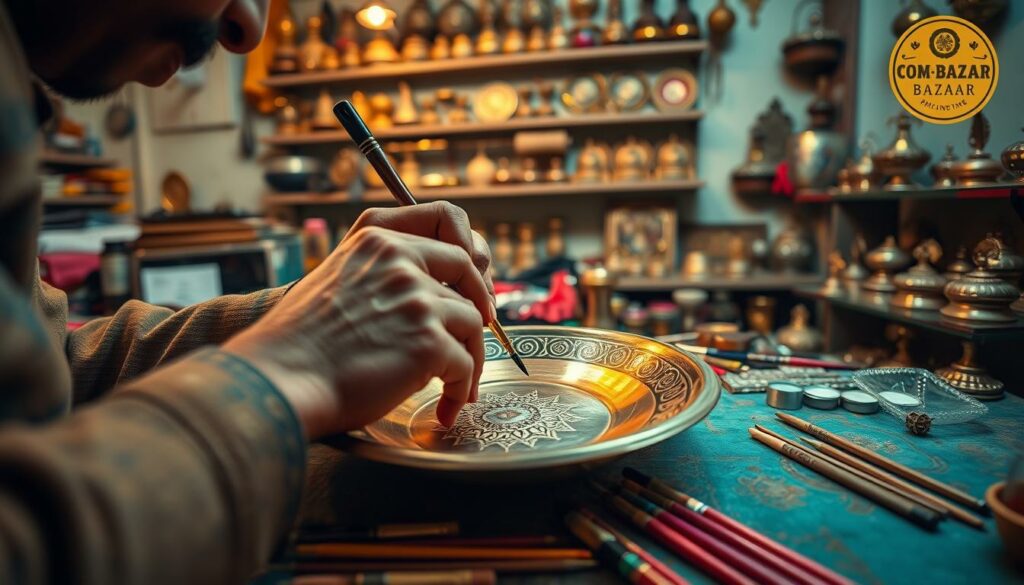
Meenakari is about engraving designs on metal and then adding colored glass powders. The piece is then fired to melt the glass onto the metal. This process is very detailed and takes a lot of patience. The result is a beautiful piece of art that shows the artist’s skill.

Tools and Materials Used in Traditional Practice
Artisans use many tools and materials for Meenakari, like metal bases, glass powders, and special furnaces. The materials used are very important. They affect how the piece looks and lasts. You can see how good materials make a big difference.
| Material | Description | Use in Meenakari |
|---|---|---|
| Metal Base | Copper or silver base metal | Foundation for the enameling design |
| Glass Powders | Colored glass powders | Creating the enamel design |
| Specialized Furnace | High-temperature furnace | Firing the enamel to fuse it to the metal |
The Step-by-Step Enameling Process
The process of enameling includes designing, engraving, applying enamel, and firing. Each step needs careful attention to get the right look. You can try this ancient art with some guidance.
- Designing the pattern
- Engraving the design onto the metal
- Applying colored glass powders
- Firing the piece to fuse the enamel
Famous Enameling Centers in India
India is home to many enameling centers, each with its own style. Jaipur and Varanasi are famous for their unique techniques and designs. These places are key in keeping the traditional art of enameling alive.
Jaipur: The Epicenter of Meenakari
Jaipur is known for its bright red enameling. This style is a big part of the city’s rich history. The artisans of Jaipur are experts in meenakari, making beautiful jewelry and decorative items. Jaipur’s enameling industry helps the local economy and keeps the craft alive.
Varanasi’s Unique Enameling Style
Varanasi is famous for its delicate pink enameling. The city’s artisans mix old techniques with new styles. This makes Varanasi’s enameling very popular. The pink enameling of Varanasi shows the city’s role in India’s enameling world.
Other Notable Regions and Their Distinctive Approaches
Besides Jaipur and Varanasi, places like Bikaner and Hyderabad have their own styles. Bikaner is known for its bold colors, while Hyderabad is famous for intricate designs. These places, along with Jaipur and Varanasi, show India’s rich diversity in enameling.
| Region | Enameling Style | Notable Features |
|---|---|---|
| Jaipur | Red Enameling | Vibrant red color, intricate designs |
| Varanasi | Pink Enameling | Delicate pink hue, traditional techniques |
| Bikaner | Bold and Colorful | Bright colors, bold patterns |
| Hyderabad | Intricate Designs | Complex patterns, detailed workmanship |
Exploring these famous centers shows India’s enameling heritage is alive and growing. This is thanks to the skilled artisans and the many regional styles.
The Decline of Traditional Enameling in the 20th Century
Industrialization and changing tastes led to a drop in traditional enameling in the 20th century. This craft’s history shows how mass-produced items cut into the market for handmade goods.
Impact of Industrialization and Mass Production
Industrialization introduced mass production, making jewelry and decorations cheaper and more available. This change made people choose mass-produced items over traditional, handmade ones.
The table below shows how traditional enameling and mass production differed. These differences helped traditional enameling decline.
| Characteristics | Traditional Enameling | Mass Production |
|---|---|---|
| Production Time | Time-consuming, labor-intensive | Quick, mechanized |
| Cost | Generally more expensive | Less expensive due to economies of scale |
| Uniqueness | Unique, handmade pieces | Identical, mass-produced items |
Changing Consumer Preferences and Market Dynamics
Consumer tastes also played a big part in traditional enameling’s decline. As global markets grew, people started to prefer modern, Western-style items over traditional crafts.
Understanding these factors helps us see the efforts to bring back traditional enameling. By knowing the challenges, we can support efforts to keep this ancient craft alive.
The Renaissance of Indian Enameling in Modern Times
The revival of Indian enameling is a mix of keeping traditions alive and adding a modern twist. As you delve into Indian enameling, you’ll see how this ancient art is being updated for today’s world.
Factors Driving the Revival
Several things are pushing Indian enameling back into the spotlight. A renewed interest in traditional crafts is a big reason. People want unique, handmade items that show off cultural heritage.
Government support is also key. They help artisans and promote traditional crafts. Designers and NGOs are helping too, by connecting traditional artisans with today’s markets.
Key Players in the Revival Movement
The revival of Indian enameling is a team effort. Artisans lead the way, making stunning pieces that mix old and new. Designers help by making traditional techniques fit modern designs.
Government agencies and NGOs offer vital support. They provide training, financial help, and market access to artisans. Together, they’re making Indian enameling relevant again in today’s world.
Global Enameling Techniques Influencing Indian Artisans
Global enameling techniques are changing how Indian artisans view and practice traditional enameling. They are keeping their heritage alive while also bringing in new ideas from around the world.
Indian enameling has a long history. But, with the help of global techniques, artisans are now exploring new ways to be creative. They are using methods like cloisonné, champlevé, and plique-à-jour to make their art even more special.
Cloisonné Enamel: Adaptation in Indian Context
Cloisonné enamel is a method where cells are made on metal to hold enamel, leading to detailed designs. Indian artisans have mixed this with their traditional meenakari art. This has resulted in beautiful pieces that show both global and local influences.
This technique has led to the creation of unique jewelry and decorative items. It allows for intricate patterns and designs, making each piece special.
Champlevé Enamel: Indian Interpretations
Champlevé enamel is made by carving metal to hold enamel, creating a striking contrast. Indian artisans have put their own spin on this, often mixing it with traditional designs. This has led to the creation of modern pieces.
Adapting champlevé has opened up new possibilities for Indian enameling. It lets artisans play with different textures and colors. This technique is especially popular for making decorative items and jewelry.
| Technique | Description | Indian Interpretation |
|---|---|---|
| Cloisonné | Creating cells on metal to hold enamel | Blended with meenakari for unique designs |
| Champlevé | Carving metal to create recesses for enamel | Combined with traditional designs for contemporary pieces |
| Plique-à-jour | Creating a translucent, stained-glass-like effect | Used in jewelry and decorative items for a modern touch |
Plique-à-jour: Translucent Beauty in Indian Designs
Plique-à-jour creates a translucent, stained-glass-like effect, adding a modern twist to traditional Indian enameling. Indian artisans are using this to make stunning jewelry and decorative items. These pieces are both modern and deeply rooted in tradition.
This technique has brought a new level of creativity to Indian enameling. It allows artisans to make pieces that are not only beautiful but also innovative.
Contemporary Applications of Enameling Techniques
Enameling techniques are now used in many modern ways, like in jewelry and home decor. This skill is in high demand in design today. It lets artists make things that are both useful and beautiful.
Jewelry and Personal Adornments
Enameled jewelry is becoming more popular for its bright colors and lasting quality. Artists mix old enameling methods with new styles to make unique items. For example, a contemporary enameled necklace might combine traditional Meenakari patterns with modern designs.
Some examples include:
- Enameled pendants with detailed floral designs
- Colorful enameled earrings that brighten up any look
- Bracelets with enameled designs that show off Indian craftsmanship
Home Décor and Utilitarian Objects
Enameling is also used in home decor items like vases, plates, and boxes. These items add elegance to any room and show off the artist’s skill. For instance, an enameled vase can be a stunning centerpiece in a living room.
| Item | Description | Traditional/Modern |
|---|---|---|
| Enameled Vase | Handcrafted vase with detailed enameling | Traditional |
| Enameled Plate | Decorative plate with modern designs | Modern |
| Enameled Box | Box with enameled lid, great for storing things | Both |
Art Pieces and Installations
Artists are making complex art pieces and installations using enameling. These works often mix enameling with other materials and techniques. This creates amazing visual displays that show off enameling’s versatility and beauty.
“Enameling is not just a craft; it’s an art form that continues to evolve with time, adapting to new ideas and techniques while retaining its traditional essence.”
Exploring enameling’s modern uses shows it has a bright future in design. It will be used in everything from jewelry to decorative art pieces.
The Urban Market for Enameled Products
Enameled products are becoming more popular in cities. They appeal to those who love cultural heritage and unique craftsmanship. Urban buyers look for items that mix old traditions with new styles.
Consumer Demographics and Preferences
People from all walks of life in cities want enameled products. This includes young professionals and older, wealthier buyers. They all share a love for handmade goods and quality items with a story.
Key preferences include:
- Unique, handmade designs
- High-quality materials and craftsmanship
- Cultural significance and storytelling behind the product
- A blend of traditional and contemporary styles
As Arjun Jain, a prominent artisan, notes, “There’s a growing appreciation for the story behind each piece, not just its aesthetic appeal.”
Pricing and Positioning Strategies
Setting prices for enameled products in cities is tricky. It’s about finding a balance between the value of craftsmanship and what buyers can afford. By positioning these items as premium and culturally rich, they can command higher prices.
“The value of enameled products lies not just in their beauty but in the skill and tradition behind their creation.”
To effectively position these products, focus on their unique qualities. Emphasize the traditional techniques used, the artisans’ skills, and the cultural background of the items. This strategy attracts buyers who are willing to invest in something special and of high quality.
Challenges in Preserving Authentic Enameling Techniques
Keeping authentic enameling techniques alive is tough. As you dive into enameling, you’ll see how hard it is to keep its traditional feel alive.
Shortage of Skilled Artisans
One big problem is the shortage of skilled artisans. These artists need years of training to master enameling’s complex techniques. With fewer skilled artists, this ancient art is at risk. Supporting programs that train new artists can help.
Raw Material Sourcing Issues
Finding top-notch raw materials is hard for enameling artists. The quality of enamel and metal greatly affects the final piece. Pure, high-quality materials are key to keeping enameling true to its roots.
Balancing Tradition with Commercial Viability
Artisans and businesses face a big challenge. They must keep traditional techniques alive while also making a profit. By buying authentic enameled items, you help support these artists and keep their craft alive.
Government and NGO Initiatives Supporting Enameling Crafts
The revival of traditional Indian enameling techniques is thanks to government and NGO efforts. These initiatives are key in keeping cultural heritage alive. They also help promote the unique skills of Indian artisans.
Policy Measures and Financial Support
The Indian government has set up several policies to back the enameling crafts sector. One big move is the Geographical Indications (GI) tag. It protects traditional crafts and boosts their cultural value. For example, Jaipur’s Meenakari craft got a GI tag, making it more popular.
Artisans also get financial help through grants and subsidies. This lets them keep working and invest in their craft. Some main benefits are:
- Direct financial help for artisans
- Subsidies on materials
- Support for marketing and selling enameled items
A report shows that these efforts have really helped artisans’ income grow.
Training Programs and Skill Development
Training and skill development are crucial for enameling crafts’ future. Government and NGO programs focus on teaching traditional skills to the next generation. For instance, NIFT offers courses on traditional crafts, including enameling.
Key parts of these programs are:
- Hands-on training with skilled artisans
- Learning new designs and techniques
- Training on business skills for artisans
Rajesh Kumar, a master artisan, says, “These programs have not only made my craft better. They’ve also taught me about the business side, helping me sell my products better.”
Through policy, financial support, and training, the government and NGOs are vital in saving India’s cultural heritage.
Digital Platforms: New Avenues for Traditional Enameled Products
Digital platforms are opening new doors for artisans to showcase their traditional enameled products. With the rise of e-commerce and social media, artisans can now reach a global audience. They sell their unique, handmade items to customers who appreciate traditional craftsmanship.
Online Marketplaces Specializing in Artisanal Crafts
Online marketplaces that specialize in artisanal crafts have become a haven for artisans selling traditional enameled products. These platforms provide a curated space where artisans can list their products, share their stories, and connect with customers. You can now find a wide range of enameled products, from intricate jewelry to decorative home items, on these platforms.
Social Media as a Promotional Tool for Artisans
Social media has emerged as a powerful promotional tool for artisans. By sharing high-quality images and stories about their creative process, artisans can engage with potential customers. They build a brand around their craft. You can follow artisans and stay updated on their latest creations, behind-the-scenes insights, and the stories behind their products. This fosters a deeper connection with the craft and the artisan.
Beginner Enameling Techniques: How You Can Try This Ancient Art
Enameling lets you make unique, colorful items. It has a long history and is very appealing. For beginners, learning the basics is key to getting better.
Essential Tools and Materials for Starters
To start enameling, you need some essential tools and materials. You’ll need metal blanks, enamel powders, a kiln or torch, and safety gear. Good quality tools will help you learn faster and make better work.
Simple Projects to Begin Your Enameling Journey
Start with simple projects to build your confidence and skills. Try making pendants, small decorative items, or enameled jewelry. These projects use less material and are great for practicing.
Where to Learn Enameling in Urban India
In urban India, there are many ways to learn enameling. You can find workshops, classes, and online tutorials for beginners. These resources offer hands-on learning and help from experienced artists, improving your skills.
Conclusion: The Future of Indian Enameling in Urban Markets
The future of Indian enameling in urban markets is bright. A renewed interest in traditional crafts is driving this growth. Various stakeholders are working together to support this trend.
As you explore enameled products, you’ll find a growing demand for unique items. Artisans and designers are creating innovative products. They mix traditional techniques with modern styles.
Government initiatives, NGOs, and digital platforms are backing Indian enameling. This support positions it well for success in urban markets. Expect to see more enameled products that meet both traditional and modern tastes.
The urban market’s evolution is creating new opportunities for Indian enameling. This future looks promising, with chances for growth and innovation.